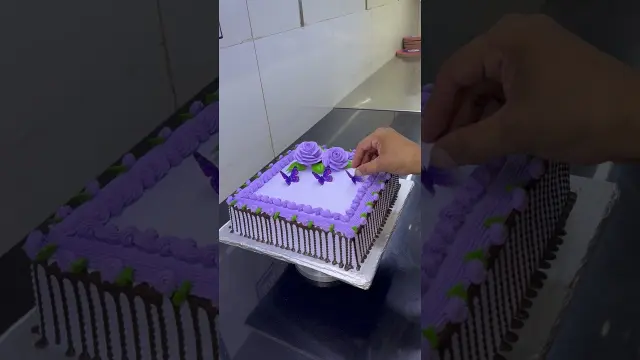
 Purple Butterfly and Rose Cake Design for an Elegant Birthday
#Buttercream Flowers
1 ideas
Purple Butterfly and Rose Cake Design for an Elegant Birthday
Get new #Buttercream Flowers ideas by email
Every Thursday: the week's best ideas, with the newest from #Buttercream Flowers.
Related tags
Buttercream Flowers: A Beginner's Guide to Piped Blooms
Buttercream flowers are exactly what they sound like: blossoms piped by hand from soft icing, through a nozzle, directly onto a cake or cupcake. They sit somewhere between decoration and dessert — unlike sugar paste or wafer paper flowers, these petals are meant to be eaten, and they taste of butter and sugar rather than fondant. That is a large part of their charm, and also why they behave the way they do: they are soft, they respond to temperature, and they will never look quite as sharp as something cut from paste.
Where the craft comes from
Piping with a cloth or paper cone is an old pastry technique, and cake decorating traditions in Europe turned it towards flowers — ruffled carnations, roses, small daisies built petal by petal. Over time the repertoire grew into whole bouquets, wreaths and cascading sprays, and more recently a lighter, glossier style of floral piping became popular, with thin, almost translucent petals layered to look like real blooms. What all of these share is a simple idea: a bag, a shaped opening, and a wrist that learns pressure.
The icings you can pipe
Read more
Most piped flowers are made with one of three families of buttercream. The simple kind, made from butter, icing sugar and a little milk, is sweet and firm and holds a shape well, which makes it forgiving for beginners. Meringue-based buttercreams are silkier and less sweet, take colour beautifully, and demand more care — they soften quickly in a warm room and need chilling. The glossy, smooth style favoured for delicate petals sits at the softer end of the scale. Whichever you choose, consistency matters more than the recipe: icing that is too stiff gives cracked, ragged petals, while icing that is too soft lets them slump.
Tips, shapes and styles
- A petal tip builds roses, carnations and ruffles, one petal at a time.
- A star tip makes hydrangea clusters, small fillers and textured mounds.
- A drop flower tip gives quick, single-squeeze daisies.
Beyond the nozzle, the arrangements matter: a tight wreath around the top of a cake, a looser spray up one side, a single bloom on a cupcake, or a full bouquet with leaves tucked in last. Keep your palette to two or three colours and let the centres of the flowers sit slightly darker than the edges.
What beginners should know
Practise on small squares of parchment pinned to a flower nail; pipe the bloom, chill it until firm, then lift it with scissors or a small spatula and place it on the cake. Hold the bag upright, keep your pressure even, and stop squeezing before you pull away. Work in a cool room, chill your cake before decorating, and make more flowers than you think you need — some will not survive the transfer. Pipe one test bloom each time you fill the bag, so you can feel whether the icing is right before you commit to the cake.
#Buttercream Flowers: frequently asked questions
How do I start making buttercream flowers if I’m a beginner?
A good place to begin is with simple blooms piped onto parchment, then chilled before moving them to a cake. Practise steady pressure, keep the bag upright, and start with a forgiving buttercream so you can learn how the icing behaves.
What kind of buttercream works best for piping flowers?
A firm buttercream is usually the easiest for beginners because it holds its shape well and is less likely to slump. A silkier buttercream can give a smoother, more delicate look, but it needs a cooler room and more careful handling.
Which piping tips are best for different flower shapes?
Petal tips are best for roses, carnations, and layered petals, while star tips work well for textured clusters and filler flowers. Drop flower tips are useful when you want a quick daisy-like effect with a single squeeze.
How do I keep buttercream flowers from melting or losing shape?
Buttercream flowers do best in a cool environment, and the cake itself should be chilled before you decorate it. If the icing is too soft, the petals can slump, so test the consistency first and chill finished flowers before transferring them.
What are some good ways to use buttercream flowers for an occasion cake?
They work beautifully as a small bloom on a cupcake, a wreath around the top of a cake, or a spray climbing up one side. For an elegant look, keep the color palette simple and vary the flower sizes and leaves to create a bouquet effect.
What are the most common mistakes when piping buttercream flowers?
One common mistake is using icing that is too stiff or too soft, which can cause cracked petals or flowers that collapse. Another is piping without enough practice on parchment first, or trying to move flowers before they have firmed up enough to handle.
Videos come from YouTube and posts from Instagram; titles and summaries are our own. All rights belong to their creators.