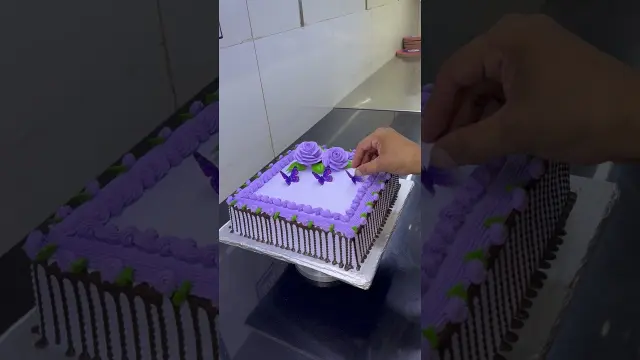
 Purple Butterfly and Rose Cake Design for an Elegant Birthday
#Butterfly Cake
1 ideas
Purple Butterfly and Rose Cake Design for an Elegant Birthday
Get new #Butterfly Cake ideas by email
Every Thursday: the week's best ideas, with the newest from #Butterfly Cake.
Related tags
Butterfly Cake: A Guide to Designs, Techniques and Ideas
A butterfly cake is a celebration cake decorated with butterfly motifs, shaped like a butterfly, or built around butterfly wings rising from the surface. It suits birthdays, weddings, christenings and spring gatherings, and it appeals because it carries a simple, universal idea: lightness, change and something lovely taking flight. The design works on almost any cake base, from a plain sponge to a rich chocolate layer, which is part of why it never goes out of fashion.
Where the idea comes from
Butterflies appear in decoration across many cultures, often as symbols of transformation and renewal. On cakes, the motif became a natural companion to garden and floral themes, and it sits comfortably alongside roses, blossom, ivy and pastel palettes. Because it is a decorative idea rather than a fixed recipe, every baker interprets it differently, and there is no single correct version.
The main styles
Read more
The most common approach is the silhouette cake: a round or tiered cake with butterflies scattered across the top and sides, often in graduated sizes so the eye travels upward. A variation is the "floating" or "flying" butterfly cake, where wings are attached to fine wire or stiffened sugar so they seem to hover above the surface. Others use a shaped tin to bake the cake itself as a butterfly, usually with two round cakes for the wings and a smaller one for the body. Colour schemes range from soft pastels and ivory to bold jewel tones, and the butterflies may be the only decoration or one element in a fuller floral design.
Ways to make the butterflies
Sugar paste or fondant is the most forgiving choice: cut with a plunger cutter, shaped by hand, and left to firm up before placing. Royal icing butterflies are piped onto parchment in a wing shape, dried, then lifted off and stood upright in pairs. Wafer paper and rice paper give a delicate, translucent look and can be printed with patterns. Chocolate butterflies, piped onto acetate and chilled, work well on darker cakes. For beginners, cutters with an embossed pattern do most of the work, and a small ball tool adds the fold down the centre of each wing.
Practical tips for beginners
Bake and fill the cake a day ahead so it is firm and easier to cover. Apply a thin crumb coat and let it set before the final layer, or the butterflies will sit on an uneven surface. Make the decorations first, since they need drying time. Attach butterflies with a little buttercream or edible glue, and place them in odd numbers at varied angles so the arrangement feels natural rather than regimented. Keep taller wings away from the cut edge so serving does not destroy them. If the cake will be out for long, choose fondant or chocolate over delicate paper.
Butterfly cakes reward a light touch. A few well-placed wings in a considered palette will always look better than a crowded surface, so start simple and add detail as your confidence grows.
#Butterfly Cake: frequently asked questions
What do I need to get started with a butterfly cake?
You need a baked and filled cake, something to cover it with such as buttercream or fondant, and a way to make the wings — sugar paste with a butterfly cutter is the easiest route, though piped icing, wafer paper or chocolate all work. A small ball tool for pressing the fold into each wing, plus a little buttercream or edible glue for attaching them, covers the rest of the basics.
Which style of butterfly cake should I choose?
Pick based on how the cake will be served and how long it will sit out: scattered butterflies across a round or tiered cake are the most forgiving, hovering wings on wire or stiffened sugar look dramatic but are more fragile, and a shaped tin gives you a cake that is itself a butterfly. Soft pastels and ivory suit garden and floral themes, while deeper jewel tones stand out against a plain or chocolate base.
How do I stop the butterflies from drooping or falling off?
Make the decorations well before you need them and let them dry fully, because a wing that is still soft will sag once it is standing up. Cover the cake with a thin crumb coat and let that set too, so the butterflies sit on a firm, even surface instead of sliding on soft icing. Keep the taller wings back from the cut edge so serving slices does not knock them loose.
How far ahead can I make a butterfly cake?
Bake and fill the cake ahead of time so it firms up and is easier to cover, and prepare the butterflies first since they need drying time before they can stand. Add the wings as a final step rather than decorating days in advance, and if the cake will be out for a long stretch, favour fondant or chocolate over delicate paper.
What occasions suit a butterfly cake?
It works for birthdays, weddings, christenings and spring or garden gatherings, largely because the motif reads as lightness and something taking flight without needing any explanation. Purple butterflies with roses, for instance, give an elegant birthday look, while pastel wings and blossom feel softer and more playful.
What are the most common mistakes beginners make?
The usual one is overcrowding — a few well-placed wings in a considered palette always look better than a surface covered edge to edge. Placing butterflies in rigid rows and at identical angles also kills the sense of movement, so vary the sizes and tilt them at different angles instead. Starting simple and adding detail as your confidence grows is a better plan than attempting an elaborate arrangement first time.
Videos come from YouTube and posts from Instagram; titles and summaries are our own. All rights belong to their creators.