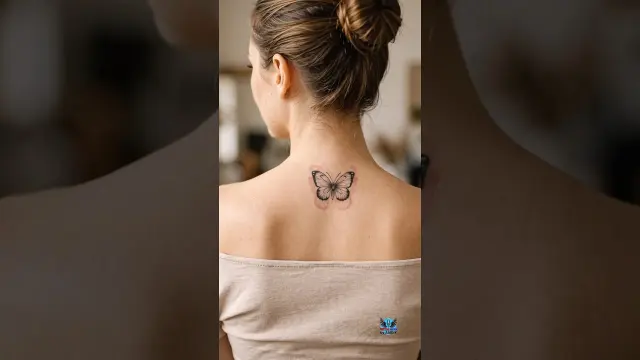
 Butterfly and Minimal Fine Line Tattoo Ideas for Girls
#Butterfly Tattoo
1 ideas
Butterfly and Minimal Fine Line Tattoo Ideas for Girls
Get new #Butterfly Tattoo ideas by email
Every Thursday: the week's best ideas, with the newest from #Butterfly Tattoo.
Related tags
Butterfly Tattoo Ideas, Meanings and Design Guide
A butterfly tattoo is one of the most enduring choices in body art, and for good reason. It carries a meaning almost anyone can recognise, it works at nearly any size, and it suits every part of the body. If you are thinking about one, a little background helps you choose a design you will still love in ten years.
What a butterfly stands for
Across cultures, the butterfly is a symbol of transformation. Its life cycle — egg, caterpillar, cocoon, wings — makes it a natural emblem of change, growth and starting again. In many traditions it also stands for the soul, for freedom, or for a person remembered. In Japanese art the butterfly is associated with joy and with the passing nature of beauty; in others it signals hope and renewal. You do not need to attach a meaning to yours, but knowing the associations can help you decide what you want the design to say.
The main styles
Read more
The style you pick changes the whole feel of the piece.
- Fine line and single needle: delicate outlines, minimal shading, small scale. Elegant and unobtrusive, but they can soften over the years, so placement and size matter.
- Blackwork and dotwork: bold silhouettes or textured shading built from dots. Strong contrast that ages well.
- Realism: detailed wings and pattern work, often in colour, usually larger and better suited to a flat area of skin.
- Traditional and neo-traditional: strong outlines, saturated colour, simplified shapes that stay legible at a distance.
- Watercolour and abstract: soft washes or expressive brushstrokes, sometimes without a hard outline.
- Geometric and ornamental: symmetry, line and pattern, often paired with florals or mandalas.
Choosing the design and placement
Think about the shape of the space before the shape of the butterfly. Wings suit the shoulder blade, the collarbone, the ribs, the forearm, the ankle or the back. Symmetrical designs sit naturally on the spine or the sternum; a single wing, or a butterfly resting on a stem, works well in narrow areas.
Size is the other decision. Very small tattoos with fine detail lose definition as the ink settles, so if the design has pattern inside the wings, give it room. If you want something tiny, simplify the drawing rather than shrinking a complicated one.
Before you book
Look at healed work, not only fresh photographs — ink looks different once the skin has settled. Ask how the artist handles line weight and shading, and be honest about your pain tolerance and your budget. Bring reference images, but let the artist redraw the idea to fit your body.
Afterwards, follow the aftercare you are given: keep the area clean, avoid soaking and direct sun, and do not pick at the skin as it heals. A well-made tattoo, cared for properly, keeps its shape for a very long time.
Finally, take your time. A design that means something to you, drawn for your body by someone whose work you trust, is worth waiting for.
#Butterfly Tattoo: frequently asked questions
What does a butterfly tattoo usually symbolize?
Most people read it as a sign of transformation, since the butterfly moves through stages before it earns its wings. Depending on the tradition you draw on, it can also stand for freedom, the soul, joy, hope or someone remembered. You are not obliged to attach a meaning, but knowing the associations helps you decide what you want yours to say.
Which style of butterfly tattoo should I choose?
It depends on the look you want and how you want it to age: fine line reads as light and delicate, blackwork and dotwork hold strong contrast, realism gives detailed wing patterns, and traditional styles stay legible from a distance. Watercolour and geometric approaches push the design in a more abstract direction. Ask to see healed work in your preferred style, since ink settles differently than it looks fresh.
Where on the body does a butterfly tattoo work best?
Think about the shape of the space first: open wings fit the shoulder blade, collarbone, forearm, ankle or back, while symmetrical designs sit naturally along the spine or sternum. A single wing or a butterfly resting on a stem suits narrow areas where a full symmetrical piece would be cramped. Your artist can redraw the idea to fit your chosen spot.
Should I get a small butterfly tattoo or a larger one?
Small works well when the drawing is simple, because very fine detail in a tiny piece loses definition once the skin settles. If the wings contain pattern or shading, give the design enough room to breathe. The usual approach is to simplify the drawing rather than shrink a complicated one.
How do I prepare for the appointment and care for the tattoo afterwards?
Before booking, look at healed photographs rather than only fresh ones, ask how the artist handles line weight and shading, and be honest about your pain tolerance and what you can spend. Bring reference images but let the artist adapt them to your body. Afterwards, follow the aftercare you are given: keep the area clean, avoid soaking and direct sun, and don't pick at the skin while it heals.
What mistakes should I avoid with a butterfly tattoo?
The common ones are choosing a design that is too intricate for the size, picking a placement that fights the shape of the wings, and booking on price alone without seeing healed work. Another is rushing the decision instead of waiting for a design that genuinely means something to you. Taking your time costs nothing and usually gets you a piece you still like later.
Videos come from YouTube and posts from Instagram; titles and summaries are our own. All rights belong to their creators.