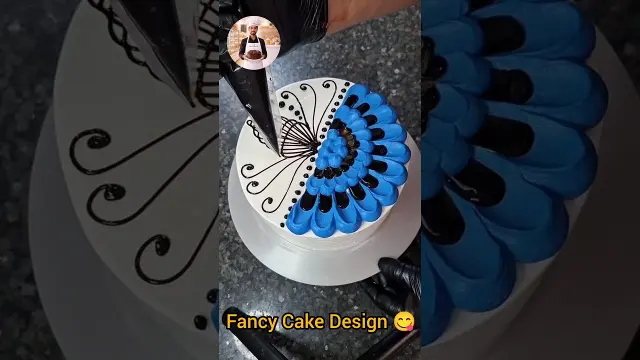
 Step-by-Step Buttercream Cake Decorating Technique
#Cake Tutorial
1 ideas
Step-by-Step Buttercream Cake Decorating Technique
Get new #Cake Tutorial ideas by email
Every Thursday: the week's best ideas, with the newest from #Cake Tutorial.
Related tags
Cake Tutorial: A Beginner's Guide to Baking and Decorating
A cake tutorial is any guided explanation that walks you through making a cake, from choosing a recipe to the final decorative touch. Tutorials exist in every format: written step-by-steps, photographs of each stage, long videos, short clips, or in-person classes. What they share is a sequence — do this, then this — which is exactly what makes them useful when a recipe alone leaves you guessing.
Where the idea comes from
Cakes began as plain mixtures of flour, fat, sweetener and eggs, baked dense and often leavened only by air. Over time, two broad families emerged: butter-based cakes, where fat is creamed with sugar to trap air, and foam-based cakes such as sponge and angel food, where whipped eggs do the lifting. Learning which family your recipe belongs to is one of the most helpful things a tutorial can teach you, because the mixing method follows from it.
What tutorials usually cover
Read more
Most cake tutorials fall into a few areas:
- Choosing a recipe that suits your tin, oven and skill level
- Preparing tins properly so cakes release cleanly
- Mixing methods: creaming, the rubbing-in method, the all-in-one approach, and folding
- Judging when a cake is baked, usually by touch, colour and a skewer
- Cooling and levelling before any decoration begins
- Frosting and filling: buttercream, cream cheese, ganache, whipped cream
- Simple decoration: smooth or textured finishes, piped borders, flowers, fruit
What beginners should know
Read the whole tutorial before you start. Baking rewards preparation, and a step that surprises you halfway through rarely ends well. Bring ingredients to room temperature when the method calls for it, especially eggs and butter; cold ingredients curdle and split more easily.
Weigh ingredients where you can. Cup measures vary between kitchens, and small differences matter more in cake than in most cooking.
Learn your oven. Most run a little hot or cool, and a cheap oven thermometer tells you more than the dial does. Bake in the middle of the oven, and avoid opening the door in the first part of the baking time, when the structure is still setting.
Practical tips
Bake a cake the day before you need it. Wrapped well and kept cool, it firms up and becomes easier to slice and stack. Chill before frosting — a cold cake sheds fewer crumbs.
Keep your frosting simple at first. A single well-beaten buttercream, applied evenly, looks better than ambitious piping done in a hurry. Practise piping on the back of a baking tray or a sheet of baking paper before you commit to the cake.
Finally, treat a failed cake as information rather than a verdict. A sunken centre, a domed top or a crumbly slice each point to something specific in the method, and the next tutorial you read will make far more sense for it.
#Cake Tutorial: frequently asked questions
I've never decorated a cake before — how do I get started?
Begin with a simple cake you can bake confidently, then practise the finishing steps on their own before committing to a finished cake. Piping a border or testing a smooth finish on an upturned baking tray or a sheet of baking paper lets you build the hand movements without risking the cake. Choose tutorials that explain why each step is done, not just what to do, so the technique carries over to the next cake.
What equipment do I actually need to follow a cake tutorial?
Far less than the tutorials suggest — a couple of tins, a mixing bowl, a spatula, an offset palette knife and something to pipe with will carry you through most beginner projects. An oven thermometer is the one modest extra that genuinely changes results, because oven dials are unreliable and baking rewards an accurate temperature. Add tools only when a specific technique calls for them, rather than buying a full decorating kit up front.
Which kind of cake should I pick for my first tutorial?
Pick a recipe whose mixing method matches the equipment and time you have — a butter cake if you have an electric mixer and patience for creaming, a foam cake if you want something lighter and quicker to bring together. Check that the tin size, oven setting and skill level suit you before you begin, since a mismatched recipe is the usual reason a first attempt disappoints. Reading the whole tutorial through first will tell you whether you are ready for it.
How should I store a cake before decorating or serving it?
Baking the cake a day ahead and wrapping it well in a cool place firms the crumb and makes it easier to level, slice and stack. Chilling it before you frost reduces crumbs lifting into the buttercream, which is the difference between a clean finish and a speckled one. Only fill and decorate once the cake is properly cool, or the frosting will slide.
Are there cake ideas that suit a celebration without much decorating skill?
A single well-beaten buttercream spread evenly over a levelled cake reads as deliberate and finished, and it is far more forgiving than elaborate piping. From there, a piped border, a few fresh flowers or a pile of fruit gives you a celebratory look with very little technique. Keep the decoration to one idea done calmly rather than several attempted in a rush.
What mistakes do beginners make most often?
Starting before reading the whole tutorial, using cold eggs and butter where the method wants them soft, and opening the oven door early while the structure is still setting are the usual culprits. Measuring by volume instead of weight is another, since cup sizes differ between kitchens and cake is less tolerant of small errors than most cooking. When something does go wrong, treat the sunken centre or domed top as a clue about the method rather than a failure.
Videos come from YouTube and posts from Instagram; titles and summaries are our own. All rights belong to their creators.