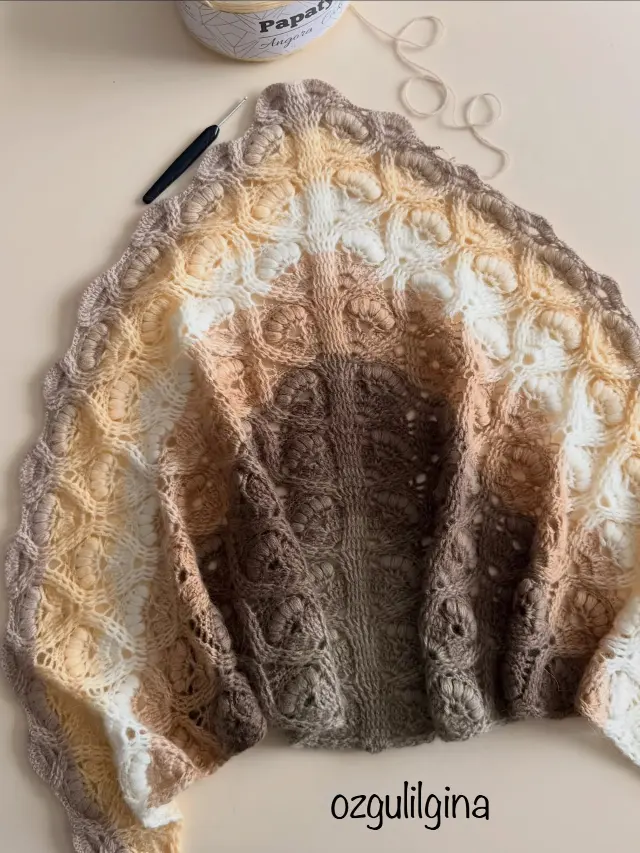
 Morning crochet session with gradient cake yarn
#Cake Yarn
1 ideas
Morning crochet session with gradient cake yarn
Get new #Cake Yarn ideas by email
Every Thursday: the week's best ideas, with the newest from #Cake Yarn.
Related tags
Cake Yarn: A Guide to Gradients, Cakes and Colour Repeats
Cake yarn is yarn wound into a compact, rounded shape — a flat-topped cylinder or dome that looks a little like a small cake, which is where the name comes from. The winding is practical rather than decorative: the strand is laid in crossed layers so that you can pull from the centre, and the cake sits flat and steady beside you instead of rolling away across the floor as a traditional ball does. Many yarns sold this way are also designed around that format, with long, repeating colour sequences that unfold gradually as you work.
Where it comes from
Winding yarn into cakes is an old handling habit that became easy to reproduce at home when hand-operated ball winders appeared. A winder takes a skein or hank and turns it into that familiar cylinder, usually with a hollow centre. Commercially, cakes are wound at the mill and sold ready to use, which suits plant fibres, blends and soft spun yarns that would otherwise need winding before the first stitch. Hand dyers often choose the cake format too, because it lets a long length of painted or dip-dyed yarn be presented as a single usable unit.
The main kinds
Read more
The word covers two overlapping ideas: a shape, and a style of colouring. Plain and semi-solid yarns come in cakes simply as a convenient put-up. Gradient or ombre cakes are wound so that the colour shifts slowly along the length, sometimes through several shades in one direction. Self-striping cakes repeat a sequence of colours in bands, giving regular stripes without changing yarn. Some cakes are wound from several strands of different colours held together, which produces a blended, heathered effect as you knit or crochet. Variegated cakes sit between these — colours change, but in shorter, less predictable runs.
What beginners should know
Start from the centre strand if you can find it; pull gently so the cake does not collapse inward. If the centre tangles or the cake slumps as it empties, try working from the outside end instead, or set the cake in a bowl or a small net to keep its shape. Keep the paper band until the project is finished, since it carries the colour number and dye lot — useful if you need more. Wind cakes loosely: yarn stored under tension for a long time can lose some of its bounce.
Practical tips
Swatch before you commit, not only to check gauge but to see how long the colour repeat actually is. That length decides whether a gradient reads as a soft fade or as broad blocks, and where the changes fall on a sleeve, a heel or a border. When using a gradient, plan the order of pieces so the colour flows rather than restarts. Buy enough of one dye lot for the whole project, especially with gradients, where a second cake may begin at a different point in the sequence. And expect the cake to flatten and widen as it is used — that is normal, and it is why a light bowl helps.
#Cake Yarn: frequently asked questions
What exactly is cake yarn, and how is it different from a ball of yarn?
It is yarn wound into a flat-bottomed cylinder or dome with a hollow centre, so it sits steady beside you instead of rolling away. The crossed winding lets you pull from the middle, and because the cake stays put, many yarns are also sold this way to show off long colour sequences.
How do I get started with a cake, and where do I find the end?
Look for the loose strand tucked into the hollow centre and pull it out gently, then work from there so the cake empties from the inside. If the centre tugs or tangles, switch to the outside end, and set the cake in a bowl or a net so it keeps its shape as it loosens.
Which kind of cake should I pick for my project?
Choose a plain or semi-solid cake when you just want a convenient put-up, and a gradient or ombre cake when you want colour to shift gradually across a shawl or garment. Self-striping cakes give you regular bands without changing yarn, while blended cakes wound from several strands produce a softer heathered look.
How should I store and care for cake yarn?
Keep the paper band until the project is done, since it carries the colour and dye lot you would need to match more. Store cakes loosely wound and out of long-term tension, and follow the fibre's own washing guidance rather than the cake shape, which has no bearing on how the yarn cleans.
What mistakes do people make with gradient and self-striping cakes?
The common one is skipping a swatch, which means you never learn how long the colour repeat really is and the changes land awkwardly on a sleeve or heel. Another is buying too little, because a second cake may start at a different point in the sequence and break the flow.
What can I make with a cake of gradient yarn?
Gradients suit anything where a slow fade reads well — a shawl worked from one tip to the other, a simple top-down garment, or a blanket square where the colour does the work. Plan the order of pieces ahead so the colour continues rather than restarting at each seam.
Videos come from YouTube and posts from Instagram; titles and summaries are our own. All rights belong to their creators.