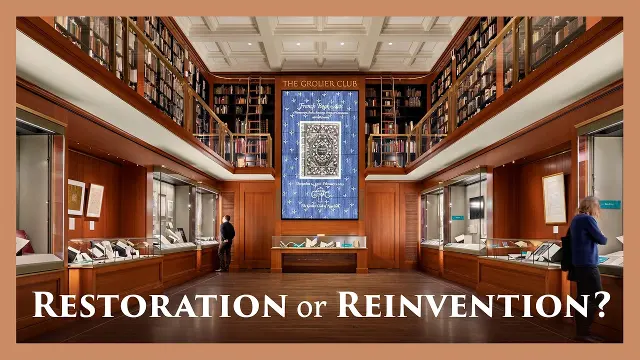
 Innovative Approaches to Historic Building Preservation
#Case Studies
1 ideas
Innovative Approaches to Historic Building Preservation
Get new #Case Studies ideas by email
Every Thursday: the week's best ideas, with the newest from #Case Studies.
Related tags
Case Studies: Learning from Real Examples
What a case study is
A case study is a close, detailed examination of a single person, place, project, event, or organization. Instead of looking at broad patterns across many examples, it focuses deeply on one example to understand how something works in real life. Case studies are used in many fields, including education, business, social research, health, design, and architecture.
A good case study does more than describe what happened. It explores context, decisions, challenges, and outcomes. That makes it useful for learning, comparing approaches, and drawing practical lessons.
Why case studies are useful
Read more
Case studies help you see how ideas work in practice. They can show:
- how a problem was solved
- why a decision was made
- what worked well and what did not
- how context affected the result
- what others can learn from a similar situation
Because they are based on real examples, case studies often feel more concrete and memorable than general explanations. They are especially helpful when a topic is complex or when the details matter.
Common kinds of case studies
Case studies can take different forms depending on the purpose.
- Descriptive case studies explain what happened in a clear, organized way.
- Exploratory case studies are used to understand a situation before deeper research begins.
- Explanatory case studies try to show why something happened.
- Comparative case studies look at two or more examples side by side.
- Practical or professional case studies focus on a real project, process, or outcome.
In creative and professional fields, case studies are often used to present a process from beginning to end, showing the brief, the approach, the obstacles, and the final result.
How a case study is usually built
A useful case study usually has a clear structure:
- introduction to the subject
- background and context
- the main problem, question, or goal
- the approach taken
- key actions or stages
- results or outcomes
- lessons learned
Good case studies are specific, but they should also be easy to follow. The best ones balance detail with clarity, so the reader can understand not only what happened, but why it mattered.
What to keep in mind
If you are writing or reading case studies, remember that one example does not automatically prove a rule. A case study gives depth, not general certainty. It is most useful when you want to understand a particular situation in detail.
For beginners, the main skill is asking good questions. What was the original challenge? What influenced the choices made? What changed along the way? What can be learned from the result?
Practical tips
- Choose a subject with enough detail to tell a full story.
- Keep the focus narrow enough to stay clear.
- Use context so the example makes sense.
- Be honest about difficulties as well as successes.
- End with clear takeaways rather than vague conclusions.
A well-made case study is one of the most useful ways to learn from real experience. It turns a single example into a source of insight.
Videos come from YouTube and posts from Instagram; titles and summaries are our own. All rights belong to their creators.