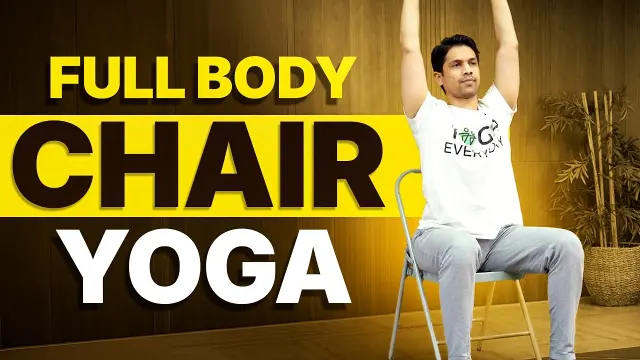
 10 Minute Chair Yoga Routine to Relieve Stiffness and Feel Fresh
#Chair Yoga
1 ideas
10 Minute Chair Yoga Routine to Relieve Stiffness and Feel Fresh
Get new #Chair Yoga ideas by email
Every Thursday: the week's best ideas, with the newest from #Chair Yoga.
Related tags
Chair Yoga: A Gentle Practice You Can Do Anywhere
Chair yoga is a form of hatha yoga practised while seated on a chair, or standing with a chair for support. Rather than folding yourself onto a mat, you borrow the chair as a steady base: it holds your weight, keeps you balanced and lets you explore stretches, twists and breathing without ever needing to get down to the floor. Because of that, it has become one of the most adaptable ways into yoga for people who find a mat practice difficult, whether because of age, limited mobility, injury, long hours at a desk or simply a preference for something unhurried.
Where it comes from
Yoga itself is an old tradition from India, and the postures most people recognise today were largely shaped in the twentieth century. Chair yoga is much more recent. It grew out of teachers looking for a way to bring the same principles, breath, alignment and attention, to students who could not easily stand or sit on the floor. What began as an adaptation has settled into a recognised style of its own, taught in community centres, offices, care homes and studios.
What a practice looks like
Read more
Most sessions follow the shape of a classical class. You begin seated, settling the spine and softening the shoulders, then move through gentle warm-ups: neck rolls, shoulder circles, wrist and ankle movements. From there come seated poses such as a gentle twist, a side bend, a forward fold over the knees and a supported backbend. Some classes add standing poses with the chair back for balance, and finish with a few minutes of quiet breathing or rest. Props are common and welcome: a cushion, a strap or a second chair can make a pose comfortable rather than strained.
Is it really still yoga?
Yes, though the emphasis differs. Nobody expects you to hold a pose for minutes or sweat through a sequence. The work is in the quality of attention: moving with the breath, noticing where you hold tension, staying within a range that feels easy. That said, chair yoga is not only a resting practice; it can still build strength and improve mobility when taught with care.
If you are starting out
Choose a sturdy chair with a flat seat, no arms if you can, and legs that sit firmly on the floor. Sit toward the front edge so your spine is free to lengthen, and keep both feet grounded. Simplicity is the point: short, frequent sessions tend to feel better than long ones. Move slowly, breathe out as you fold or twist, and never push into sharp pain; a mild stretch is enough. If you have an injury, are pregnant, or are unsure whether movement is appropriate for you, ask a health professional before starting.
A few minutes in a chair, done with attention, is a complete practice. That is the real appeal of chair yoga: it asks for almost nothing and fits almost anywhere.
#Chair Yoga: frequently asked questions
Do I need any special equipment to start chair yoga?
All you really need is a chair, ideally one with a flat seat and legs that rest squarely on the floor. A cushion or a strap can help make certain poses more comfortable, and an extra chair is handy for support. Wear something you can move in, and go barefoot or in socks so your feet stay grounded.
How do I begin if I have never done any yoga before?
Start with short sessions repeated often rather than trying to last a long time, since the body responds better to small, regular practice. Sit toward the front edge of the seat so your spine can lengthen, keep both feet on the floor, and follow a teacher or guided class so the sequence is already worked out for you. Begin with simple warm-ups for the neck and shoulders before adding twists and folds.
Is chair yoga really yoga, or is it just gentle stretching?
It keeps the same principles as a mat class — moving with the breath, watching alignment, staying inside a comfortable range — but shifts the emphasis away from endurance and long holds. Taught with care, it can still build strength and improve mobility rather than being purely restful.
What are the most common mistakes beginners make?
The usual ones are slumping back into the chair instead of sitting forward, holding the breath while concentrating, and pushing a stretch until it hurts. It also helps to avoid chairs with arms or wheels, which get in the way of twists and can shift under you.
Which kind of chair yoga class should I choose?
Classes range from fully seated and very gentle to sessions that include standing poses held with the chair back for balance, so pick according to how much support you want on a given day. A restorative class suits quiet, low-energy days, while a more active one adds strength work. Watching a sample lesson first is the simplest way to judge whether the pace and teaching style suit you.
Can I practise chair yoga at my desk or while travelling?
Yes — the chair is the only equipment involved, so a desk, a waiting room or a hotel room all work as a place to practise. Seated twists, side bends and shoulder work travel especially well, and a brief session fits easily into a break.
Videos come from YouTube and posts from Instagram; titles and summaries are our own. All rights belong to their creators.