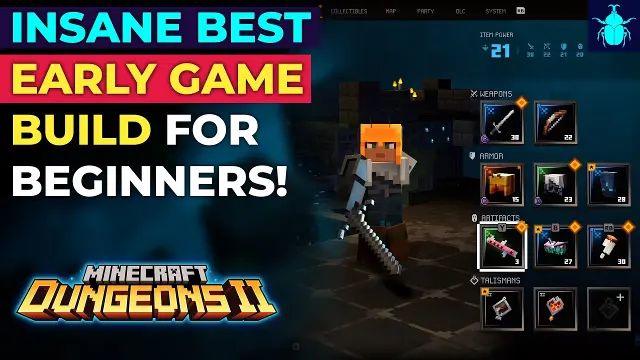
 Minecraft Dungeons 2 Beginner Build Guide for Early Levels
#Character Build
1 ideas
Minecraft Dungeons 2 Beginner Build Guide for Early Levels
Get new #Character Build ideas by email
Every Thursday: the week's best ideas, with the newest from #Character Build.
Related tags
Character Build: A Beginner's Guide to Planning a Hero
A character build is the set of choices that decide how a hero fights, survives and supports others. It covers where you put your attribute points, which skills or spells you learn first, what equipment you chase, and how those pieces reinforce one another. Two players can pick the same class and end up with completely different characters, because a build is the plan behind the choices rather than the starting template.
The idea comes from tabletop role-playing games, where a player writes down statistics, a class and a handful of abilities before the first session and then lives with those decisions for a long campaign. Digital role-playing games inherited the structure and added respecs, gear sets and skill trees, so the build became something you could tinker with over dozens of hours. Today the word shows up in action role-playing games, dungeon crawlers, strategy games and even board games.
The main archetypes
Most builds fall into a few broad families, and nearly every game borrows from them.
Read more
- Damage dealers focus on output: raw attack power, critical hits, area damage or burst windows. They end fights quickly but usually forgive few mistakes.
- Tanks absorb punishment and hold attention, stacking health, armour, blocking or crowd control so others can work safely.
- Support builds heal, buff, debuff or control the battlefield. They rarely top the damage charts and are often the reason a group survives.
- Hybrids blend two roles, trading peak performance for flexibility. They are popular in solo play, where nobody else covers the gaps.
- Utility and mobility builds lean on speed, stealth, resource generation or crafting rather than direct combat.
How a build is put together
A good build is built around one idea, called a core, and everything else serves it. If your core is a fire spell that grows stronger with each enemy it hits, then gear and passives that boost fire damage, reduce cooldowns and cluster enemies all belong. Scattered points that each do something different usually perform worse than a focused investment.
Watch your resource economy. Mana, stamina, cooldowns or ammo decide whether a plan survives a long fight, not just a short one. A build that empties its pool in ten seconds and then stands still is a build that only works in theory.
What beginners should know
Start with a single clear goal for the character and spend points towards it. Read what each stat actually does in that particular game, since names mean different things across titles. Keep some defence, because damage means nothing if you fall over. Play the build for a while before judging it, and change one thing at a time so you can tell what helped. Finally, check how easily the game lets you respec: if refunds are cheap, experiment freely; if they are not, plan ahead.
There is no universally best build. The strongest one is the one that matches how you like to play and that you understand well enough to use under pressure.
#Character Build: frequently asked questions
How do I start a character build without getting overwhelmed?
Pick a single clear goal for the character — how you want it to fight — and spend your points only toward that goal. Read what each stat actually does in that particular game, since the same names mean different things across titles. Keep a little defence in the plan, because damage means nothing if your character falls over.
What decisions does a character build actually cover?
It covers the choices that decide how a hero fights, survives and helps others: attribute points, which skills or spells you learn first, and the equipment you go after. What makes it a build rather than a random pile of choices is that the pieces reinforce one another. Two players can pick the same class and end up with entirely different characters because the plan behind the picks differs.
Which kind of build should I choose — damage, tank, support or hybrid?
Choose the role that matches how you naturally like to play, since there is no universally best build. Damage dealers end fights fast but forgive few mistakes, tanks and supports trade personal output for keeping a group alive, and hybrids give up peak performance for flexibility. If you mostly play alone, a hybrid is often the safer pick because nobody else is there to cover the gaps.
Why does my build fall apart in longer fights?
It usually comes down to resource economy: mana, stamina, cooldowns or ammo decide whether a plan survives a drawn-out encounter, not just a short one. A build that empties its pool quickly and then stands still only works in theory. Check how your resources regenerate and pace your investment so the character keeps functioning after the opening burst.
What mistakes do beginners make most often?
Spreading points across many unrelated ideas instead of concentrating on one core, so nothing performs well. Another common slip is judging a build after a few minutes rather than playing it long enough to see how it holds up. Change one thing at a time when you adjust, so you can actually tell what helped and what didn't.
How freely can I experiment with a build?
That depends on how easily the game lets you respec — where refunds are cheap, experiment as much as you like, and where they aren't, plan ahead before committing. Either way, play the build for a while before deciding it doesn't work. The strongest build is the one you understand well enough to use under pressure.
Videos come from YouTube and posts from Instagram; titles and summaries are our own. All rights belong to their creators.