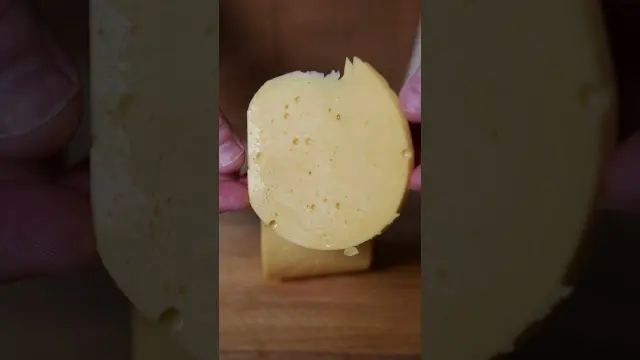
 How to Make Sliceable American Cheese From Cheddar
#Cheese Making
1 ideas
How to Make Sliceable American Cheese From Cheddar
Get new #Cheese Making ideas by email
Every Thursday: the week's best ideas, with the newest from #Cheese Making.
Related tags
Cheese Making Guide
What cheese making is
Cheese making is the process of turning milk into a more stable, concentrated food by separating the curds from the whey and shaping, draining, salting, or aging the result. It is one of the oldest ways of preserving milk, and it has been practiced in many parts of the world for centuries. Different regions developed their own styles based on the milk available, the climate, and local traditions.
At its simplest, cheese making relies on a few basic ideas: acid, heat, and enzymes help milk proteins join together, forming curds. How those curds are handled determines whether the cheese is fresh and soft, firm and sliceable, or aged and complex in flavor.
Common types of cheese
Read more
Cheese can be grouped in many ways, but beginners usually find it helpful to think in terms of texture and aging.
- Fresh cheeses are made to be eaten soon after making. They are usually mild, soft, and moist.
- Soft-ripened cheeses develop a tender rind and a creamy interior.
- Semi-soft and firm cheeses are pressed and drained more thoroughly, so they hold their shape better.
- Hard and aged cheeses spend more time maturing, which deepens flavor and changes texture.
- Blue cheeses are made with special molds that create veining and a distinct taste.
You can also classify cheeses by the kind of milk used. Cow’s, goat’s, and sheep’s milk each bring their own flavor and fat content, which affect the final cheese.
How cheese is made
Most cheese making follows a few basic steps:
- Milk is warmed carefully.
- A starter culture or acid is added to begin souring the milk.
- Rennet or another setting agent is often used to help the milk coagulate.
- The curd is cut so whey can separate and drain.
- The curds are stirred, cooked gently, or pressed, depending on the style.
- Salt is added for flavor and preservation.
- Some cheeses are eaten right away, while others are aged under controlled conditions.
Not every cheese uses the same method. Fresh cheeses are simpler and often do not require long aging, while traditional aged cheeses need more patience and attention.
What beginners should know
If you are new to cheese making, start with a simple fresh cheese before trying longer-aged styles. That gives you a feel for how milk behaves and how curds and whey look at each stage.
A few practical habits help a lot:
- Work with very clean equipment.
- Measure carefully, especially when using cultures or rennet.
- Keep temperatures steady.
- Use good-quality milk.
- Be patient and avoid stirring or cutting too roughly unless the recipe calls for it.
Small changes in temperature, acidity, or draining time can affect the texture, so it is worth following a recipe closely at first. As you gain experience, you will begin to understand how each decision changes the final cheese.
Tips for better results
Taste and texture often improve when you pay attention to moisture, salt, and time. If a cheese is too dry, it may have been drained or pressed too long. If it is too soft, it may need more draining, a firmer set, or a longer rest. Aging cheese requires a cool, steady environment and regular care, but even fresh cheeses benefit from calm handling and clean storage.
Cheese making is both practical and creative. Once you understand the basic process, you can explore many styles and learn how milk, timing, and technique shape the character of each cheese.
Videos come from YouTube and posts from Instagram; titles and summaries are our own. All rights belong to their creators.