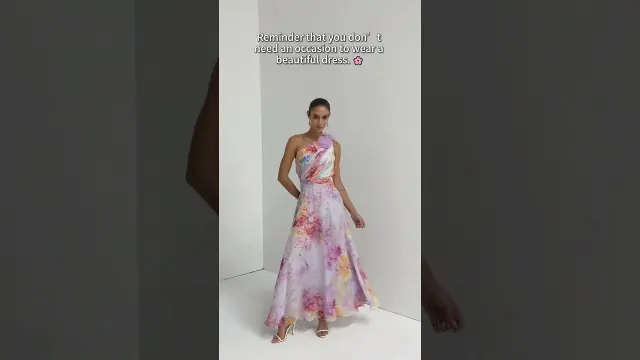
 Flowy Chiffon Floral Dress for Everyday Elegance
#Chiffon Dress
1 ideas
Flowy Chiffon Floral Dress for Everyday Elegance
Get new #Chiffon Dress ideas by email
Every Thursday: the week's best ideas, with the newest from #Chiffon Dress.
Related tags
Chiffon Dress Guide: Fabric, Styles and Styling Tips
Chiffon is one of those fabrics that seems to do very little and yet changes everything. Light, slightly sheer and softly textured, it gives a dress its movement — the way a skirt catches a breeze or a sleeve floats when you raise your arm. If you have ever admired a dress that looked almost weightless, chiffon was probably behind it.
What chiffon actually is
Chiffon is a plain-woven fabric made from fine, tightly twisted yarn, which is why it feels slightly crisp in the hand yet drapes so fluidly once it hangs. It has a subtle stretch and a gentle sheen, and it is usually semi-sheer. Traditionally it was woven from silk, and silk chiffon remains the most luxurious version; today you will also find polyester and other synthetic chiffons, which are more affordable, more wrinkle-resistant and easier to wash, though they can feel less breathable.
Because the weave is open and the yarn fine, chiffon is almost always lined or layered where modesty matters — a bodice lined in a smooth fabric, a skirt built over a slip, or several layers gathered together for opacity.
Read more
The main styles
Chiffon appears in nearly every silhouette, but a few combinations are enduring:
- Floaty midi and maxi dresses, often with a softly gathered waist or tiers that let the fabric move.
- Wrap and faux-wrap dresses, where chiffon's drape flatters the neckline and creates a soft waist.
- Long-sleeved chiffon dresses with sheer sleeves, a quiet way to add coverage.
- Tiered and pleated skirts, which use the fabric's lightness for volume without bulk.
- Printed chiffon — florals, small geometrics, dots — where the sheerness softens the pattern.
- Chiffon overlays on fitted dresses, giving a solid base with a veil of movement over it.
What beginners should know
Chiffon is unforgiving of the wrong fit, because it clings where it is pulled and hangs loose where it is not. Look for a dress with a defined waist or a lining that holds its shape, and check that seams sit flat rather than puckering. Hold the fabric up to the light: very sheer chiffon needs either a lining or a slip you are happy to wear.
Chiffon also frays easily and does not enjoy a hot iron. If you sew, use fine needles, sharp scissors and plenty of pins.
Wearing and caring for it
Chiffon dresses sit comfortably between casual and formal. A simple floral midi works with sandals and a straw bag for daytime; the same dress with heeled shoes and jewellery reads as occasion wear. Because the fabric is delicate, choose smooth bags and avoid rough straps or Velcro, which catch the weave.
Wash gently by hand or on a delicate cycle in cool water, and never wring it out. Hang or lay flat to dry, then steam rather than press — a cool iron through a cloth works if you must. Stored loosely folded or on a padded hanger, a chiffon dress will keep its softness for years.
Choose it for the way it moves, and it will rarely let you down.
#Chiffon Dress: frequently asked questions
How do I choose a chiffon dress that actually flatters me?
Look for a defined waist or a shaped lining, because chiffon drapes loosely and can hang shapelessly without something to anchor it. Hold the dress up to the light before buying so you know exactly how sheer it is and whether you'll need a slip underneath. A cut with some structure at the bodice and softness below tends to suit most figures.
Is a chiffon dress appropriate for a wedding or a formal occasion?
Yes — chiffon reads as occasion wear as soon as you pair it with heeled shoes and jewellery, and its floatiness suits ceremonies and warm-weather celebrations. A long tiered or wrap style in a deeper shade works especially well for evening, while a soft floral midi is easier for a daytime event. Just keep accessories smooth and refined, since rough straps and textured bags snag the weave.
How should I wash and care for a chiffon dress?
Hand wash in cool water or use a delicate cycle, and never wring or twist it — press the water out gently instead. Dry it flat or on a hanger, then steam out creases rather than ironing directly, or use a cool iron with a cloth between the fabric and the soleplate. Store it loosely folded or on a padded hanger so it keeps its softness.
Why does my chiffon dress look sheer in some places but not others?
Sheerness changes depending on how the fabric is pulled and how many layers sit behind it, so a stretched area over the hip can look far more revealing than the same fabric lying flat. That's why well-made chiffon dresses use a lining at the bodice and a slip or extra layers under the skirt. If you sew your own, plan the lining before you cut rather than after.
Can I wear a chiffon dress casually, or is it only for dressing up?
It works both ways — a simple floral midi with sandals and a straw bag is easy daytime dressing, and the same dress with heels and jewellery turns into occasion wear. The trick is keeping the rest of the outfit relaxed so the fabric's lightness does the work. Long sheer sleeves are a good option if you want a little coverage without weight.
What mistakes do people make when sewing with chiffon for the first time?
The most common one is fighting the fabric — chiffon frays readily and slides as you cut, so sharp scissors, fine needles and generous pinning make a real difference. Another is skipping the lining and only discovering the transparency under daylight. Press seams flat as you go, because a puckered seam is very visible through such a fine weave.
Videos come from YouTube and posts from Instagram; titles and summaries are our own. All rights belong to their creators.