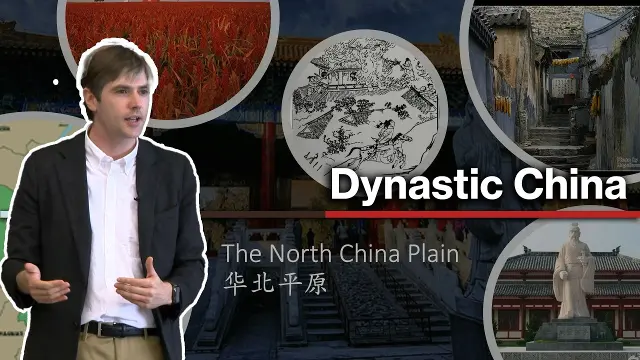
 MIT Lecture One: Introduction to China's Dynastic History
#Chinese History
1 ideas
MIT Lecture One: Introduction to China's Dynastic History
Get new #Chinese History ideas by email
Every Thursday: the week's best ideas, with the newest from #Chinese History.
Related tags
A Beginner's Guide to Chinese History and Its Dynasties
Chinese history is the recorded story of one of the world's oldest continuous civilisations, unfolding across the land we now call China. It runs from Neolithic farming villages and Bronze Age kingdoms, through a long imperial age, to the modern era. Because the written record is unusually deep — clay, bronze, bone, silk, bamboo, paper — historians can follow both the doings of courts and the rhythms of ordinary life.
The dynastic cycle
For most of the past, China was ruled by dynasties: families who claimed the throne and passed it down. A recurring idea was the Mandate of Heaven, the belief that a ruler governed with a kind of cosmic endorsement that could be withdrawn. Good government, fair taxes and order were read as proof of that mandate; famine, rebellion and defeat as its loss. In practice this gave Chinese political thought a moral vocabulary: a dynasty that failed its people had forfeited its right to rule. Historians often describe a pattern of founding vigour, consolidation, decline and collapse, followed by a new house — though real history is messier than the model suggests.
The shape of the story
Read more
The earliest states grew along the Yellow River and later the Yangtze. A period of competing kingdoms ended with unification under a single emperor, who standardised weights, measures and writing — the pattern of unity followed by fragmentation repeats throughout the story. Later dynasties expanded the exam system, built canals, and presided over cities of extraordinary size. Some eras are remembered for openness to foreign trade and ideas, others for introspection and defence. The last imperial dynasty gave way to a republic, and then to the modern state.
Ideas, letters and art
Three traditions shaped much of Chinese thought: Confucianism, with its emphasis on family, ritual and cultivated character; Daoism, with its attention to naturalness and flow; and Buddhism, which arrived from the south and west and was thoroughly transformed. Writing knit the civilisation together — the same characters served speakers of mutually unintelligible languages. Calligraphy grew into a high art, alongside poetry, landscape painting, ceramics and architecture with its timber frames and generous eaves.
Everyday life
Most people were farmers, tied to the agricultural calendar and to the village. The family, not the individual, was the basic unit, and ancestral rites bound generations together. For ambitious families, the civil service examinations offered a path into officialdom, though schooling was never equally available.
Getting started
- Begin with a clear timeline of the dynasties, then read outward from it.
- Remember the scale: China is a continent of regions, and local histories differ sharply.
- Read primary voices — poems, memoirs, letters — alongside surveys.
- Expect change and argument, not a single timeless "China".
Approached with patience, the subject rewards you with a long view of how societies organise power, belief and daily life.
#Chinese History: frequently asked questions
How should someone completely new to Chinese history get started?
Begin with a simple timeline of the dynasties and treat it as the spine you hang everything else on. Once that skeleton is in your head, branch out into whichever periods or themes catch your interest, because placing people and events on the timeline is what makes the subject click.
Do I need any background knowledge or special materials before I begin?
No preparation is required — an ordinary survey history plus an atlas will carry you a long way. It is worth adding primary voices such as poems, memoirs and letters early on, since they show how the same upheavals looked to the people living through them rather than to later historians.
Should I take on the whole civilisation at once, or narrow it down?
Narrowing is usually the surer route: pick a period or a region and go deep before widening out. The civilisation is continent-sized and local histories differ sharply, so a focused start gives you something concrete to compare later reading against.
How do I keep track of everything and actually remember it?
Keep a running timeline and a short list of the questions you are trying to answer, and add to both as you read. Sketching the geography alongside — the rivers, the capitals, the frontiers — helps a great deal, because so much of the story follows the water and the land.
What mistakes do people commonly make when reading about it?
The most frequent is imagining a single unchanging country instead of a shifting set of regions and eras that argued with itself constantly. Another is reading only surveys, which turns the story into a list of rulers; and it is easy to over-trust the tidy rise-and-fall pattern, when real history is far messier than the model.
Any ideas for turning it into something shared, like a family or book-club activity?
Read a period together and pair the reading with something hands-on — trying brush calligraphy, or cooking from a regional cookbook while you discuss the chapter. Watching a documentary and comparing it against what the group read is another easy way to open up an evening.
Videos come from YouTube and posts from Instagram; titles and summaries are our own. All rights belong to their creators.