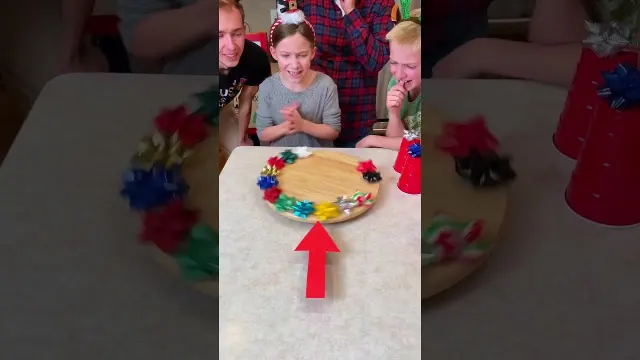
 Christmas Bow Spinner: A Party Game for Family Gatherings
#Christmas Games
1 ideas
Christmas Bow Spinner: A Party Game for Family Gatherings
Get new #Christmas Games ideas by email
Every Thursday: the week's best ideas, with the newest from #Christmas Games.
Related tags
Christmas Games: Ideas for Family Gatherings
Christmas games are the informal, playful side of the festive season: the activities families and friends reach for when the meal is over, the presents are open and the afternoon stretches ahead. They need no special equipment beyond what a house already holds — a bowl, a roll of paper, a pair of scissors — and that is part of their charm. Almost every household has its own version of one, handed down loosely and changed a little each year.
Where the tradition comes from
Games have been part of winter gatherings for a very long time, especially in northern Europe, where long dark evenings kept people indoors together. Many of the games we play now grew out of older parlour and fireside customs: guessing games, blindfold games, forfeits and singing games that filled the hours before and after a meal. Victorian households formalised some of them into indoor party entertainment, and the habit drifted naturally into the modern Christmas living room. The details vary enormously from country to country, but the pattern is the same: a shared activity that gives a mixed group of ages something to do together.
Kinds of Christmas games
Read more
- Guessing games: identifying an object by touch in a bag, guessing how many sweets are in a jar, or asking yes-or-no questions to work out a hidden word. Simple, quiet and easy to adapt for small children.
- Blindfold and forfeit games: a player is gently blindfolded and has to describe, taste or name something, or performs a small silly task drawn from a hat.
- Memory and word games: recalling the contents of a tray before it is covered, or building a growing list of festive items that each player must repeat back.
- Physical party games: pass-the-parcel style rounds, balloon games, or a wrapped gift rolled back and forth on a spinner or dice. These need space and a little supervision.
- Craft-and-play games: making paper decorations, snowflakes or a spinner board first, then using them in the game itself.
- Story and performance games: a group telling a story one sentence at a time, or acting out a scene with improvised props.
What beginners should know
Choose for the group, not the game. A mixture of grandparents and toddlers needs something gentle, with short rounds and no pressure to perform. Explain the rules once, simply, and start before interest fades — most games live or die on their first two minutes. Keep prizes small and plentiful, and let children win sometimes without it being obvious.
It helps to prepare props the day before, so the game does not begin with a search for string. Have a fallback that needs nothing at all, such as a word game or twenty questions, for the moment when a plan does not land. And let the game end while it is still fun — a round that stops early is remembered warmly, while one dragged out for a second hour is not.
Finally, keep it kind. Christmas games work best when losing is funny, when nobody is put on the spot, and when the point is the laughter in the room rather than the score.
#Christmas Games: frequently asked questions
How do I get a Christmas game started when everyone is relaxed and distracted after dinner?
Pick something with almost no setup and explain the rule in a single sentence before interest drifts, then begin immediately rather than waiting for a full crowd. Games tend to live or die in their opening moments, so a quick first round does more to draw people in than a careful briefing. Once a few players are laughing, others usually wander over on their own.
What do I actually need to have on hand for Christmas games?
Most of them run on ordinary household things: a bowl, paper, scissors, a pen, a bag for hiding objects, a scarf for a blindfold. Preparing the props the day before saves the game from turning into a hunt for string at the worst moment. It is also worth having one fallback that needs nothing at all, such as a word game or twenty questions.
Which kind of Christmas game suits a group with both young children and grandparents?
Choose for the people in the room rather than for the game itself: mixed ages do best with gentle guessing, memory or word games where rounds are short and nobody has to perform. Blindfold and forfeit games are fun but can put a shy player on the spot, so keep them optional. Physical party games work well too, provided there is space and someone keeping half an eye on the younger players.
How do I keep a Christmas game from going flat or dragging on too long?
Keep prizes small and plentiful, let children win now and then without making it obvious, and stop while the room is still enjoying it. A round that ends early is remembered warmly, while one stretched out long past its fun is not. If a plan clearly is not landing, switch to something simpler instead of pushing through.
What are common mistakes people make with Christmas games?
Over-explaining the rules, choosing a game that only suits part of the group, and letting a single round run far too long are the usual ones. Another is forgetting that losing should be funny rather than embarrassing, since a game stops being playful the moment someone feels singled out. The point is the laughter in the room, not the score.
Can Christmas games double as a craft activity?
Yes, and it often works well with children who need something to do before or after the meal. Making paper decorations, snowflakes or a simple spinner board first and then using those things in the game gives the activity a shape and a purpose. It also means the props come from what the house already holds.
Videos come from YouTube and posts from Instagram; titles and summaries are our own. All rights belong to their creators.