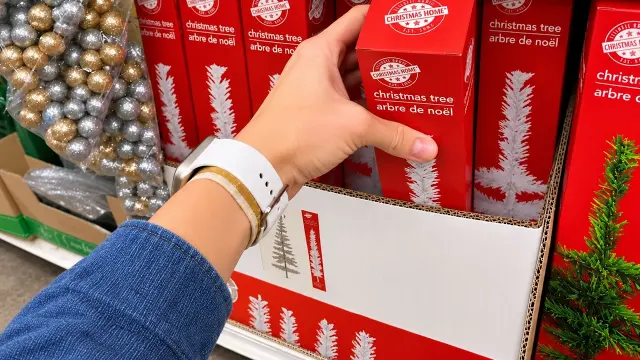
 Mini Christmas Trees Styled in a Window Display
#Christmas Trees
2 ideas
Mini Christmas Trees Styled in a Window Display
 A Tour of a Home Decor Shop Dressed for Christmas
Get new #Christmas Trees ideas by email
Every Thursday: the week's best ideas, with the newest from #Christmas Trees.
Related tags
Christmas Trees: A Guide to Choosing and Decorating
The Christmas tree is the centrepiece of the winter home: an evergreen brought indoors, dressed in lights and ornaments, and gathered around for the quiet rituals of the season. Almost every element of it — the conical shape, the evergreens, the glow — points in the same direction. The tree stays green when everything else has gone bare, and that is precisely why it became a symbol of endurance, hope and continuing life in the darkest part of the year.
Where it comes from
Evergreen boughs have been brought indoors in midwinter across northern Europe since long before the tradition took its familiar shape. The decorated tree as we know it is usually traced to German-speaking lands, where trees were set up in homes and decorated with fruit, nuts, sweets and paper ornaments. The custom travelled outward with migration and marriage, and became widely popular in Britain and North America in the nineteenth century, helped along by illustrations of the royal family's tree and by the growing fashion for domestic celebration. Early ornaments were edible: apples, gilded walnuts, marzipan figures. Glass baubles arrived later as a substitute for the fruit, and the decorated tree settled into the form most people recognise today.
Real or artificial
Read more
Both are legitimate choices, and the honest answer depends on your circumstances. A real tree gives scent, texture and an unevenness that no mould can imitate; it needs regular watering, careful placement away from heat sources, and responsible disposal at the end of the season. An artificial tree offers predictability, no needle drop and repeated use over many years. What matters most is how long you keep what you choose.
If you buy a real tree, look for firm, fresh needles that resist a gentle pull, a trunk that is not split, and even shape on all sides. Cut a slice from the base before you put it in water so it can drink, keep the stand filled, and site it away from radiators and fires.
Styles and approaches
Trees tend to fall into a few broad moods. The traditional look is dense and warm: reds, golds, tartan ribbon, personal ornaments accumulated over decades. The natural look leans on undyed linen, dried citrus, wooden beads, foraged foliage and a restrained palette. The minimal look strips things back to a single colour, matching baubles and white lights on a sparse, well-shaped tree. None is more correct than another, and many homes layer two of them at once.
What beginners should know
Decide the palette before you shop, and let one or two textures do the work rather than adding every idea you like. Put the lights on first, working in sections rather than spiralling randomly, and test them before they go on the tree. Hang larger and heavier ornaments deeper inside the branches for depth, and save the small, precious ones for the outer tips. Step back often. Leave a little breathing space rather than filling every gap. Finally, keep the oldest ornaments. A tree becomes interesting through accumulation, and the mismatched pieces carry the most meaning.
#Christmas Trees: frequently asked questions
How do I choose between a real and an artificial Christmas tree?
Think about your space and routine rather than about which is objectively better. A real tree brings scent, texture and a natural unevenness, but it drinks a lot, dislikes sitting near radiators or fires, and needs a plan for disposal afterwards. An artificial one is predictable, drops no needles and comes back year after year, so the greener choice often comes down to how many seasons you keep it in use.
What should I check before buying a real tree?
Run your hand along a branch and give a few needles a gentle tug — fresh ones hold on and feel firm rather than brittle. Check that the trunk is solid and not split, and turn the tree to make sure the shape is even on every side, since you will see it from more than one angle at home. Once it is indoors, take a thin slice off the base so it can take up water, and keep the stand topped up.
How do I decorate a tree when I have never done one before?
Pick your colours and one or two textures before you buy anything, so the tree reads as a whole instead of a collection of separate ideas. Test the lights first, then wind them on in sections rather than spiralling at random, and hang the heavy ornaments further in among the branches for depth while the small treasured ones go near the tips. Step back regularly and leave a little empty space — a few gaps look better than a tree with every branch filled.
Which decorating style should I go for?
The traditional look is warm and dense, built on deep reds and golds, ribbon and ornaments collected over the years; the natural look leans on linen, dried fruit, wooden beads and foraged foliage in a muted palette; the minimal look keeps to one colour with matching baubles and simple white lights. None is more correct than the others, and plenty of homes quietly combine two of them — a restrained base with a few sentimental pieces layered on top.
How do I keep a cut tree looking good through the season?
Water is the main thing: a fresh cut at the base and a stand that never runs dry will keep needles attached far longer than any other trick. Site the tree away from radiators, fires and sunny windows, because heat is what dries it out and turns it brown. Check the water level every day or so, particularly in the first week when the tree takes up the most.
What are the most common mistakes people make with a Christmas tree?
Buying without a plan is the usual one — ornaments in three unrelated colour schemes and a tree that never quite pulls together. Others are putting the lights on last instead of first, crowding every gap so the shape disappears, and buying a tree too tall for the ceiling once a stand and topper are counted. Keeping the old, mismatched ornaments is rarely a mistake, though: a tree gets its character from the things accumulated on it.
Videos come from YouTube and posts from Instagram; titles and summaries are our own. All rights belong to their creators.