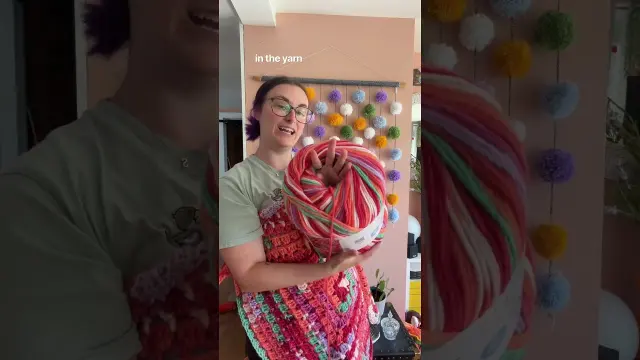
 Crocheting a Lap Blanket From a Single Skein of Caron Anniversary Cake
#Chunky Crochet
1 ideas
Crocheting a Lap Blanket From a Single Skein of Caron Anniversary Cake
Get new #Chunky Crochet ideas by email
Every Thursday: the week's best ideas, with the newest from #Chunky Crochet.
Related tags
Chunky Crochet: A Guide to Big Yarn and Quick Makes
Chunky crochet is the everyday name for work made with thick yarn and a correspondingly large hook. The yarn is usually sold as chunky, bulky, super bulky or roving, and the hook that suits it grows with the weight: a bulky yarn typically calls for something around five and a half to six and a half millimetres, while the heaviest super bulky yarns want considerably more. The appeal is easy to understand: the stitches are big, so the fabric grows quickly, the texture is soft and pronounced, and a project that would take weeks in fine cotton can be finished in a few evenings.
Where it comes from
Heavy yarn is far older than crochet as a hobby. In cold climates, wool was spun thick and worked into garments where warmth mattered more than neatness, and the dense, slightly irregular fabric that resulted was a feature rather than a flaw. Over time, thick yarn moved from practical outerwear into the home, and the oversized stitches that once signalled utility came to be valued for their looks: generous, sculptural, and pleasant to touch.
What it is used for
Read more
- Blankets and throws, from small lap sizes to large bed covers
- Cushions, baskets, floor poufs and rugs
- Scarves, cowls, hats and simple cardigans
- Home accessories such as plant-pot covers and storage baskets
Very small, detailed work is the one thing chunky yarn does poorly. Amigurumi and lace-like patterns lose their definition at this scale.
The main approaches
Most chunky crochet is ordinary crochet with a bigger hook, and the basic stitches behave exactly as they do in finer weights. Single crochet gives a dense, sturdy fabric suited to baskets and rugs; half double and double crochet give more drape and are the usual choice for blankets; the moss or linen stitch makes a beautifully textured, firm cloth. Granny squares work well in chunky yarn and become large quickly, and puff or bobble stitches turn almost exaggerated.
Some makers skip the hook entirely and work with their fingers, which produces very large, loose stitches. Roving — unspun or barely spun fibre — can be worked the same way for dramatic oversized blankets, though it is delicate and sheds.
What beginners should know
Start with a smooth, tightly spun yarn in a light or mid tone, where the stitches are easy to see. Fluffy, hairy and roving yarns hide your work and are difficult to undo. Trust the hook size printed on the label as a starting point, then make a small sample to check the fabric feels right for the project rather than relying on numbers alone.
Thick yarn forgives little: an uneven stitch is very visible, so aim for an easy, relaxed tension rather than tugging the yarn tight. Large hooks and heavy fabric ask more of your hands and wrists, so keep sessions short, support your arms and put the work down when you feel strain.
Check the care label before you begin, especially for wool and roving, which can felt in warm water. And buy enough yarn in one go: slight differences between batches show far more in big stitches than in small ones.
Worked slowly and simply, chunky crochet is one of the most satisfying ways into the craft — few stitches, plenty of texture, and something finished before your enthusiasm runs out.
#Chunky Crochet: frequently asked questions
How do I get started with chunky crochet if I have never crocheted before?
Begin with a smooth, tightly spun thick yarn in a light or mid tone, because pale, even yarn makes the big stitches easy to see while you learn. Pick up the hook size suggested on the yarn label, then work a small sample square to see how the fabric feels. Keep your tension relaxed rather than tight, since an uneven stitch shows clearly at this scale.
What do I need to buy before starting a chunky crochet project?
You need a thick yarn, a large hook matched to its weight, and a pair of scissors or a yarn needle for finishing ends. Add a couple of stitch markers if you plan to work in the round or keep track of long rows. Buy all the yarn for a project at once, because differences between batches are much more obvious in big stitches.
Which kind of chunky yarn should I choose for a blanket versus a basket?
For blankets choose a softer, slightly drapier yarn and work half double or double crochet so the fabric folds rather than stands up. For baskets, rugs and floor poufs, use a firmer, tightly spun yarn with single crochet or the moss stitch to build a dense, sturdy cloth. Fluffy and roving yarns are best kept for dramatic, lightly used pieces, as they shed and are hard to undo.
How should I care for a finished chunky crochet piece?
Read the yarn's care label before you begin and follow it afterwards, since thick wool and roving can felt in warm water. In general, wash gently by hand in cool water and dry the piece flat and shaped rather than hanging it, which stretches heavy fabric. Brush or shake out dust on baskets and rugs instead of soaking them.
What are common mistakes people make with chunky crochet?
The most frequent ones are choosing a hairy or barely spun yarn that hides the stitches, and crocheting so tightly that the fabric turns stiff and the hands ache. Another is guessing the hook size instead of making a small sample first. Because large hooks and heavy fabric are demanding, short sessions with supported arms keep the work comfortable.
What can I actually make with chunky crochet, and what should I avoid?
It suits blankets and throws, cushions, baskets, rugs, floor poufs, scarves, cowls, hats, simple cardigans and small home accessories such as plant-pot covers. Granny squares, puff stitches and bobbles all look wonderfully bold at this scale. What it does poorly is fine detail, so amigurumi and lace patterns lose their definition.
Videos come from YouTube and posts from Instagram; titles and summaries are our own. All rights belong to their creators.