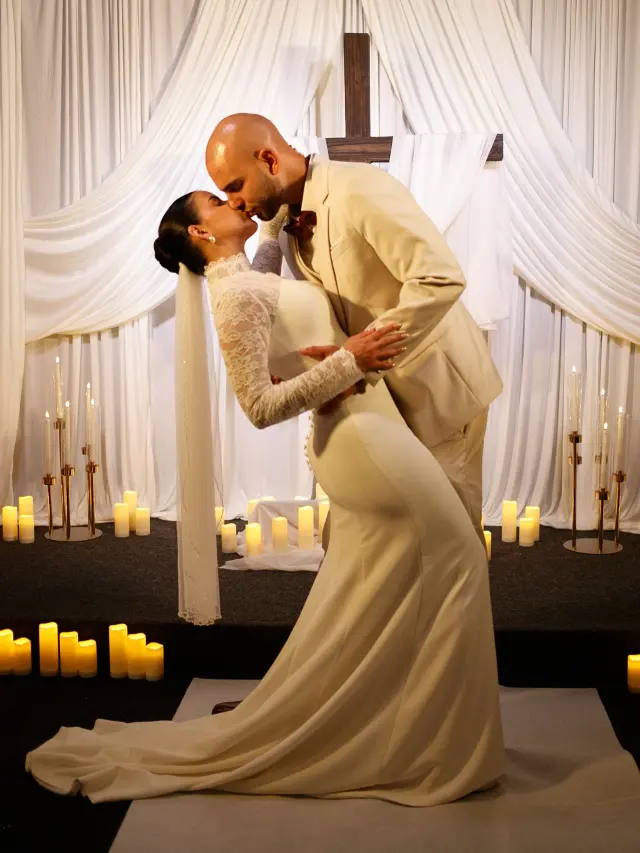
 Elegant church wedding inspiration with a vintage aesthetic and candlelight
#Church Wedding
1 ideas
Elegant church wedding inspiration with a vintage aesthetic and candlelight
Get new #Church Wedding ideas by email
Every Thursday: the week's best ideas, with the newest from #Church Wedding.
Related tags
Church Wedding Guide: Traditions, Ceremony and Planning
A church wedding is a marriage celebrated inside a place of worship, and what sets it apart is that the ceremony is first a religious act and only afterwards a social one. The couple stands before a minister and a congregation, and the promises they make are understood to be witnessed by the community and, in most traditions, by God. That double layer is why these weddings tend to feel quieter and more formal than a civil ceremony on a beach or in a garden.
Where the tradition comes from
Christian marriage rites go back many centuries. In early centuries couples were simply blessed at home; later the church gradually took the ceremony into the building itself, and by the medieval period the doorway, the exchange of consent in front of witnesses and the blessing inside the church had become familiar. The words have been revised many times since, and the details vary widely between denominations, but the shape endures: gathering, readings, vows, rings, a blessing, and a sending out.
What happens in the ceremony
Read more
The couple usually enters after guests are seated, often escorted by a parent, though many now walk in together. The service itself consists of hymns or songs, one or more readings from scripture, a short address, the exchange of vows and rings, prayers, and a blessing. Some churches include the lighting of a unity candle, a handfasting-style binding, or a moment of silence for those who have died. After the final blessing the couple signs the register with witnesses, and only then do they leave together.
The main kinds
The difference between churches matters more than most couples expect. A Roman Catholic wedding usually includes a full Mass unless the couple ask for the shorter form. Anglican and Episcopal services follow a set liturgy with wide room for music choices. Orthodox ceremonies are longer and include crowning and circling. Free churches and many Protestant congregations give the minister more freedom to shape the service around the couple. A civil ceremony held in a church is not the same thing, and not every building is licensed for it.
What beginners should know
Book early. Churches are busy with regular worship, and a date that suits you must also suit the parish. Ask about the fee, the paperwork, and how many guests the building holds, because old churches are often smaller than they look. Meet the minister before you commit; a good working relationship matters more than the architecture. For music, check what the organist or musicians can play and whether recorded music is allowed. Flowers, candles and decorations are usually welcome but should respect the space, and some churches discourage confetti or have rules about photography during the vows.
Plan the walk from the church to the reception as part of the day rather than an afterthought, and tell your guests where to park or how to travel. Above all, remember that the ceremony is the point, not the prelude to a party. A church wedding works best when the couple treat the building and the words with a little patience, and let the day carry its own calm.
#Church Wedding: frequently asked questions
How do we start planning a church wedding?
Start by talking to the church itself rather than fixing a date first, since the parish's own calendar of worship comes before any booking. Ask about availability, the paperwork they require, and what the minister expects from couples preparing for the ceremony. Sorting this out early saves a great deal of rearranging later.
What do we need to arrange before the ceremony?
Beyond the booking, you'll need to confirm the legal side the church asks of you, meet the minister to discuss the order of service, and settle the music with whoever plays there. Guest numbers matter too, because older buildings often hold fewer people than they appear to from outside. Flowers, candles and photography rules are usually agreed with the parish in advance.
Which kind of church wedding should we choose?
It depends less on the building than on the tradition you belong to or feel at home in. Catholic, Anglican, Orthodox and free-church services differ in length, structure and how much freedom the minister has to shape them, so attend a service or two before deciding. If you want a religious ceremony in a church building but not a full liturgy, say so plainly when you first enquire.
How should we care for the church and its space on the day?
Treat the building with the same care you would a borrowed home: keep decorations modest and removable, and check before using confetti, open flames or anything fixed to the fabric. Ask where photography is permitted, particularly during the vows, so nobody is moving about at the wrong moment. Leaving the space as you found it is both good manners and usually a condition of the booking.
What ideas make a church ceremony feel special without overwhelming it?
Music does most of the work, so choose pieces the musicians play well rather than pieces that merely sound impressive. Candlelight, a few well-placed flowers and a quiet moment of remembrance can carry more weight than elaborate decoration. Let the readings and the vows have room to be heard, and the ceremony will feel considered rather than staged.
What mistakes do couples commonly make with a church wedding?
The usual one is treating the ceremony as a formality before the reception, which shows in rushed timing and distracted guests. Another is assuming the reception venue and the church are close enough to move between without planning the journey and parking. Finally, couples often leave the minister out of the planning until late, when a good working relationship would have made everything easier.
Videos come from YouTube and posts from Instagram; titles and summaries are our own. All rights belong to their creators.