 Stunning London Skyline View
#Cityscape
2 ideas
Stunning London Skyline View
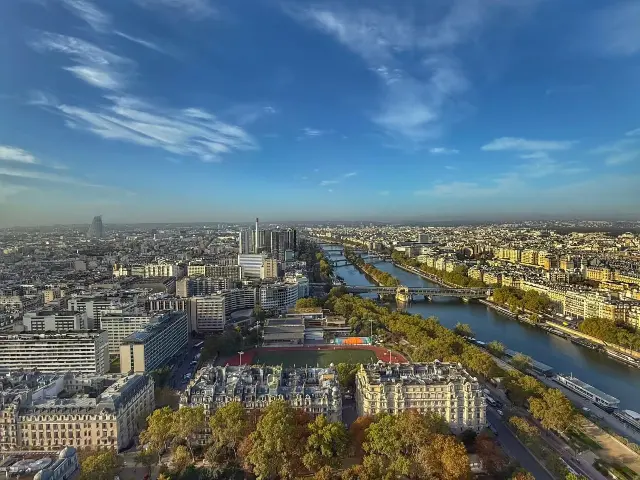 Elevated Panoramic Views Over Paris
Get new #Cityscape ideas by email
Every Thursday: the week's best ideas, with the newest from #Cityscape.
Related tags
Cityscape Photography and Design Inspiration
A cityscape is the view, character, or visual composition of a city. It can show a skyline, streets, rooftops, bridges, towers, and the spaces between them. More than just a collection of buildings, a cityscape tells you how a city feels: busy or calm, historic or modern, dense or open, formal or irregular.
The idea comes from landscape painting and drawing, where artists began to include towns and cities as subjects in their own right. Over time, cityscapes became important in photography, illustration, architecture, and travel imagery. Today, people use the word for both wide panoramic views and close details that reveal the rhythm of urban life.
What makes a cityscape interesting
A strong cityscape usually has a clear structure. It may be defined by repeating windows, strong vertical lines, layered rooftops, or a recognizable skyline. Some cityscapes focus on grand landmarks, while others are more about everyday streets, alleyways, and the way buildings frame light and shadow.
Read more
You can think of cityscapes in a few broad kinds:
- Skyline views, where tall buildings or landmarks form a distant outline
- Street-level views, where the eye moves through roads, facades, signs, and people
- Architectural views, which highlight form, symmetry, texture, and detail
- Night cityscapes, where lights, reflections, and contrast become central
- Atmospheric views, where weather, haze, rain, or fog soften the scene
How to look at a cityscape
If you are photographing, drawing, or simply observing a city, try to notice the relationship between shape and space. Ask yourself what dominates the scene: height, depth, pattern, or movement. The most memorable cityscapes often balance order and complexity.
Light matters a great deal. Early morning and late afternoon can make forms feel softer and longer, while overcast light can bring out detail evenly. At night, artificial light creates a different mood, often emphasizing contrast and reflection.
Tips for beginners
If you want to capture a cityscape well, keep your composition simple at first. Choose one clear focal point rather than trying to include everything. Look for strong lines that lead the eye, such as roads, riverbanks, rows of buildings, or bridges. Changing your viewpoint can make a big difference: a higher vantage point gives a broad overview, while street level feels more intimate and immediate.
A few practical ideas:
- Stand still and study the frame before taking or drawing the scene
- Use foreground elements to add depth
- Include a mix of large forms and smaller details
- Watch for clutter that distracts from the main structure
- Try different weather and lighting conditions for a new mood
Why cityscapes matter
Cityscapes help you understand how people shape space. They show history, planning, identity, and daily life all at once. Whether you are looking at a skyline or a quiet side street, a cityscape invites you to notice patterns, contrasts, and the personality of a place.
#Cityscape: frequently asked questions
What exactly is a cityscape, and how is it different from a landscape?
A cityscape is the visual character of a city — its skyline, streets, rooftops, bridges, and the spaces connecting them — rather than open countryside. It grew out of landscape painting, when artists started treating towns as subjects worth depicting in their own right. The distinction is mainly one of subject: a landscape shows nature, while a cityscape shows how people have shaped space.
How do I get started with cityscape photography or drawing?
Start by simplifying: pick a single clear focal point instead of trying to fit the whole city into one frame. Look for strong lines that pull the eye along, such as a road, a riverbank, a bridge, or a row of facades, and use something in the foreground to create depth. Standing still and studying the scene before you shoot or sketch makes more difference than any gear.
Which kind of cityscape should I choose?
It depends on what you want the image to say. Skylines read as grand and distant, street-level views feel intimate and busy, architectural close-ups emphasise pattern and symmetry, night scenes lean on light and reflection, and hazy or rainy weather gives a softer, moodier result. Try the one that matches the mood of the place you are standing in.
What time of day is best for shooting a cityscape?
Early morning and late afternoon tend to be the most forgiving, because low light stretches forms and softens edges. Overcast light flattens shadows and reveals even detail, which suits architectural subjects, while night brings out contrast and reflections. Rather than hunting a perfect hour, revisit the same spot in different conditions and compare the moods.
What are the most common mistakes beginners make with cityscapes?
The usual one is trying to include everything, which leaves the eye with nowhere to rest. Clutter is the close second — signs, wires, and background objects that fight the main structure and dilute it. Changing your vantage point fixes most of this: a higher position gives an overview, while dropping to street level makes the scene feel immediate.
How do I care for cityscape prints or artwork at home?
Keep framed pieces out of direct sunlight and away from damp rooms, since fading and warping both come from exposure and humidity. Handle prints by the edges or with clean hands, and hang them where the light is even rather than glaring. For anything valuable or on unstable paper, ask a professional framer about protective glazing and backing.
Videos come from YouTube and posts from Instagram; titles and summaries are our own. All rights belong to their creators.