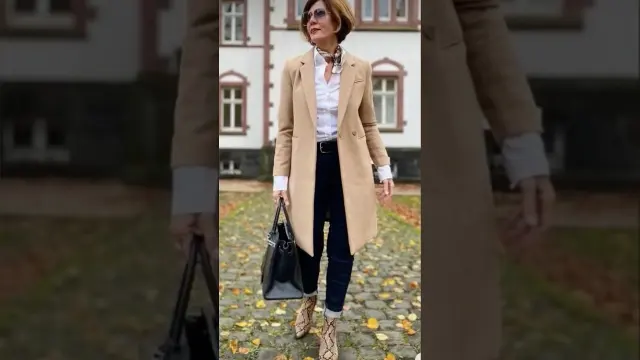
 Timeless Parisian Style Guide for Women Over Sixty
#Classic Outfits
1 ideas
Timeless Parisian Style Guide for Women Over Sixty
Get new #Classic Outfits ideas by email
Every Thursday: the week's best ideas, with the newest from #Classic Outfits.
Related tags
Classic Outfits: A Guide to Timeless Dressing
A classic outfit is one that doesn't ask to be noticed for being new. It works because of cut, fabric and proportion rather than novelty, which is why the same combinations keep returning in one form or another. The idea goes back to the tailoring traditions of the nineteenth and twentieth centuries, when suits, coats and shirts were built to be worn for years and repaired rather than replaced. What survives from that inheritance is a simple principle: choose pieces whose shape flatters the body and whose quality holds up, then let them repeat.
What makes an outfit classic
Three things tend to be present. First, a clear silhouette: a defined shoulder, a waist that sits where it should, a hem that falls cleanly. Second, restrained colour: neutrals, deep tones and a small number of shades that sit well together. Third, fabrics with body and weight, such as wool, cotton, linen, silk and good knitwear, which drape properly and improve with wear instead of losing shape after a few washes.
The building blocks
Read more
Most timeless wardrobes rest on a handful of pieces that mix easily:
- A well-cut blazer, single or double breasted, in a neutral tone
- Plain trousers or a skirt with a straight or gently tapered line
- A crisp shirt, and a fine-knit sweater in a plain colour
- A simple dress with a defined waist
- A trench or wool coat, cut to the knee or below
- Leather shoes, low heels or flats, in black, brown or navy
- One good bag with clean lines and no busy hardware
Add a scarf, a belt or a piece of simple jewellery and the same outfit moves from daytime to evening.
Fit before anything else
The single most useful habit is learning what a good fit looks like on you. Shoulder seams should sit at the edge of your shoulder, sleeves should end at the wrist bone, and trousers should break once over the shoe. A modest alteration to a hem or waist often does more for an outfit than buying something new. If you sew, even basic skills let you adjust hems, take in seams and replace buttons.
Choosing colours and fabrics
Build around two or three base colours you actually enjoy wearing, then add one accent you return to. Check fabric content before buying: natural fibres tend to age better, hold colour longer and breathe more comfortably. Look at the seams, the lining and the buttons, which reveal how much care went into construction.
Wearing it well
Classic dressing is mostly maintenance and confidence. Store knitwear folded, hang tailoring on proper hangers, brush coats, and mend small damage early. Press clothes before wearing them, keep shoes polished, and resist the urge to add one more accessory. The result is quiet, comfortable and repeatable, which is exactly the point.
#Classic Outfits: frequently asked questions
How do I start building a classic wardrobe without replacing everything at once?
Start with the pieces you reach for most often — a well-cut blazer, plain trousers or a straight skirt, a crisp shirt and a simple dress with a defined waist — and choose them in tones that sit easily together. Add one item at a time as you notice genuine gaps, rather than shopping for a whole new look in a single go. The aim is a small set of shapes that mix with what you already own, so the wardrobe grows by combination rather than by volume.
What should I check in the fabric and construction before buying a classic piece?
Read the fabric content first: natural fibres such as wool, cotton, linen, silk and good knitwear tend to drape properly, hold their colour and improve with wear. Then turn the garment inside out and look at the seams, the lining and the buttons, because those details show how much care went into making it. A restrained tone in a sound fabric will outlast a more eye-catching piece that loses its shape.
How can I tell whether a garment actually fits me properly?
Check the landmarks: shoulder seams should sit at the edge of your shoulder, sleeves should end at the wrist bone, and trousers should break once over the shoe. If something is close but not quite right, a modest alteration to a hem or waist usually does more for the outfit than buying a replacement. Learning what a good fit looks like on your own body is the most useful habit in classic dressing.
How do I care for classic pieces so they last?
Store knitwear folded rather than hung, keep tailoring on proper hangers, brush coats and press clothes before wearing them. Deal with small damage early — a loose button or a dropped hem is quick to fix and much harder to rescue later. Polished shoes and tidy details matter as much as the clothes themselves.
Can the same classic outfit work for both daytime and evening?
Often it can, because the base pieces are deliberately plain and quiet. A scarf, a belt or a piece of simple jewellery shifts the same combination from day to evening without adding anything new. Resist the urge to keep adding accessories — one considered change usually reads better than several.
What are the common mistakes people make with classic dressing?
The usual ones are choosing a piece for novelty rather than for cut and proportion, and ignoring fit in favour of the label or the look on the rail. Another is letting colour drift, so nothing quite works with anything else, or over-accessorising an outfit that was already complete. Keeping the silhouette clear, the palette restrained and the fabrics substantial avoids most of these.
Videos come from YouTube and posts from Instagram; titles and summaries are our own. All rights belong to their creators.