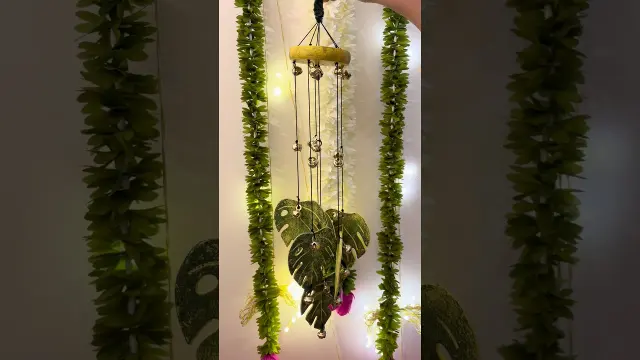
 DIY clay leaf wind chime for handmade home decor
#Clay Craft
1 ideas
DIY clay leaf wind chime for handmade home decor
Get new #Clay Craft ideas by email
Every Thursday: the week's best ideas, with the newest from #Clay Craft.
Related tags
Clay Craft: A Beginner's Guide to Shaping by Hand
Clay craft is the practice of shaping soft, pliable material into objects and letting it harden or be fired so it keeps its form. It is one of the oldest human activities — people have made pots, figurines and tiles from earth for thousands of years — and it remains popular because the barrier to entry is low. You need very little equipment, mistakes can be reworked while the clay is still damp, and the results are useful as well as decorative.
The main kinds of clay
The material you choose shapes what you can make.
- Air-dry clay hardens on its own as moisture evaporates. It needs no kiln, which makes it the friendliest option for home crafting, though finished pieces are more fragile and water-sensitive.
- Polymer clay is a synthetic modelling material that cures in an ordinary oven at low temperature. It holds fine detail well, comes in many colours, and is a favourite for jewellery, miniatures and small figures.
- Ceramic clay — earthenware, stoneware and porcelain — is the traditional potter's material. It requires firing in a kiln to become durable, so it usually means working in a studio or a class rather than at the kitchen table.
- Paper clay and self-hardening mixtures are lighter and cheaper alternatives, often used for sculptures and children's projects.
Read more
Techniques worth learning
Hand-building is the natural starting point. Pinching a ball of clay into a bowl teaches you how the material responds to pressure. Coiling — rolling long ropes and stacking them — lets you build taller forms. Slab work means rolling the clay flat and joining pieces, which suits boxes, tiles and flat ornaments.
Whatever you build, joining matters. Score the two surfaces with a fork or pin, wet them slightly, and press them together firmly; a weak join is the most common reason a piece falls apart. Keep your clay covered between sessions so it does not dry out, and work on a non-stick surface or a sheet of paper.
Sculpting small figures relies on the same logic at a finer scale: build a support from wire or foil, add clay in layers, and refine with simple tools — a blunt knife, a cocktail stick, a damp finger.
Getting started and practical tips
Buy a small amount of one type of clay first and finish a project before investing in more. Wash your hands between colours to avoid muddying pale shades. Dry or cure pieces slowly and evenly; rushing the process causes cracks. When a piece is finished, sealing it with an appropriate varnish or glaze helps protect the surface, particularly for air-dry and polymer work.
Keep your workspace ventilated and dust-free, and follow the maker's instructions on the packet for curing times and safety.
Clay rewards patience more than talent. Start with something small, accept that the first attempts will be uneven, and let each piece teach you how the material wants to move.
Videos come from YouTube and posts from Instagram; titles and summaries are our own. All rights belong to their creators.