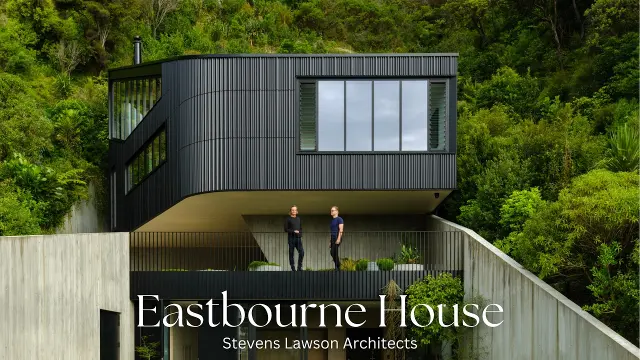
 Inside Eastbourne House: New Zealand Home of the Year
#Cliffside Home
1 ideas
Inside Eastbourne House: New Zealand Home of the Year
Get new #Cliffside Home ideas by email
Every Thursday: the week's best ideas, with the newest from #Cliffside Home.
Related tags
Cliffside Homes: Living at the Edge of Land and Sea
A cliffside home is a house placed where the land gives way to water, and that single fact shapes almost everything else about it. You get a horizon instead of a fence, weather instead of neighbours close by, and a daily reminder of scale. You also get wind, salt, damp air and ground that was never meant to hold a building. Most of what makes these houses beautiful and what makes them difficult come from the same source.
How the idea developed
People have built on high coastal ground for a very long time, often for practical reasons: a raised position was easier to defend, easier to watch the water from, and left the flatter land below free for growing and grazing. Older examples tend to hug the contours — thick stone walls, small openings, roofs pitched to shed rain and hold their weight against gales. Later, better roads and modern engineering made remoter edges reachable, and the cliff started to be treated as a site to build on rather than a boundary to build behind. The result is the modern clifftop house: open, glazed, and often deliberately precarious in appearance.
Three broad approaches
Read more
The most common is the house that sits back from the edge, on level ground, with the view as its main luxury. A second type is cut into the slope, so that the house is partly buried on the landward side and opens out to the sea — sheltered from wind, discreet from above. The third is the cantilevered house, which projects past its base and appears to hang. Each sets up a different relationship with the ground, and each asks different things of the structure underneath.
What to establish first
Before you fall in love with a site, find out what the ground is doing. Coastal cliffs are shaped by erosion, and the rate and pattern of that change vary enormously from place to place; a geotechnical survey and the local authority's coastal records matter far more than any view. Check drainage and how surface water leaves the site, look at how wind is funnelled by the surrounding landform, and confirm what planning rules apply to building near an edge. Access for construction and for maintenance is often the hardest practical problem, and worth thinking about early.
Materials and detailing
Salt and wind are unforgiving. Stone, concrete and well-detailed timber tend to age gracefully; metal fixings, hinges and frames need to be chosen for a coastal setting. Large glazing brings the view in but also heat, glare and condensation, so shading and ventilation deserve real thought. Sheltered courtyards, deep reveals, screens and windbreaks make outdoor space usable, and planting with tough native coastal species helps hold soil and soften the building into the landscape.
Living with the weather
A cliffside house asks for a rhythm of maintenance — gutters, seals, paint, drainage — and rewards you with light that changes hourly and a sense of distance that is hard to find anywhere else. Go in with your eyes open about the exposure, and it can be a profoundly calm place to be.
#Cliffside Home: frequently asked questions
How do I start planning a cliffside home?
Begin with the site rather than the design — commission a geotechnical survey and review the local authority's coastal erosion records before you commit to anything. Confirm the planning rules that apply near an edge, and work out early how builders and future maintenance will actually reach the property. Falling for the view first and asking structural questions later is the most common way these projects go wrong.
What should I check about the land before buying a coastal site?
Find out how the cliff is changing, since coastal ground is shaped by erosion and the pace of that change differs greatly from one stretch to the next. Look at where surface water goes, how the surrounding landform channels wind, and whether services and vehicle access are realistic. A site that looks stable can still be a poor place to build if drainage or access is unresolved.
Which approach suits me — set back, cut into the slope, or cantilevered?
A house set back on level ground is the simplest to build and maintain, and treats the view as its main luxury. Building into the slope gives shelter from wind and privacy from above, while a cantilevered design creates the most dramatic effect but demands the most of the engineering underneath. Choose based on how much exposure and structural complexity you are willing to take on.
What materials hold up best in salt and wind?
Stone, concrete and carefully detailed timber weather well over time, while fixings, hinges and frames should be specified for coastal conditions rather than pulled from a general catalogue. Large glazing brings the view in but also brings heat, glare and condensation, so plan shading and ventilation alongside it. Deep reveals, screens and sheltered courtyards make the outdoor spaces genuinely usable.
How much upkeep does a cliffside house need?
Expect a regular rhythm of maintenance covering gutters, seals, paint and drainage, because the exposure that makes these houses striking also wears them down. Check the building after storms rather than waiting for a scheduled visit, and address small failures before weather gets into them. In return you get light that shifts hour by hour and a sense of distance that is hard to find elsewhere.
How can I make the outdoor space usable and hold the ground together?
Use screens, windbreaks and sheltered courtyards to break up the wind, and think about where sun and glare fall through the day. Plant tough native coastal species, which help stabilise soil and settle the building into the landscape. Grouping seating and planting into protected pockets usually works better than trying to tame the whole plot.
Videos come from YouTube and posts from Instagram; titles and summaries are our own. All rights belong to their creators.