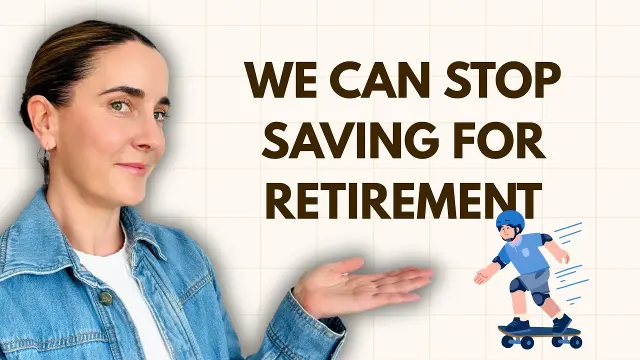
 How We Reached Coast Fire and Our Actual Numbers
#Coast FIRE
1 ideas
How We Reached Coast Fire and Our Actual Numbers
Get new #Coast FIRE ideas by email
Every Thursday: the week's best ideas, with the newest from #Coast FIRE.
Related tags
Coast FIRE: What It Means and How It Works
Coast FIRE sits inside the wider FIRE movement — Financial Independence, Retire Early — but it asks a smaller, quieter question. Instead of aiming to quit work as soon as possible, it asks how much you need to have invested today so that, if you stop adding money, ordinary growth will still carry that balance to enough by the time you reach a conventional retirement age.
The name comes from the idea of a cyclist who stops pedalling and coasts. Effort is front-loaded. In the early years you save and invest aggressively, then at some point you reach your "coast number" and ease off. You may still work, often in something less demanding or more meaningful, but you no longer need to save for retirement. Your income can cover your current life.
How the idea works
The coast number is not one fixed figure; it depends on your age, your expected spending in retirement, and how many years of growth remain before you need the money. Younger people need to save less for the same target, because compounding has more time to work. Someone close to retirement needs to have saved nearly the whole amount already.
Read more
Because the calculation rests on assumptions about investment returns and inflation, it is a planning tool rather than a promise. A cautious saver runs the numbers with modest assumptions, revisits them periodically, and treats the result as a range rather than a precise target.
Where it fits among the FIRE variants
- Lean FIRE: reaching independence on a deliberately small budget.
- Fat FIRE: reaching independence while maintaining generous spending.
- Barista FIRE: reaching the point where part-time work covers your costs.
- Coast FIRE: reaching the point where you can stop saving, while still working.
The distinctions overlap, and many people move between them as their circumstances change.
What beginners should know
Start with what you actually spend, since that number drives everything else. Then estimate what you would need invested to support that spending indefinitely — a common approach is to apply a conservative withdrawal rate to your target annual costs, and to test how that holds up under weaker market conditions.
Keep costs low, diversify broadly, and automate contributions so the early saving phase happens without constant decisions. Remember that taxes, pensions and any employer contributions all affect the picture.
Practical cautions
Coasting assumes you keep working long enough to cover your life, and that you can keep doing so. Health problems, redundancy or a change in family circumstances can interrupt that plan, so an emergency fund and some flexibility matter. Markets do not deliver steady returns; a poor decade early in the coasting phase can set you back.
Above all, treat Coast FIRE as a way to buy options — the freedom to choose less stressful work — rather than a guarantee.
Videos come from YouTube and posts from Instagram; titles and summaries are our own. All rights belong to their creators.