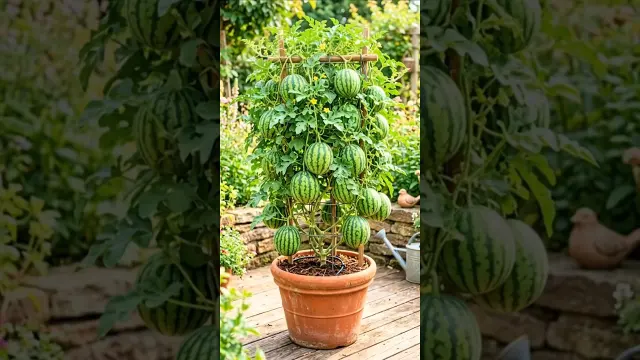
 How to Grow Watermelon in a Container Using Vertical Gardening
#Container Gardening
1 ideas
How to Grow Watermelon in a Container Using Vertical Gardening
Get new #Container Gardening ideas by email
Every Thursday: the week's best ideas, with the newest from #Container Gardening.
Related tags
Container Gardening Guide
Container gardening is the practice of growing plants in pots, boxes, tubs, baskets, and other containers instead of planting them directly in the ground. It is used for flowers, herbs, vegetables, small shrubs, and even some trees, making it a flexible way to garden when space, soil, or mobility is limited. You can garden on a balcony, patio, doorstep, windowsill, or in a small yard, and you can move plants around to suit the light and the weather.
Why people choose container gardening
Container gardening is useful when you want more control over soil, drainage, and placement. It can help you garden in places where the ground is poor, compacted, or unavailable. It also lets you create a tidy, decorative display and group plants with similar needs together. For many people, it is an easier way to begin gardening because it can start small and grow over time.
Choosing the right container
Read more
The best container is one that is large enough for the plant’s roots and has drainage holes so excess water can escape. A pot that is too small can dry out quickly and limit growth, while one that is too large may hold more moisture than a young plant can use. Different materials such as terracotta, ceramic, plastic, wood, or metal all have their own look and feel, but the most important thing is that the container suits the plant and the space you have.
Soil, watering, and placement
Use a potting mix made for containers rather than garden soil, which can become heavy and compacted in pots. Container plants usually need watering more often than plants in the ground because their roots have less soil around them and containers dry out faster. Check the soil regularly and water when the top layer feels dry, adjusting for heat, wind, and plant type. Most plants also need the right balance of sun and shade, so pay attention to light levels before placing a pot.
What to grow
Many plants can thrive in containers if the pot is the right size. Herbs, leafy greens, compact flowers, strawberries, dwarf varieties of vegetables, and small ornamental plants are all common choices. Some climbing plants can be trained on a support, while trailing plants can soften the edges of a pot or hanging basket. When choosing plants, think about their mature size, light needs, and how much care you want to give them.
Practical tips for success
- Start with a few easy plants rather than filling every pot at once.
- Make sure containers do not sit in water after heavy rain or watering.
- Feed plants gently if the potting mix becomes tired over time, following the needs of the plant.
- Remove faded flowers and yellowing leaves to keep plants tidy.
- Group pots with similar water and light needs together.
- Re-pot or divide plants when they become crowded.
Container gardening is a simple, creative way to bring plants into your daily space. With the right container, good soil, and steady care, you can grow a healthy, attractive garden in almost any setting.
#Container Gardening: frequently asked questions
How do I start a container garden if I've never gardened before?
Begin with just a few easy, forgiving plants and a couple of containers rather than filling every pot at once. Pick a spot you already pass by daily, so you notice when the soil dries out, and choose containers with drainage holes that are big enough for the plant's roots. Starting small makes it easier to learn how the light, water, and weather behave in your space before you add more.
What do I actually need to get going?
You need containers with drainage holes, a potting mix made for containers rather than garden soil, and a watering can you can handle easily. Add plants suited to the light where the pot will sit, plus something to lift pots off the ground or a saucer arrangement that doesn't leave roots standing in water. A gentle feed and a pair of snips for deadheading are handy once plants settle in.
Should I choose terracotta, plastic, wood, or metal pots?
The material mostly affects looks, weight, and how fast the pot dries out, so pick what suits your space and is comfortable to move. More important is that the container is large enough for the roots and has holes for excess water to escape. A pot that is too small dries out quickly and limits growth, while an oversized one can stay wetter than a young plant can handle.
How often do container plants need watering?
More often than plants in the ground, because a pot holds less soil around the roots and dries out faster. Check the soil regularly and water when the top layer feels dry, adjusting for heat, wind, and the type of plant. Make sure pots never sit in water after rain or watering, since soggy roots do more harm than a missed day.
What can I grow in pots on a balcony or patio?
Herbs, leafy greens, compact flowers, strawberries, dwarf vegetable varieties, and small ornamental plants are all reliable choices. Climbing plants can be trained up a support, while trailing ones soften the edge of a pot or hanging basket. Before buying, think about each plant's mature size, its light needs, and how much care you want to give it.
What are the most common mistakes with container gardening?
Using garden soil in pots, choosing containers without drainage, and letting pots stand in water are the usual culprits. Another is overcrowding — squeezing too many plants into one pot or skipping re-potting when roots become crowded. Removing faded flowers and yellowing leaves, feeding gently when the mix gets tired, and grouping pots with similar water and light needs go a long way toward keeping things healthy.
Videos come from YouTube and posts from Instagram; titles and summaries are our own. All rights belong to their creators.