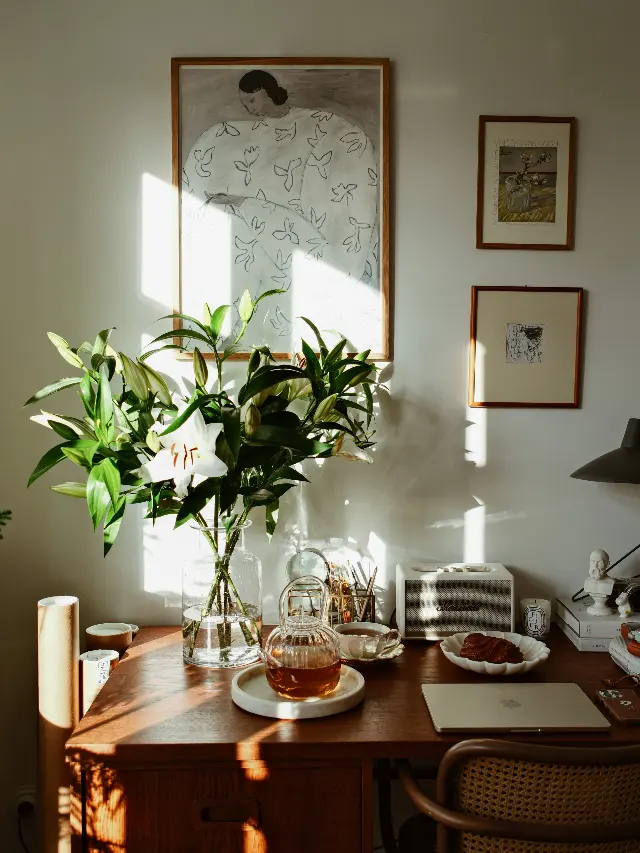
 A quiet Sunday coffee moment in a cosy, styled workspace corner
#Cosy Decor
1 ideas
A quiet Sunday coffee moment in a cosy, styled workspace corner
Get new #Cosy Decor ideas by email
Every Thursday: the week's best ideas, with the newest from #Cosy Decor.
Related tags
Cosy Decor: Creating Warmth at Home
Cosy decor is a way of furnishing and styling a room so that it feels warm, calm and lived in. It is less a single style than an intention: the aim is comfort you can feel the moment you walk in, rather than a look designed to impress from a photograph. Where minimalist interiors often favour cool surfaces and clear space, cosy decor leans towards softness, layered textiles, gentle light and objects that carry a bit of personal history.
The idea has roots in several traditions. Northern European homes have long been built around the need to feel sheltered during long, dark winters, which is why wool, sheepskin, candles and wood appear so often in Scandinavian and British interiors. English country house style contributed deep armchairs, patterned fabrics and rooms arranged for conversation. Japanese and other Asian influences brought an appreciation of natural materials, muted colours and the quiet pleasure of a few carefully chosen objects. What these traditions share is a belief that a home should offer rest.
Beginners usually do best by working from the largest surfaces upwards. Floor coverings make the quickest difference: a rug underfoot, a throw over the back of a sofa, cushions in a mix of textures. Mixing materials is what stops a room feeling flat, so combine something smooth with something nubby, something matte with a little sheen. Colours in cosy schemes tend to be warm and slightly muted, such as clay, ochre, moss, rust, cream and soft brown, often grounded by deeper tones on larger pieces.
Light matters as much as anything you can buy. Rather than one bright overhead source, layer several small ones at different heights: a floor lamp, a table lamp, a candle or two. Warm-toned bulbs and dimmable options let you change the mood from task to rest. Curtains and blinds that actually close help a room feel enclosed, and enclosure is a large part of comfort.
Read more
Texture carries the theme further. Wood, linen, cotton, wool, rattan, stoneware and aged metal all soften a space and improve with time. Books, plants, framed pictures and small collections add life and a sense of someone living there, which no showroom arrangement can imitate. A little imperfection, a slightly mismatched chair, a worn wooden table, usually helps rather than hurts.
A few practical points worth knowing. Clutter is not the same as cosiness: edit as you add, so each object has room to be seen. Keep walkways clear, and make sure any real flame, such as candles or a fire, is never left burning unattended and is kept away from loose fabric. If you rent, or have a small budget, start with lighting, textiles and scent, which are inexpensive, easy to change and make a noticeable difference.
Above all, cosy decor should reflect how you actually live. A room built around the way you sit, read, eat and rest will always feel warmer than one assembled purely for looks.
#Cosy Decor: frequently asked questions
What exactly is cosy decor, and how does it differ from minimalism?
Cosy decor is about how a room feels rather than how it photographs: the goal is warmth, calm and a sense of being lived in. Minimalist rooms tend to rely on clear surfaces, cool tones and a pared-back look, while cosy rooms layer soft textiles, gentle light and objects with personal meaning. Think of it as an intention rather than a fixed style you have to match.
How do I start making a room feel cosy without redecorating the whole space?
Work from the biggest surfaces downwards, since those change the mood fastest. Put something soft underfoot, drape a throw where you actually sit, and add cushions in contrasting textures before thinking about paint or furniture. If you rent or are on a tight budget, light, textiles and scent give the most noticeable change for the least commitment.
What do I actually need to buy to get the cosy look?
Very little is essential: soft floor coverings, a throw or two, mixed-texture cushions and several small light sources will carry most of the effect. After that, natural materials such as wood, linen, wool, rattan and stoneware do more for a room than decorative extras. Books, plants and framed pictures finish it off, and those can often come from what you already own.
Which colours and materials should I choose for a cosy room?
Warm, slightly muted shades work best, with deeper tones anchoring the larger pieces and lighter ones kept for smaller accents. The key is contrast in texture rather than only in colour, so pair something smooth with something nubby, and something matte with a touch of sheen. A room with only one surface finish tends to feel flat however nice the palette is.
How do I look after the wool, linen and other natural textiles in a cosy room?
Natural fibres reward gentle treatment: air wool and wool blends between wears, shake out cushions and throws, and wash linen and cotton on a soft cycle with a mild detergent, drying them away from direct heat. Rotate cushions and throws so wear and fading stay even. Wood and stoneware need little more than dusting and an occasional wipe with a barely damp cloth.
What mistakes make a cosy room end up feeling cluttered or cold?
Assuming that more objects equals more warmth is the usual mistake; clutter hides the things you love and makes a room feel busy rather than restful. Keep walkways clear, edit as you add, and let each piece have space to be seen. A brighter single overhead light also flattens a room, so layer smaller lamps at different heights instead.
Videos come from YouTube and posts from Instagram; titles and summaries are our own. All rights belong to their creators.