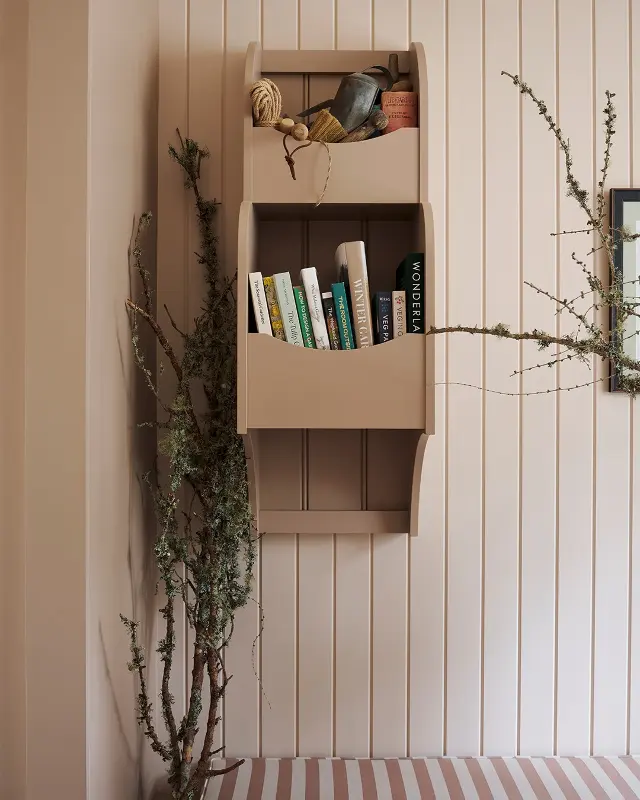
 Wall-Mounted Vegetable Boxes Repurposed for Flower Arranging
#Country Kitchen
1 ideas
Wall-Mounted Vegetable Boxes Repurposed for Flower Arranging
Get new #Country Kitchen ideas by email
Every Thursday: the week's best ideas, with the newest from #Country Kitchen.
Related tags
Country Kitchen: A Warm, Practical Style Guide
A country kitchen is less a decorating formula than a way of treating the room where a household actually lives. It is a working kitchen first: somewhere food is cooked in quantity, produce is preserved, dishes are washed by hand and people sit down without being invited to. Its beauty comes from that work — worn wood, thick crockery, a scrubbed table — rather than from surfaces kept too precious to use.
Where the style comes from
The look has its roots in rural farmhouse kitchens across Europe and North America, where the kitchen was the warmest room in the house and therefore the busiest. Cooking, eating, mending and talking all happened around the same table, often beside a hearth that served as both stove and heating. Because rooms were rarely built with fitted cabinetry, storage arrived as furniture: a dresser for plates, a cupboard for flour and preserves, a chest for linen, shelves for jars. Tools hung in reach because they were used daily, and the kitchen doubled as pantry, laundry and dining room. Much of what we now admire as a style began as straightforward practicality.
The main variations
Read more
Country kitchens vary a great deal by region, and most real ones borrow from several traditions at once.
- English country: painted wooden cabinets, a deep sink set under a window, a dresser stacked with plates, linen and gentle pattern.
- French farmhouse: stone floors, exposed beams, old armoires, copper pans, a long rustic table that seats everyone.
- American farmhouse: simple shaker-influenced lines, an apron-front sink, open shelves, butcher block and plenty of white.
- Mediterranean and Scandinavian rural: whitewashed or pale wood surfaces, tile, plain ceramics and very little ornament.
What to know before you start
You do not need to rebuild a kitchen to give it this feeling. Begin with what is already there.
- Prefer freestanding pieces to fitted ones where you can. A secondhand dresser or a plain table does more for the room than new cabinets.
- Choose materials that improve with age: solid wood, stone, ceramic, linen, cast iron, enamel. Too many finishes at once reads as showroom rather than home.
- Keep open shelving honest. Display only what you use and enjoy looking at; the rest belongs behind a door.
- Let one or two old things carry the room — a chipped jug, a crate used as a drawer, a stool that has been repaired. New reproductions of everything look staged.
- Think about function first. Good light over the worktop, clear surfaces beside the stove, and storage that suits the quantities you really buy will keep the room warm rather than merely pretty.
- Bring the outside in. Herbs on the windowsill, a bowl of whatever is in season, garden flowers in an old vegetable box or tin.
- Edit as you go. Country style is generous, not crowded; a little empty space is what makes the collected things read as chosen.
Above all, let the kitchen be used. Scratches, spills and the odd mismatched chair are part of the character — the room is meant to be lived in, not preserved.
#Country Kitchen: frequently asked questions
How do I start a country kitchen without a full remodel?
Start from the room you already have and change the furniture rather than the walls. Swap in a freestanding dresser or a plain wooden table for plates and dry goods, and let one or two worn pieces carry the character instead of replacing the cabinetry. Light, clear work surfaces and storage that matches the quantities you actually cook with will do more than a new set of fitted units.
Which country kitchen style should I choose?
Pick the one that fits the climate, the architecture and the way your household actually cooks. English country leans on painted cupboards, a deep sink and a plate-stacked dresser, French farmhouse on stone, beams and a long rustic table, while American farmhouse stays simpler and paler and Mediterranean and Scandinavian rural versions are quieter still. Most real kitchens borrow from more than one tradition, so treat them as starting points rather than rules.
What materials work best in a country kitchen?
Choose surfaces that look better as they wear, such as solid wood, stone, tile, ceramic, linen, cast iron and enamel. The point is that use adds patina rather than damage, so you can cook and scrub without treating anything as too precious. Too many finishes at once tends to look like a showroom instead of a home.
What are common mistakes people make with a country kitchen?
The biggest is trying to stage the look rather than furnish a working room: buying reproductions of everything, crowding shelves, or installing a dozen different finishes. Keep open shelving honest by displaying only what you use and enjoy, and leave a little empty space so the collected things read as chosen rather than accumulated. Keeping the room too tidy to work in defeats the whole idea.
How do I care for a country kitchen so it ages well?
Treat wear as part of the finish: oil or wax solid wood occasionally, keep stone and ceramic in everyday use, and expect scratches and spills to blend into the character of the room. Wash dishes by hand with thick crockery rather than storing it away, and repair rather than replace old pieces when you can. A mended stool or a chipped jug is what makes the room feel lived in.
How can I bring seasonal and celebration touches into a country kitchen?
Work with what the garden and the market are already giving you: herbs on the windowsill, a bowl of whatever is in season, flowers in an old tin or a repurposed wall-mounted vegetable box. Let the display change with the year instead of buying new decorations, and keep it generous but edited. A few plain ceramics and one or two old containers usually read warmer than a large arrangement.
Videos come from YouTube and posts from Instagram; titles and summaries are our own. All rights belong to their creators.