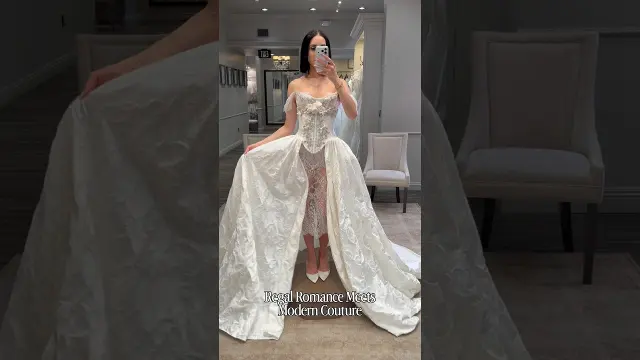
 Victorian Inspired Wedding Dress with a Modern Couture Touch
#Couture Bridal
1 ideas
Victorian Inspired Wedding Dress with a Modern Couture Touch
Get new #Couture Bridal ideas by email
Every Thursday: the week's best ideas, with the newest from #Couture Bridal.
Related tags
Couture Bridal: The Art of the Bespoke Wedding Dress
A couture bridal gown is a wedding dress made for one person alone. It begins as a conversation rather than a size on a rail: the design is drawn for you, the pattern is cut to your measurements, and the finished dress is fitted to the way you actually stand, walk and sit. That is the practical difference between couture and the other routes to a wedding dress — made-to-measure, where a standard pattern is adjusted to your body, and ready-to-wear, where the dress is made first and altered afterwards.
Where the tradition comes from
Couture bridal grows out of the haute couture tradition of nineteenth-century Paris, where dressmaking houses showed collections and then made private versions of them for individual clients. Wedding dresses were among the most demanding commissions, because they carried the weight of a single occasion and were often kept, photographed and handed down. Much of the vocabulary still in use comes from that world: the atelier where the work is done, the toile that tests a shape, the fittings that follow one another over months. What has not changed is the principle — a dress built around a person, not a person fitted into a dress.
From sketch to final fitting
Read more
- A first meeting to talk about the wedding, the setting, and what you feel genuinely comfortable wearing.
- Sketches and fabric samples, refined until the design settles.
- A toile: a mock-up in plain cotton, fitted to your body so the shape can be corrected before any silk is cut.
- Two or more fittings in the real fabric, where length, neckline and internal support are adjusted.
- Hand finishing at the end — closures, hems, beading, pressing — which often takes as long as the sewing itself.
Techniques and materials
Couture work is distinguished by hand skills: beading and embroidery worked stitch by stitch, lace motifs cut apart and reapplied so the pattern flows around a seam rather than stopping at it, internal corsetry that supports the dress and holds its line, and draping directly on a stand so the fabric falls according to its own weight. The fabrics follow the same logic. Structured silks hold sculptural shapes, while organza, chiffon, tulle and fine lace move and soften. Neither is better; they simply do different things.
What to know before you begin
- Allow months, not weeks. Several fittings are normal, and the calendar is part of the design.
- Ask clearly what the quoted price includes: fittings, alterations, embellishment, veil or accessories.
- Move in the dress. Walk, sit down, raise your arms, take a few dance steps.
- Bring the shoes and undergarments you plan to wear to every fitting.
- Match the dress to the venue and to the hours you will spend standing in it.
- Decide major changes early. Reworking a design late in the process is difficult and expensive.
Looking after the dress
Store the gown on a padded hanger or folded in a box with acid-free tissue, and avoid sealed plastic, which traps moisture. Have it cleaned after the wedding by someone used to working with delicate embellishment, and decide in advance whether it will be kept, remade or passed on.
#Couture Bridal: frequently asked questions
How do I start the process of having a couture bridal gown made?
It starts with a conversation rather than a shopping trip: you talk through the wedding, the setting and what you actually feel comfortable wearing, and the design grows from there. From that discussion come sketches and fabric samples, which are refined until the shape settles. Choosing a maker whose hand and taste you respond to matters as much as the design itself.
What is the difference between couture bridal, made-to-measure and ready-to-wear?
Couture means the dress is designed for one person alone, drawn for you and cut to your own measurements. Made-to-measure takes an existing pattern and adjusts it to your body, while ready-to-wear is made first and altered afterwards. The practical result is that a couture gown is fitted to the way you actually stand, walk and sit.
What should I expect during the fittings?
You will usually see a toile first — a plain cotton mock-up fitted to your body so the shape can be corrected before any silk is cut. After that come several fittings in the real fabric, where length, neckline and internal support are adjusted. Bring the shoes and undergarments you plan to wear to each one, and walk, sit and raise your arms so the dress is tested in motion.
How do I choose the right fabric and level of embellishment for my gown?
Structured silks hold sculptural shapes, while organza, chiffon, tulle and fine lace move and soften, so the choice follows the silhouette you want rather than being better or worse. Match the dress to the venue and to the hours you will spend standing in it, since heavy beading and stiff fabric behave very differently over a long day. Ask to see and handle samples before the design is fixed, because fabric rarely reads the same on a sketch as in the hand.
What are the most common mistakes people make with a couture bridal gown?
The biggest one is starting too late — allow months rather than weeks, since the fittings and hand finishing are part of the design, not delays around it. Another is leaving major changes until the end, when reworking a design becomes difficult and costly. Ask clearly what the quoted price covers, including fittings, alterations, embellishment and any veil or accessories, so nothing arrives as a surprise.
How should I care for and store a couture wedding dress after the wedding?
Keep the gown on a padded hanger or folded in a box with acid-free tissue, and avoid sealed plastic, which traps moisture. Have it cleaned by someone experienced with delicate embellishment, since beading and lace need a gentler hand than ordinary garments. Decide in advance whether the dress will be kept, remade or passed on, as that shapes how carefully it needs to be packed away.
Videos come from YouTube and posts from Instagram; titles and summaries are our own. All rights belong to their creators.