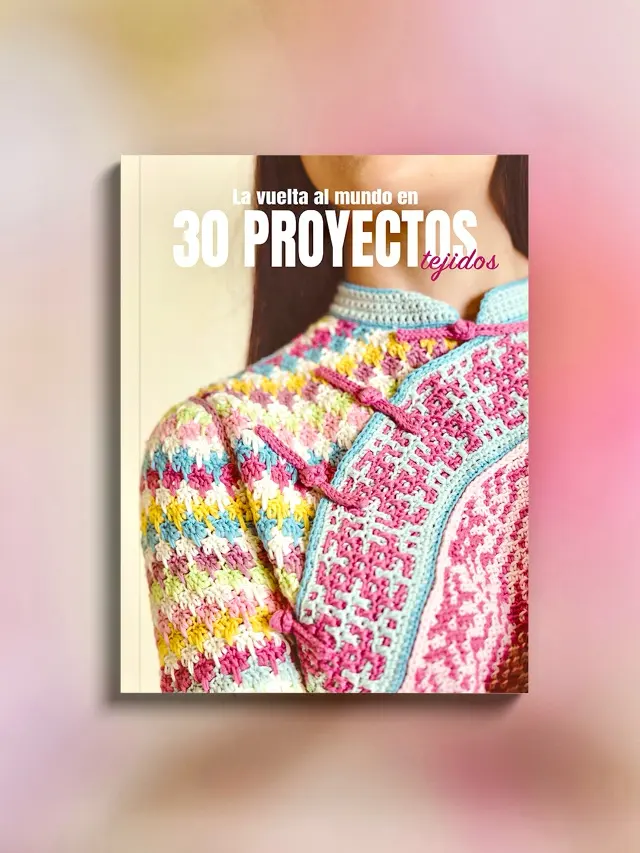
 Around the world in thirty knitted and crocheted projects
#Craft Book
1 ideas
Around the world in thirty knitted and crocheted projects
Get new #Craft Book ideas by email
Every Thursday: the week's best ideas, with the newest from #Craft Book.
Related tags
Craft Books: How to Choose and Use Them
A craft book is more than a bound set of patterns. It is a working companion: a place where a technique is explained step by step, a project is broken into stages, and one maker's accumulated knowledge is set down for someone else to follow. It does a different job from a video. It holds still, it can be scribbled in, and it lets you work at your own pace without a screen between you and your hands.
Where they come from
Instructions for making things have been written down and passed on for a very long time, and once printed pattern sheets and small instruction booklets became common, craft knowledge started to travel further than a single household or workshop. The habit stuck. Most crafts you can name — knitting, crochet, sewing, embroidery, quilting, woodwork, pottery, bookbinding, dyeing, paper craft — have a shelf of books behind them, written by people who spent years working out what a beginner actually needs to be told.
The main kinds
Read more
- Project books. A themed collection of patterns, usually built around a technique, a material or a style.
- Technique references. One craft explained from the ground up: tools, materials, basic moves, common mistakes and how to fix them.
- Stitch and pattern dictionaries. Hundreds of variations, often charted, meant for browsing and adapting rather than following cover to cover.
- Design and colour books. Less about instructions, more about how to plan, scale, combine and improvise.
- Finishing and repair books. The unglamorous half of any craft: seams, edges, blocking, mending and care.
What to look for as a beginner
Clarity beats beauty. Good diagrams and clear photographs of the hands doing the thing are worth more than styled shots of finished objects. Check whether the patterns state a skill level honestly, whether they give you the information you need to test your tension or gauge before you commit, and whether charts are offered alongside written instructions. A glossary, a list of abbreviations and an index tell you the book was made to be used. Spiral or lay-flat binding is a quiet luxury you will appreciate later.
Getting the most out of one
Read the whole book before you start a project, even the chapters that seem irrelevant. Practise the technique section on a sample first, so you meet the difficult step without a finished object depending on it. Write in pencil: your own corrections, your row counts, notes about what you changed. Do not skip the finishing chapter — it is often the difference between homemade and handmade.
A last word
One thorough reference will carry you further than five pretty project books. Borrow before you buy, keep the ones you return to, and remember that a craft book is a conversation with its author, not a test you can fail.
#Craft Book: frequently asked questions
How do I get started with a craft book if I have never made anything before?
Start with a technique reference rather than a project collection, so the basic moves, tools and materials are explained before anything depends on them. Read the opening chapters all the way through and practise the core technique on a scrap sample first. That way you meet the awkward steps while nothing finished is riding on them.
Which kind of craft book should I choose for what I want to do?
Decide first whether you need to learn a skill or simply find a pattern: technique references teach a craft from the ground up, project books give you a themed set of things to make, and stitch or pattern dictionaries are for browsing and adapting. Design and colour books help you plan and improvise rather than follow, and finishing books cover seams, edges and mending. Many makers end up with one solid reference plus whatever project book matches the mood they are in.
Is a craft book still useful when there are so many tutorials online?
They do different jobs. A book holds still, lets you scribble in the margins, and keeps a screen out from between you and your hands while you work at your own pace. Videos are good for seeing motion once; a book is better for following along repeatedly and for keeping your own corrections in one place.
What should I look for when choosing a craft book I cannot flip through first?
Clarity matters more than pretty styling, so look for clear diagrams and photographs of hands actually doing the technique, not just finished objects. Check that skill levels are stated honestly, that charts come alongside written instructions, and that there is a glossary, an abbreviation list and an index. Lay-flat or spiral binding is worth seeking out, and borrowing before buying is a sensible way to test a book.
Where can I find project ideas for a gift or a particular occasion?
Themed project collections are built exactly for this, grouping patterns around a technique, a material, a style or a place, so you can pick a direction and work through it. A travel-inspired collection of knitted and crocheted projects, for instance, gives you a ready-made set of ideas for a gift or a seasonal make. Skim the whole book first, since the piece that suits your occasion is often not the one on the cover.
What are the most common beginner mistakes, and how do I avoid them?
Skipping the finishing chapter is the big one, because seams, edges, blocking and care are usually what separate homemade from handmade. Others are starting a project before reading the whole book, working without testing tension or gauge on a sample, and not writing down what you changed. Keep a pencil to hand and note your row counts and corrections as you go.
Videos come from YouTube and posts from Instagram; titles and summaries are our own. All rights belong to their creators.