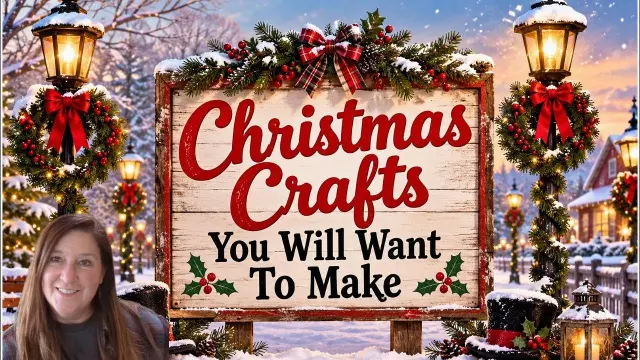
 Cute Christmas Craft Ideas From a Monthly Craft Challenge
#Craft Challenge
1 ideas
Cute Christmas Craft Ideas From a Monthly Craft Challenge
Get new #Craft Challenge ideas by email
Every Thursday: the week's best ideas, with the newest from #Craft Challenge.
Related tags
Craft Challenge: A Guide to Making Together
A craft challenge is a simple idea with a lot of pull: a group of people agree on a theme, a supply, a technique or a deadline, and each of them makes something in response. Nobody marks the work. The point is the shared nudge — a reason to sit down and make, and a set of other people making alongside you.
Where the idea comes from
Making in company is older than any particular craft. Guilds, sewing circles, church halls, village fairs and after-school clubs have all done the same thing in different clothes: they give a maker a time, a place and an audience. A craft challenge carries that habit into groups that may never meet in person. A monthly theme, a photograph of the result, a friendly comment thread — the structure is light, but it does the work a weekly meeting used to do. Seasonal rounds are a familiar version of the pattern: a prompt each month that builds towards handmade decorations and gifts, with every instalment adding something to a gradually growing collection.
The main kinds
Read more
- Time-based challenges. A theme arrives every week or every month, and you make something within it. The rhythm matters more than the theme.
- Supply challenges. Everyone uses the same material, or works only from what they already have. Useful for stash-busting and for learning a material properly.
- Technique challenges. The prompt names a skill — a stitch, a join, a finishing method — and the work is practice dressed up as a project.
- Prompt lists. A list of short daily or weekly ideas you can pick from rather than complete in order. Gentler, and easier to dip into.
- Swap and gift challenges. You make something to a brief and send it on. The recipient is the deadline.
- Charity and community makes. A group works towards a shared output for someone else, which gives the making a purpose beyond the shelf.
If you are new to it
Read the prompt loosely. A challenge is a starting point, not an exam, and the most interesting entries usually interpret the theme sideways. Choose a project you can finish — an unfinished ambitious piece teaches you less than a completed small one. Work with materials you already own for your first attempt, so the cost of trying stays low.
Post whatever you make, including the wonky version. Groups that run these challenges are generally built on encouragement rather than critique, and seeing imperfect work in progress is what makes other beginners feel able to start.
Keeping it going
Keep a small box or folder of supplies set aside for the challenge, so starting does not mean hunting through everything you own. Note ideas as they occur to you rather than waiting for the prompt to arrive. If a month slips past, rejoin at the next one without treating the gap as a failure.
And if the group you find does not suit you, start your own with two or three people. A craft challenge needs a theme and someone willing to say the date. That is all.
#Craft Challenge: frequently asked questions
What exactly is a craft challenge, and how does it work?
It is a light agreement among a group of makers: everyone takes the same theme, material, skill prompt or finishing point, and each person makes something in response to it. Nobody grades the results — the shared prompt simply gives you a reason to sit down and create next to other people doing the same. The structure can be as loose as a photo of the finished piece and a friendly comment thread.
How do I get started if I have never joined one before?
Treat the prompt as a suggestion rather than an assignment, and let yourself bend the theme sideways — the sideways interpretations are usually the ones people enjoy most. Pick something you can realistically finish, since a small completed piece teaches you more than a grand one that stalls. For your first round, work only from materials you already own so that trying costs you almost nothing.
Which kind of challenge should I choose?
It depends on what you are hoping to get out of it: a recurring theme gives you rhythm, a shared supply teaches you a material properly, and a technique prompt turns practice into an actual project. If you want something gentle, a list of short prompts you can dip into in any order works better than a fixed schedule. Swaps and community makes suit people who need a recipient or a purpose to keep them moving.
What do I actually need in order to take part?
Very little — a theme and somebody willing to name when the round ends. Beyond that, a small box or folder of supplies kept aside for the challenge saves you from hunting through everything you own every time a prompt arrives. A willingness to show imperfect work in progress matters more than any equipment.
What do people usually get wrong when they join?
The commonest slip is choosing something too ambitious, which leaves you with an unfinished piece instead of a finished one and less learned along the way. Another is reading the prompt like an exam and waiting until the result is polished before sharing it — groups run on encouragement, and wonky work in progress is what gives other beginners permission to start. Spending money on new supplies before you know the habit will stick is also worth avoiding.
How do I keep going, and what if I miss a round?
Jot ideas down as they occur to you instead of waiting for the prompt to land, so you always have something to reach for. If a round slips past, simply rejoin at the next one and don't treat the gap as a failure. And if the group you find doesn't fit, gather a couple of friends and set your own theme — that is genuinely all a craft challenge requires.
Videos come from YouTube and posts from Instagram; titles and summaries are our own. All rights belong to their creators.