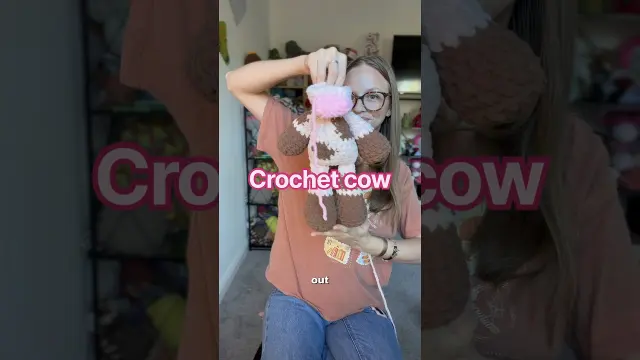
 Crochet Cow Amigurumi: A Handmade Crochet Cow Plushie
#Crochet Cow
1 ideas
Crochet Cow Amigurumi: A Handmade Crochet Cow Plushie
Get new #Crochet Cow ideas by email
Every Thursday: the week's best ideas, with the newest from #Crochet Cow.
Related tags
Crochet Cow: A Beginner's Guide to Amigurumi Cows
A crochet cow is a soft, handmade toy or decorative figure shaped like a cow, built stitch by stitch with a hook and yarn. Most often it falls under the umbrella of amigurumi, a Japanese technique of crocheting or knitting small stuffed figures. The word itself is a joining of the Japanese words for crocheted or knitted and stuffed doll, and the craft spread widely through Japanese craft culture before being taken up by makers everywhere.
How a crochet cow comes together
Almost every crochet cow is built from the same handful of shapes. The body is usually a rounded tube or an oval worked in continuous rounds, with the head added as a sphere or a slightly flattened ball. Legs are narrow cylinders, often made first and joined to the body, while the snout, horns, ears and tail are small pieces worked separately and sewn on at the end.
Working in continuous rounds, without joining at the end of each round, is the defining habit of amigurumi. It keeps the fabric smooth and even. A stitch marker is essential, since the spiral makes it easy to lose your place.
Read more
Main styles and variations
The classic version is the spotted cow, where the body is worked in a cream or white base and patches of black or brown are added later. Some makers change colour mid-round to build the spots into the fabric itself; others crochet separate patch shapes and stitch them on, which is more forgiving for beginners.
Size varies widely. Small keychain cows a few centimetres tall are popular because they use up scraps of yarn, while larger cuddly versions are made with thicker yarn and a bigger hook. Chenille and velvet yarns have become a favourite for these larger toys because the finished fabric is dense and soft, though they are harder to work with since the stitches are difficult to see.
Some crochet cows are flat rather than three-dimensional: appliqué versions used to decorate blankets, baby clothes and bags, worked in rows and finished with embroidered facial details.
What beginners should know
Start with smooth, light-coloured yarn in a medium weight and a hook one size smaller than the yarn label suggests. A tighter gauge prevents the stuffing from showing through, which is the most common problem in amigurumi.
Practise the basics first: a magic ring, single crochet, increases and decreases. Most cow patterns use little else.
Stuff firmly but in small pieces, adding fibre fill as you close each section rather than at the very end, so the shape stays even. Safety eyes are common for toys but are not suitable for anything given to a baby; embroidered eyes are the safer choice.
Finally, expect the assembly to take as long as the crocheting. Sewing the pieces on securely, with the head centred and the legs level, is what makes a cow look charming rather than lopsided.
#Crochet Cow: frequently asked questions
How do I start making a crochet cow if I've never crocheted before?
Begin by learning a magic ring, single crochet, and simple increases and decreases, since nearly every cow pattern is built from just those. Then pick a small, simple pattern and work it in smooth, light-coloured yarn so you can actually see your stitches. Expect the finishing — sewing on the snout, ears, horns and legs — to take about as long as the crocheting itself.
What supplies do I need for a crochet cow?
You need a hook, medium-weight yarn, fibre filling for stuffing, a tapestry needle for sewing the pieces together, and a stitch marker for keeping track of your rounds. Scissors and something for the face — either safety eyes or embroidery thread — round out the list. Choosing a hook slightly smaller than the yarn label suggests gives you a tighter fabric that holds the stuffing in.
Which yarn should I choose for a cow plushie?
Smooth, light-coloured medium-weight yarn is the easiest to learn on because the stitches stay visible and any mistakes are simple to undo. Chenille and velvet yarns give a dense, velvety finish that feels lovely on a large cuddly cow, but they are harder to work with since the stitches blur together. Save those softer yarns for a second or third attempt once you're comfortable with the shape.
How do I care for a finished crochet cow?
Check the yarn label before doing anything, since different fibres tolerate different treatment. As a general habit, spot-clean gently and let the toy air-dry fully, reshaping it with your hands while it's still damp so the stuffing doesn't clump. If the face is embroidered rather than made with plastic eyes, it will hold up better to regular handling.
What's a good occasion or gift idea for a crochet cow?
Small keychain-sized cows make easy little gifts and use up leftover yarn, while a bigger, softer version suits a newborn gift or a cuddly present for an older child. Flat appliqué cows work well stitched onto a blanket, bag or piece of baby clothing instead of being a toy on their own. For anything going to a baby, choose embroidered eyes rather than plastic safety eyes.
What mistakes make a crochet cow come out lopsided?
Under-stuffing is the usual culprit — add fibre filling in small pieces as you close each section so the shape stays even rather than packing it all in at the end. Losing your place in the spiral is another common slip, so keep a stitch marker at the start of each round. Finally, take your time sewing the head centred and the legs level, because rushed assembly is what makes an otherwise neat cow look crooked.
Videos come from YouTube and posts from Instagram; titles and summaries are our own. All rights belong to their creators.