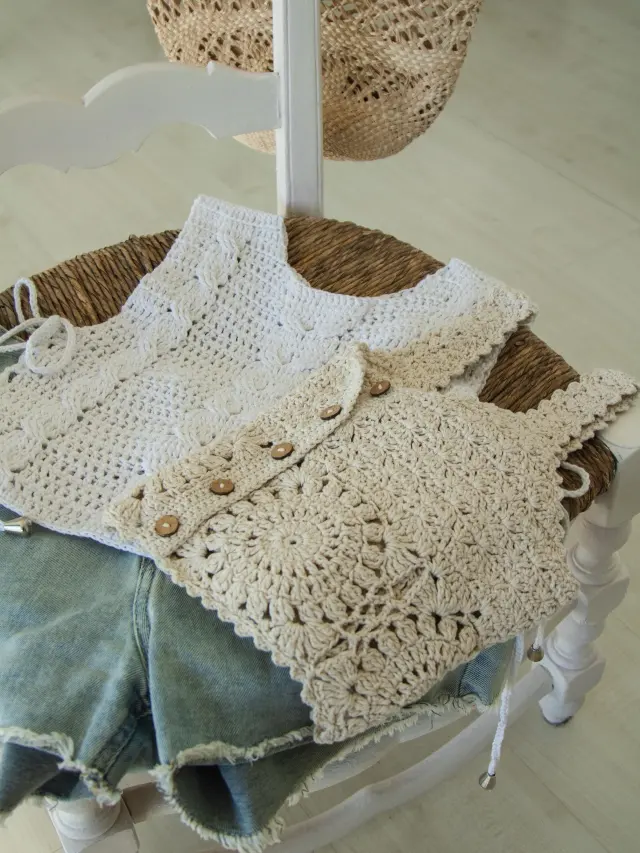
 Handmade crochet garments with unique textures
#Crochet Garments
1 ideas
Handmade crochet garments with unique textures
Get new #Crochet Garments ideas by email
Every Thursday: the week's best ideas, with the newest from #Crochet Garments.
Related tags
Crochet Garments: A Guide to Wearing Handmade Cloth
Crochet is a way of making fabric from a single continuous strand of yarn, worked with a short hooked needle. Unlike knitting, which holds many live stitches on two needles at once, crochet builds one loop at a time, each stitch anchored into the one before it. The result is a dense, structured cloth with a distinct texture: little knots and columns you can read with your eyes once you know what you are looking at.
The word comes from the French for "small hook", and the craft is thought to have grown out of older looped-textile traditions before spreading widely in the nineteenth century, when published patterns made it a domestic pastime across Europe and beyond. For a long time crochet lived in the home — doilies, edgings, blankets — but garments have always been part of it, from lacy shawls to sturdy winter waistcoats.
What crochet does well
Crochet fabric behaves differently from knitted cloth. It holds its shape, resists stretching, and can be worked into firm, sculptural forms. That makes it excellent for garments that need structure: boxy tops, cardigans with defined edges, hats, bags-adjacent pieces like belt bags, and openwork layers that drape over a simple base. The same qualities make it less suited to close-fitting, fluid clothing, because dense stitches add weight and bulk.
Read more
Main techniques and styles
Lace work uses chains and spaces to create open, airy fabric — the classic granny square is the most recognisable example, assembled from small motifs joined into a larger panel. Tapestry or colourwork crochet carries several yarns at once to draw pictures into the cloth, often in the round. Filet crochet builds images from solid and empty mesh squares. Tunisian crochet, worked on a long hook, produces a denser, woven-looking fabric. On the construction side, many makers work garments in one piece from the top down, trying them on as they go, while others crochet flat panels and seam them like sewing patterns.
What beginners should know
Start with yarn you can see clearly — a smooth, light-coloured worsted or DK weight — and a hook a size or two larger than the label suggests, which makes stitches easier to find. Learn the core stitches first: chain, slip stitch, single, half double and double crochet. Then practise tension, because even stitches matter more than fast ones.
Gauge is the thing that trips up most first garments. Work a small sample square, measure it, and compare it to the pattern; if your square is bigger, go down a hook size. Choose simple shapes for a first project — a rectangular cardigan, a sleeveless top, a shawl — and save fitted shaping and fine lace for later.
Wearing and caring for handmade pieces
Crochet garments are usually worn as a layer rather than a sole layer, and they look best with simple things underneath. Wash them gently by hand in cool water, reshape while damp, and dry flat; never hang a heavy piece wet, as it will stretch out of shape. Fold rather than hang in storage, and keep yarn-eating insects away with a clean, dry drawer.
Because crochet is made by hand, small variations in stitch size are normal and part of the character. Treat that as the point rather than a flaw: a crochet garment is a piece of slow cloth, meant to be worn for years.
#Crochet Garments: frequently asked questions
How do I get started with crochet garments if I've never crocheted before?
Begin with the basic stitches — chain, slip stitch, and the simple crochet stitches — and practise them until your loops come out even, since consistency matters far more than speed. Use a smooth, light-coloured yarn so you can see your stitches clearly, and work with a hook slightly larger than the yarn label recommends at first. Then pick a simple shape like a rectangular cardigan, a sleeveless top or a shawl before trying fitted shaping or fine lace.
What do I actually need to crochet a garment?
You need yarn, a hook in the size your pattern calls for, and a couple of small extras: a blunt needle for weaving in ends and seaming, stitch markers, scissors and a tape measure. A spare hook in a different size is useful for checking gauge. You don't need much beyond that — crochet works with a single continuous strand and one hook, which is why it's such a portable craft.
Which kind of crochet garment is best to make?
Crochet gives dense, structured cloth that holds its shape, so it shines in boxy tops, cardigans with defined edges, hats and openwork layers worn over something simple. It's less suited to close-fitting, fluid clothing, because the dense stitches add weight and bulk. For style, you can choose between airy lace work such as motifs joined into panels, colourwork, filet mesh, or the denser woven look of Tunisian crochet.
How should I wash and store a handmade crochet garment?
Wash it gently by hand in cool water, reshape it while still damp, and dry it flat — never hang a heavy piece while wet, or it will stretch out of shape. Store it folded rather than on a hanger, and keep it in a clean, dry place so insects don't get to the yarn. Small variations in stitch size are normal and part of the character of hand-worked cloth.
What can I make for a special occasion?
Lacy shawls and openwork layers are the classic choice — they drape beautifully over a simple dress or top and add texture without bulk. A structured cardigan or a fine lace wrap works well for weddings and evenings, especially in a neutral shade that lets the stitch pattern show. Crochet pieces read best as a layer over something plain rather than as the whole outfit.
What mistakes do beginners make most often with crochet garments?
Skipping the gauge sample is the big one: if your sample square comes out larger than the pattern expects, the finished garment will be too, so go down a hook size and check again. Choosing a fitted, heavily shaped pattern for a first project is another common trap — simple rectangles and loose shapes are far more forgiving. Also resist rushing your tension and don't hang the finished piece wet.
Videos come from YouTube and posts from Instagram; titles and summaries are our own. All rights belong to their creators.