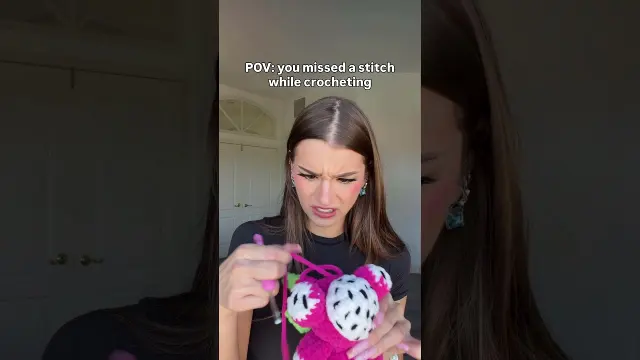
 Relatable Crochet Moment: Spotting a Missed Stitch
#Crochet Humor
1 ideas
Relatable Crochet Moment: Spotting a Missed Stitch
Get new #Crochet Humor ideas by email
Every Thursday: the week's best ideas, with the newest from #Crochet Humor.
Related tags
Crochet Humor: The Jokes Only Hookers Understand
Crochet humor is the shared comedy of people who work with yarn. It lives in the gap between what a project is supposed to look like and what is actually on the hook, and it is told mostly by makers to each other, because almost nobody else finds it funny. Its home is the crafting circle, the fibre group, the comment thread under a photo of a slightly lopsided blanket. You do not need a punchline to belong to it. You only need to have counted to forty-seven and then discovered a stitch you dropped somewhere around row twelve.
Where it comes from
The humor grows out of the craft's ordinary conditions: long, repetitive work; slow progress; small mistakes with large consequences; and a hobby whose materials are cheap individually and expensive collectively. Crochet is also a solitary activity, so the jokes travel as confessions. "I bought yarn for a project I haven't started" lands because everyone listening has done exactly that, often the same week. The laughter is recognition rather than wit.
The running themes
Read more
- The stash. Every maker insists the collection is reasonable, useful, and definitely going to be used. Everyone else can see the shelf.
- The new project. Starting something fresh feels like possibility; finishing feels like admin. The pile of unfinished work is a joke makers make about themselves before anyone else can.
- Counting. Stitch counts are sacred until a conversation, a film, or a cat interrupts them. Then the counting starts again, and everyone understands the sigh.
- The dropped stitch. A missing stitch found six rows later is a small tragedy and a reliable story. Some unravel, some fudge it, some call it a design feature.
- The reaction. Seeing something in a shop and thinking "I could make that" is the beginning of a very long, very funny road.
- The gift. Handmade presents are given with love and a silent hope that the recipient understands what they have been handed.
Why it helps
Laughing at your own mistakes is a practical skill in any slow craft. A sense of humor keeps a maker from abandoning a project over a wobbly edge, and it makes the learning years bearable. Beginners especially benefit from seeing experienced makers admit to crooked rows and abandoned blankets. Perfection is not the standard here; persistence is.
For beginners
If you are new to crochet and to the jokes, know that the humor is never aimed at you. Nobody is laughing at your first granny square; they are remembering theirs. Learn to count your stitches, keep a note of your hook size, and accept that some projects will be undone. Photograph the funny failures. They become the best stories later, and the fastest way to feel at home in the craft is to be able to laugh at your own tension problems like everyone else at the table.
#Crochet Humor: frequently asked questions
What is crochet humor, really?
It is the running joke shared among people who work with yarn, built on the gap between what a project was supposed to look like and what actually came off the hook. It lives in crafting circles, fibre groups and comment threads, and it works by recognition rather than cleverness. You do not need a punchline to join in, just the experience of finishing a row and realising something went wrong much earlier.
Do I need to be experienced to enjoy crochet humor?
Not at all, and the jokes are never aimed at beginners. When experienced makers laugh about crooked rows or abandoned blankets, they are remembering their own early attempts rather than judging yours. Seeing that even long-time crocheters make mistakes is one of the fastest ways to feel at home in the craft.
Why do crocheters joke about their yarn stash so much?
Because buying yarn and using yarn are two separate hobbies, and almost everyone claims their collection is reasonable and definitely about to be used. The joke lands because the person listening has done exactly the same thing, often quite recently. It is recognition rather than mockery, which is why it never gets old.
What are the classic mistakes people laugh about?
Losing count mid-row, discovering a missing stitch much later, and starting something new instead of finishing what is already on the hook. The pile of unfinished projects is something makers tease themselves about before anyone else can. Some people unravel the mistake, some fudge it, and some simply call it a design feature.
How do I keep a sense of humor when a project goes wrong?
Treat the failure as material rather than a verdict, and photograph the funny ones before you undo them. Laughing at your own wobbly edge is a practical skill in any slow craft, because it is what stops you abandoning the whole thing. Perfection is not the standard here, persistence is.
How can I share crochet humor with other people?
The jokes travel best as confessions told to other makers, so post the lopsided blanket or mention the yarn you bought for a project you have not started. Non-crafters usually will not find it funny, and that is part of the charm. Keep a note of your hook size and stitch counts as you go, so you have a story to tell rather than just a mystery.
Videos come from YouTube and posts from Instagram; titles and summaries are our own. All rights belong to their creators.