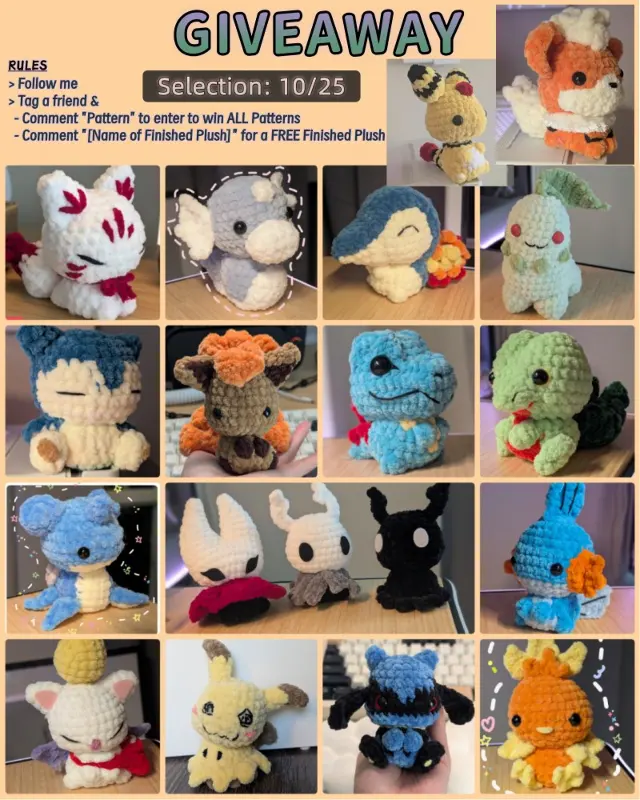
 Plush Toy Giveaway and Crochet Patterns
#Crochet Patterns
2 ideas
Plush Toy Giveaway and Crochet Patterns
Get new #Crochet Patterns ideas by email
Every Thursday: the week's best ideas, with the newest from #Crochet Patterns.
Related tags
Crochet Patterns: A Guide to Making with Yarn
What crochet patterns are
Crochet patterns are written or charted instructions that show you how to make a project with a hook and yarn. They can describe anything from a simple square to a blanket, bag, toy, garment, or decorative piece. A good pattern usually explains the materials, stitches, size, construction steps, and finishing details so you can follow along with confidence.
Crochet has a long handmade tradition and appears in many forms across different places and communities. Some patterns are very simple and practical, while others are highly decorative or shaped into detailed textures. The same basic stitches can create very different results depending on the yarn, hook size, and tension you use.
How crochet patterns work
Read more
Most patterns begin with a materials list and a set of abbreviations. They may use written instructions, charts, or both. If you are new to crochet, it helps to learn the most common terms first, such as chain, single crochet, double crochet, increase, and decrease. Once those become familiar, many patterns feel much easier to read.
A pattern also tells you how the pieces are made and joined. Some projects are worked in the round, which means you keep crocheting in circles or spirals. Others are worked back and forth in rows. Garments and blankets often use rows, while hats, baskets, amigurumi, and motifs often use rounds.
Main kinds of crochet patterns
There are many kinds of crochet patterns, but a few are especially common:
- Home items: blankets, cushions, dishcloths, baskets, coasters, and placemats
- Wearables: scarves, hats, shawls, cardigans, tops, and baby garments
- Toys and figures: stuffed animals, dolls, and decorative objects
- Motifs and lacework: squares, doilies, edges, and delicate openwork pieces
Each type has its own rhythm. For example, lace patterns often rely on spacing and repeated stitch groups, while amigurumi patterns focus on shaping and tight stitches to create a firm fabric.
Tips for beginners
If you are just starting out, choose a pattern that matches your skill level and uses familiar stitches. Simple projects like scarves, squares, and dishcloths are useful because they let you practice tension and stitch consistency without too much shaping.
A few practical tips can help:
- Read the whole pattern before you begin.
- Check whether the pattern uses US or UK stitch terms.
- Make a small swatch if size matters.
- Count your stitches regularly so mistakes are easier to catch.
- Use a yarn and hook that feel comfortable in your hands.
It also helps to keep a notebook for notes on changes you make, especially if you want to repeat the project later.
Choosing and adapting patterns
The best crochet patterns are not only clear but also flexible. You can often adjust yarn weight, hook size, or color choices to make a project your own. Still, some changes affect the final size and drape, so it is worth understanding the purpose of the original materials before changing them too much.
Crochet patterns are a useful bridge between an idea and a finished handmade piece. With a little practice, you can read them more easily, try new stitches, and build confidence one project at a time.
Videos come from YouTube and posts from Instagram; titles and summaries are our own. All rights belong to their creators.