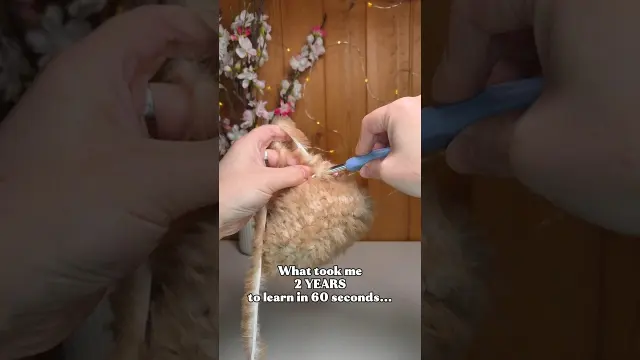
 Tips for working with faux fur yarn in crochet
#Crochet Plushies
1 ideas
Tips for working with faux fur yarn in crochet
Get new #Crochet Plushies ideas by email
Every Thursday: the week's best ideas, with the newest from #Crochet Plushies.
Related tags
Crochet Plushies: A Beginner's Guide to Soft Amigurumi
A crochet plushie is a stuffed toy made from yarn — a small animal, a doll, a piece of fruit with a face, or something entirely invented. The craft is usually called amigurumi, a Japanese word that joins a term for crocheted or knitted fabric with one meaning a stuffed toy. The name travelled outward from Japan and now covers soft toys made by crocheters almost everywhere, in every style from tiny pocket-sized creatures to pillowsized bears.
How the fabric works
Almost all plushies are crocheted in the round rather than in flat rows. You start from a small ring of stitches, work continuously in a spiral, and shape the piece by adding stitches to widen it and skipping stitches to narrow it. Because the spiral never closes with a seam, the finished surface looks smooth and continuous — which is exactly what you want on a face or a rounded belly.
The stitch almost everyone uses is the single crochet. It is short, firm and dense, so the fabric holds stuffing without gaping. Double crochet and taller stitches appear in blankets and bags, but they leave holes that show the filling through, so plushies rarely use them.
Read more
Choosing yarn and hook
You want a yarn that is soft to the touch and tightly spun, so the surface stays neat as you work. Smooth yarns in solid colours are easiest to learn on; fluffy, textured or furry yarns hide mistakes but also hide your stitches, which makes them frustrating until you can work by feel. Cotton and cotton blends give crisp, defined stitches; acrylic and chenille give a squishier toy.
Use a hook one or two sizes smaller than the yarn label suggests. Tight fabric is the goal here — it keeps the stuffing inside and stops the toy from distorting when it is squeezed.
Safety and finishing
Small plastic safety eyes are popular, but they are not suitable for anything a baby or a pet will chew, because they can come loose. For toys meant for very young children, embroider the eyes and features with yarn instead. Whichever you choose, place the features before you close up the piece, while you can still reach inside.
Stuff firmly but in small pieces rather than one large handful, so the filling spreads evenly and the shape stays round. Pay extra attention to necks and limbs, which go lumpy if they are underfilled.
Getting started
Beginners do best with a small, simple shape: a ball, a mushroom, a jellyfish with a few dangling tentacles. Learn the adjustable ring, the single crochet, the invisible decrease and how to mark the first stitch of each round — that last habit prevents most of the confusion people hit in their first project.
Work in good light, count as you go, and accept that the first toy will be slightly lopsided. The second one won't be.
Videos come from YouTube and posts from Instagram; titles and summaries are our own. All rights belong to their creators.