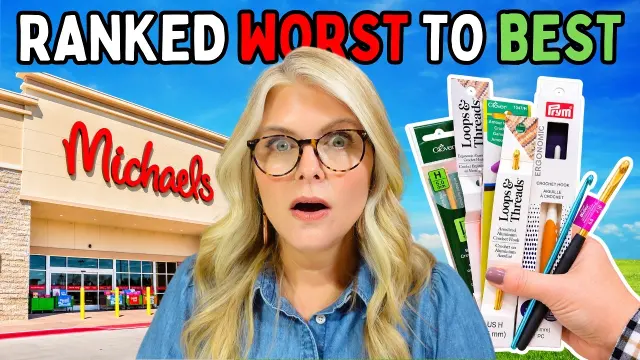
 Testing and Ranking Seven Crochet Hooks from Michaels
#Crochet Review
1 ideas
Testing and Ranking Seven Crochet Hooks from Michaels
Get new #Crochet Review ideas by email
Every Thursday: the week's best ideas, with the newest from #Crochet Review.
Related tags
Crochet Reviews: How to Judge Hooks, Yarn and Patterns
A crochet review is simply an account of how a tool, a yarn or a pattern behaved in real hands. It is not a verdict handed down from above but a record of experience: what was easy, what caught you out, what you would choose again. Because crochet is a slow craft made mostly of small repeated movements, the details that matter in a review are often small too — the way a hook glides through a stitch, the way a yarn splits, the way a pattern explains a turning chain. Learning to read those details well makes you a better chooser of materials, and writing them down sharpens your own eye.
What gets reviewed
Most crochet reviews fall into a few natural groups. Hooks and accessories come first: the shape of the head, the depth of the throat, the handle, the weight in the hand. Then yarn, where reviewers talk about how a fibre feels, whether it splits or fuzzes, how it behaves when frogged and reworked. Patterns form a third group, judged on clarity of instruction, chart quality and whether the finished size matches expectation. Finally there are reviews of finished projects, which are less about scoring and more about lessons learned.
Judging a hook
Read more
Hook preference is personal, and a good review says so. A hook has a head that catches the yarn, a throat that holds the loop, and a shaft whose diameter sets the stitch size. Inline heads sit flush with the shaft and suit a steady, even tension; tapered heads are more rounded and can help when you work quickly. Handles range from thin metal to shaped grips, and the right one is the one that lets you work without gripping hard.
Judging a yarn
When you assess a yarn, work a small swatch before deciding. Notice whether the plies stay together or separate as you pull through, whether the stitch definition stays crisp, and how the fabric drapes once a few rows are done. A yarn that feels lovely in the skein can grow heavy or pill in the fabric, and a plain-looking one can soften beautifully after a wash.
Writing a review worth reading
- Say what you made and in what circumstances, without inventing measurements you did not take.
- Describe behaviour rather than declaring quality: "the yarn split when I worked tightly" tells a reader more than "bad yarn".
- Separate your personal preference from the object's properties.
- Mention what a beginner might trip over.
- Be fair to what you cannot know, including how a fibre will wear over years.
For beginners
Start by comparing things side by side rather than one at a time; differences show up faster. Keep a notebook of hook sizes and yarns that worked for you, and revisit it before your next project. Trust reviews that explain their reasoning, and treat any single opinion, including your own first impression, as one data point among many.
#Crochet Review: frequently asked questions
What exactly is a crochet review, and why do people write one?
It is a record of how a particular hook, yarn or pattern actually behaved in someone's hands — what felt easy, what caught them out, what they would pick again — rather than a verdict handed down from on high. People write them because crochet is a slow craft of small repeated movements, so the details worth capturing are small too, like how a hook slides through a stitch or how a yarn splits. Writing those observations down also sharpens your own eye as a chooser of materials.
How do I read a hook review so it actually helps me choose?
Look for whether the reviewer describes the head shape, the throat depth, the handle and the weight in the hand, since those are what change the working experience. A trustworthy review will also admit that hook preference is personal: an inline head tends to suit steady, even tension, while a rounded, tapered head can help when you work quickly. The right hook is simply the one that lets you work without gripping hard.
How can I judge a yarn before committing a whole project to it?
Work a small swatch first and watch what the yarn does as you pull through — whether the plies stay together or separate, and whether the stitch definition holds. Then look at how a few rows of fabric drape, because a yarn that feels lovely in the skein can turn heavy or pill, while a plain one may soften nicely after a wash. Those few rows tell you far more than the feel of the ball alone.
What mistakes do beginners make when choosing materials?
The most common one is trying things one at a time instead of side by side, which hides differences that would otherwise be obvious quickly. Another is trusting any single opinion — including your own first impression — as if it were the final word, rather than one data point among many. Keeping a notebook of the hook sizes and yarns that worked for you, and checking it before the next project, saves a lot of repeat guessing.
How do I write a crochet review that other people will find useful?
Say what you made and under what circumstances, without inventing measurements you never took, and describe behaviour instead of pronouncing quality — noting that a yarn split when you worked tightly says more than calling it bad. Keep your personal preference separate from the object's actual properties, and mention what a beginner might trip over. It also helps to be fair about what you cannot know, such as how a fibre will wear over the years.
Are reviews of finished projects worth reading if they don't give a score?
Yes — those pieces are less about ranking and more about lessons learned, which is often the most transferable kind of information. A comparison of several tools side by side, for instance, shows you the trade-offs between them in a way a single verdict cannot. Read them for the reasoning behind the choice rather than for a final judgement.
Videos come from YouTube and posts from Instagram; titles and summaries are our own. All rights belong to their creators.