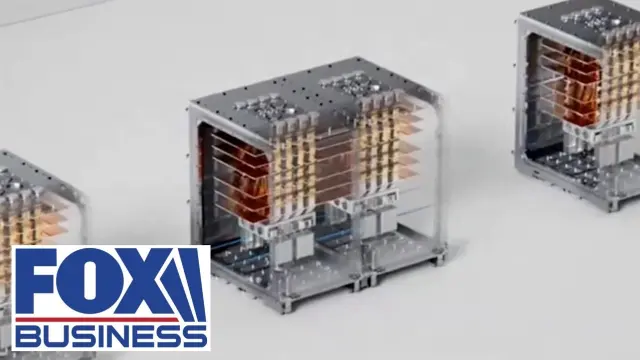
 IBM Engineer Explains Why Quantum Systems Run So Cold
#Cryogenics
1 ideas
IBM Engineer Explains Why Quantum Systems Run So Cold
Get new #Cryogenics ideas by email
Every Thursday: the week's best ideas, with the newest from #Cryogenics.
Related tags
Cryogenics: A Beginner's Guide to Extreme Cold
Cryogenics is the branch of physics and engineering concerned with producing very low temperatures and studying what materials do when they get there. The word comes from the Greek kryos, meaning frost or icy cold, and it is generally applied to temperatures below roughly minus 150 degrees Celsius — a range where the everyday rules of thumb about how substances behave stop being reliable.
The starting point is absolute zero, the coldest temperature possible, at which atoms hold the least energy they can. Nothing reaches it in practice; cryogenics is the art of getting close. Two facts make the field possible. First, gases turn liquid at low enough temperatures: nitrogen near minus 196 degrees Celsius, helium near minus 269. Second, cold is not something you add but something you remove, so most cryogenic equipment is really a machine for pumping heat out of a well-insulated space.
How cooling is achieved
Several methods do the work, often in combination.
Read more
- Cryogenic fluids such as liquid nitrogen and liquid helium absorb heat simply by boiling, and are stored in double-walled vessels with a vacuum between the walls to slow the leak of warmth back in.
- Mechanical cryocoolers run a gas through cycles of compression, expansion and heat exchange, much as a kitchen refrigerator does, but engineered for far lower temperatures.
- Dilution refrigerators, used in research, reach a few thousandths of a degree above absolute zero by exploiting the behaviour of two helium isotopes mixed together.
- Magnetic cooling uses a changing magnetic field to pull heat out of a material, a technique useful where vibration or moving parts would cause problems.
What it is used for
The most familiar application is medical imaging: scanners of a certain kind rely on superconducting magnets, and superconductors only work when chilled by liquid helium. Cryogenics also keeps detectors in telescopes and particle experiments cold enough to sense faint signals, preserves biological samples such as cells and embryos for storage and transport, and creates the environment that some quantum computing hardware needs in order to function.
Cooling changes materials in striking ways. Metals become better conductors, some become superconductors and expel magnetic fields entirely, and most materials turn brittle and contract slightly — a detail engineers must plan for rather than fight.
If you are just starting
Treat cold as a hazard of a different kind from heat. Liquefied gases boil violently at room temperature, and a splash causes damage quickly, so eye protection, gloves and loose-fitting coverage matter. Because these liquids expand into very large volumes of gas, they are handled in ventilated spaces, never in a sealed room or a lift. Ordinary glass, plastic and some metals can crack or shatter on contact.
Read the safety data before you touch any equipment, work in pairs, and keep containers upright and vented. Beyond that, the field rewards curiosity: start with simple demonstrations and the physics of heat transfer, and the rest follows from there.
#Cryogenics: frequently asked questions
What exactly is cryogenics, and how is it different from ordinary refrigeration?
Cryogenics is the branch of physics and engineering that produces extremely low temperatures and studies how materials behave once they get there. The difference from a kitchen fridge is one of degree that becomes a difference in kind: at those temperatures the usual rules of thumb about how substances behave stop holding, and gases like nitrogen and helium turn liquid. It is less about adding cold than about pumping heat out of a very well insulated space.
How do people actually reach such low temperatures?
Most approaches fall into a few families, often used together. Cryogenic fluids absorb heat simply by boiling away, mechanical cryocoolers run a gas through cycles of compression and expansion much like a household refrigerator but engineered for far colder operation, and research setups use dilution or magnetic cooling where even those methods are not enough. Each is really a machine for removing heat rather than creating cold.
What is cryogenics used for in everyday life?
The most familiar use is medical imaging, where scanners depend on superconducting magnets that only work while chilled. It also keeps detectors in telescopes and particle experiments cold enough to sense faint signals, preserves biological samples such as cells and embryos for storage and transport, and provides the environment some quantum computing hardware needs. Beyond that, cooling changes materials in striking ways that engineers design around.
What are the main safety mistakes beginners make?
The biggest one is treating cold as if it were just an extreme version of heat, when liquefied gases boil violently at room temperature and a splash does damage quickly. People also underestimate how much gas those liquids become, which is why they must never be handled in a sealed room or a lift, and forget that ordinary glass, plastic and some metals can crack or shatter on contact. Eye protection, gloves, loose coverage and good ventilation are not optional.
How should someone completely new to the subject get started?
Read the safety data before touching any equipment, work in pairs, and keep containers upright and vented. From there the field rewards curiosity more than kit: simple demonstrations and the physics of heat transfer teach you most of what you need, and the rest follows. It helps to think of the whole discipline as one long exercise in slowing down the leak of warmth back in.
Videos come from YouTube and posts from Instagram; titles and summaries are our own. All rights belong to their creators.