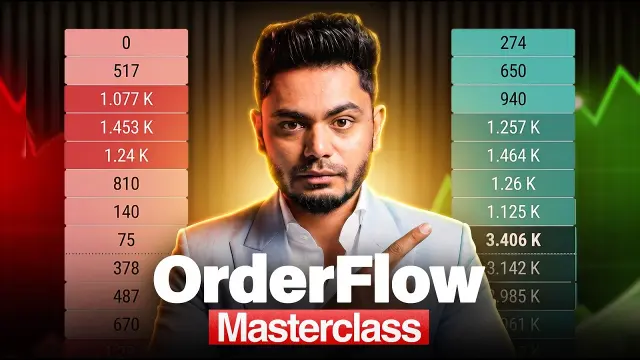
 Order Flow Masterclass for Forex and Crypto Traders
#Crypto Trading
1 ideas
Order Flow Masterclass for Forex and Crypto Traders
Get new #Crypto Trading ideas by email
Every Thursday: the week's best ideas, with the newest from #Crypto Trading.
Related tags
Crypto Trading: A Beginner's Guide to the Basics
Crypto trading is the practice of buying and selling digital assets — most often bitcoin, ether and other cryptocurrencies — with the aim of profiting from changes in their price. Unlike ordinary investing, where the goal is usually to hold an asset for years, trading focuses on shorter periods: days, hours or even minutes. The underlying technology is a blockchain, a shared ledger that records transactions publicly and cannot easily be altered, which is why cryptocurrencies can move between people without a bank in the middle.
Where it comes from
Crypto trading grew out of the arrival of bitcoin, the first widely known cryptocurrency, which was designed to allow payments between strangers without an intermediary. As these assets began to be exchanged on public markets, trading venues appeared, and with them a culture of speculating on price rather than using coins to pay for things. Today most crypto trading happens on exchanges — online platforms where buyers and sellers meet — and the market runs continuously, without closing hours.
The main styles
Read more
Traders tend to describe themselves by how long they hold a position. Day traders open and close within the same day, trying to catch short moves. Swing traders hold for several days or weeks, looking for larger patterns. Position or long-term holders treat crypto more like an investment. Alongside these, some people use automated strategies, following rules written in advance rather than reacting to each moment.
What beginners should know
Before anything else, understand that crypto prices are highly volatile. Values can fall sharply and quickly, and it is possible to lose a large part of what you put in. Only ever use money you could afford to lose entirely, and never borrow to trade.
A few practical habits help:
- Learn the vocabulary first: order types, spreads, fees, wallets and custody.
- Understand where your assets are held. Keeping funds on an exchange means trusting that exchange; holding them yourself means taking responsibility for security.
- Study risk management before strategy. Deciding in advance how much you are willing to lose on a single trade matters more than picking the right coin.
- Be sceptical. Promises of guaranteed returns, pressure to act quickly and offers to trade on your behalf are common warning signs.
- Practise with small amounts, and keep a simple record of what you did and why.
A final thought
Trading is a skill built slowly, through observation and reflection, and nobody wins every time. Treat it as something to learn rather than a shortcut, stay curious about how the market works, and be honest with yourself about how much risk you can genuinely carry.
#Crypto Trading: frequently asked questions
What is crypto trading, and how does it differ from simply investing in crypto?
Trading means buying and selling digital assets to profit from price movements, usually over short stretches such as days, hours or minutes, while investing generally means holding an asset for years. Because a blockchain publicly records every transaction and needs no bank in the middle, coins can change hands directly between people. The market itself never closes, so prices keep moving around the clock.
Do you need a large amount of money to start crypto trading?
No — one of the reasons people begin with crypto is that positions can be opened with very small amounts, which makes it a practical place to practise. Many newcomers start with a tiny sum purely to learn how orders, fees and wallets actually behave. What matters far more than the size of the starting amount is that it is money you could lose entirely without it affecting your life.
Which trading style suits a beginner best?
Styles are usually defined by how long a position is held: day traders close everything within the same day, swing traders hold for days or weeks, and long-term holders treat crypto more like an investment. Faster styles mean more decisions and more exposure to fees and volatility, so slower approaches are often easier to learn from. Some people also write fixed rules in advance and let automation follow them instead of reacting moment to moment.
Where should crypto assets be kept, and why does it matter?
There are two broad choices: leaving funds on the exchange where you trade, which means trusting that platform to hold them properly, or holding them yourself in a wallet, which puts security entirely in your hands. The second option removes dependence on a third party but makes you responsible for backups and for not losing access. Understanding this trade-off before putting money in is one of the practical basics worth learning first.
What mistakes do new crypto traders make most often?
The most common ones are skipping the vocabulary — order types, spreads, fees, custody — and jumping straight into strategies without a plan for how much they are willing to lose on a single trade. Another frequent slip is trusting promises of guaranteed returns, pressure to act fast, or offers from someone else to trade on their behalf, which are classic warning signs. Keeping a simple record of what you did and why is a habit that makes these errors much easier to spot.
Is crypto trading risky enough that some people should avoid it?
Crypto prices are highly volatile and can drop sharply in a very short time, so it is entirely possible to lose a large share of what was put in. Anyone considering it needs to be honest with themselves about how much risk they can genuinely carry, and borrowing to trade is widely regarded as a step too far. It is best approached as a skill built slowly through observation and reflection rather than as a shortcut.
Videos come from YouTube and posts from Instagram; titles and summaries are our own. All rights belong to their creators.