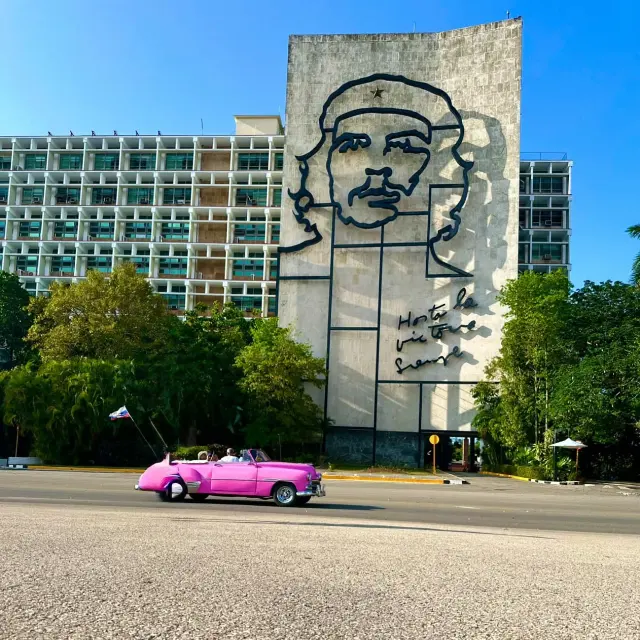
 Vibrant Scenes of Havana in Cuba
#Cuba
1 ideas
Vibrant Scenes of Havana in Cuba
Get new #Cuba ideas by email
Every Thursday: the week's best ideas, with the newest from #Cuba.
Related tags
Cuba: Island Colour, Music and Everyday Life
Cuba is an island in the Caribbean, and the word carries a whole set of images for people who have never been there: painted facades, laundry strung between balconies, old cars, a guitar somewhere down the street. Those images are real, but they are only the surface of a place whose culture runs much deeper than its postcard.
An island shaped by many hands
Cuban culture formed from the meeting of indigenous Caribbean peoples, Spanish colonisers, and Africans brought to the island enslaved, later joined by migrants from Haiti, China, the Canary Islands and elsewhere. You can read that history in the food, the religion, the language and the music. Nothing on the island is quite "pure" anything, which is exactly what makes it interesting.
Music and dance
Read more
Music is not background in Cuba; it is a social act. Son, with its gentle guitar and call-and-response singing, is usually described as the root of much Cuban popular music. Rumba, born in the port neighbourhoods, is percussion-led and improvised. Elsewhere you will meet trova, bolero, mambo, chachachá and the brass-heavy bands that fill dance floors. A beginner's advice: don't wait until you can dance "properly" before you try. The steps are learned in the doing, with a partner and a lot of laughter.
Streets and architecture
Havana's old centre, Trinidad, Camagüey and Santiago de Cuba are the places most people picture. You will find arcades, shuttered windows, inner courtyards, tiled floors and wrought-iron grilles, often in varying states of repair. Photographers are drawn to the way daylight falls across peeling paint, and residents are drawn to the shade of a doorway. If you take photographs of people, ask first, and be ready to say thank you.
Food, tobacco and craft
Cuban home cooking is built on rice and beans, root vegetables, plantain, pork, and fruit that tastes of the sun. Tobacco grows best in the west, around Pinar del Río, where leaves are dried and rolled by hand. Look for the small things made locally: embroidered linen, carved wood, painted ceramics, woven palm, and jewellery from recycled materials. Buying directly from makers is usually the best way to bring something home that means something.
What to keep in mind
- Learn a few phrases of Spanish. A greeting opens doors.
- Bring small change; many everyday transactions are informal.
- Water, sun and heat are serious. Drink more than you think you need.
- Ask before photographing people, homes or ceremonies.
- Music, food and conversation are not performances for visitors. Join in politely or simply enjoy them.
- Resources are shared and reused out of necessity, not fashion. Treat that with respect.
Cuba rewards curiosity more than a checklist. The island's real beauty is in the way people gather — on a doorstep, around a table, beside a drum — and visitors are usually welcome to sit down, too.
#Cuba: frequently asked questions
What should I know before a first trip to Cuba?
Go expecting to talk to people rather than to tick off sights — a greeting in Spanish and a little patience open far more doors than a fixed itinerary. Pack for heat and strong sun, plan to drink more water than feels necessary, and leave room in your day for the unplanned conversation or meal that turns out to be the highlight.
Do I need to know how to dance before I go?
No. Cuban music is a social activity rather than a show put on for visitors, and the steps are picked up in the doing, usually with a partner and a good deal of laughing. Watch for a while if you prefer, then join in when it feels natural — enthusiasm counts for more than technique.
What is Cuban home cooking actually like?
It is generous, simple food built around rice and beans, root vegetables, plantain, pork and fruit that ripens in the heat. The best versions are rarely in guidebooks — a family kitchen, a small neighbourhood spot, or a table someone invites you to will tell you more than any menu.
Which souvenirs are worth bringing home?
Look for things made by hand nearby: embroidered linen, carved wood, painted ceramics, woven palm, and jewellery worked from recycled materials. Buying directly from the person who made it usually means a better object and a better story, and it keeps the money where the craft is.
How should I behave when photographing people and streets?
Ask before you photograph a person, a home or a ceremony, and be ready with a thank you whether the answer is yes or no. The peeling paint and falling light that draw photographers are also people's daily surroundings, so treat a doorway as someone's front room rather than a backdrop.
What is the most common mistake visitors make?
Treating Cuban music, food and street life as a performance laid on for tourists, when in fact it is ordinary life happening in public. Join in politely or simply enjoy it from the edge, and remember that sharing and reusing resources is a necessity here rather than a style choice — treat it with respect.
Videos come from YouTube and posts from Instagram; titles and summaries are our own. All rights belong to their creators.