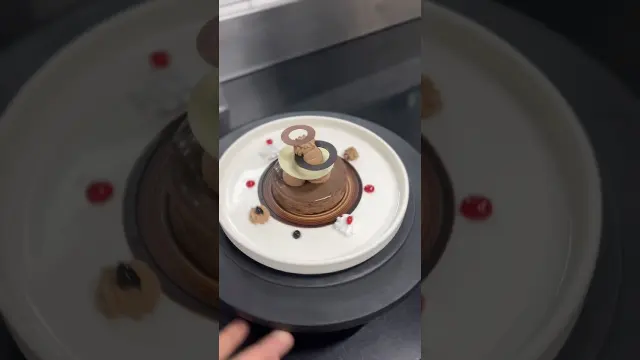
 Chocolate Tarts Plating Technique for Restaurants
#Culinary Art
1 ideas
Chocolate Tarts Plating Technique for Restaurants
Get new #Culinary Art ideas by email
Every Thursday: the week's best ideas, with the newest from #Culinary Art.
Related tags
Culinary Art: Plating, Presentation and the Craft of the Plate
Culinary art is the branch of cooking concerned with how food looks: the arrangement, colour, texture and proportion of what reaches the table. It sits alongside flavour and technique rather than above them — a plate is only truly well composed when the eye and the palate agree. The practice draws on older traditions of banquet cookery, confectionery and still-life painting, where the arrangement of food was treated as a visual discipline in its own right.
What the craft involves
Composition on a plate rests on a few quiet principles. Balance is the first: weight on the plate should feel deliberate, not lopsided. Contrast comes next — soft against crisp, pale against deep colour, a sauce with body against something light. Proportion matters too, because a modest portion placed with care reads as generous, while a crowded plate reads as anxious. Height and negative space do real work; empty porcelain is not waste.
Main styles and techniques
Read more
Broadly, plating falls into a few recognisable approaches. The classical style builds in the centre, often with a starch, a protein and a garnish in careful relation. The free-form or scattered style places components loosely, using the plate as a canvas rather than a frame. Minimal plating reduces to two or three elements and relies on precision. There are also nested and layered styles, quenelle and rocher shaping, sauce work in dots, swooshes or pools, and the use of edible flowers, herbs and micro-greens as accents rather than decoration for its own sake.
Techniques worth learning early include portioning with a consistent hand, wiping rims clean, keeping the plate warm or chilled to suit the dish, and tasting as you build so the visual choices never outrun the flavour.
Where to begin
Start with one colour family and one texture contrast, and see how far that takes you. Learn to use a squeeze bottle and a spoon before investing in anything more elaborate. Practise on plain white plates, which hide nothing. Work out where you want the diner's eye to land, then let everything else support that point rather than compete with it.
Practical habits
- Plan the plate on paper before service; improvisation under pressure tends to tighten into a pile.
- Keep garnish edible and relevant — if it does not belong in the mouth, it does not belong on the plate.
- Consider the diner's handedness and the angle at which the plate will be set down.
- Remember that food continues to settle, wilt and bleed after plating; build with that in mind.
- Restraint is a technique. Removing one element often improves a composition more than adding two.
Culinary art rewards patience and a good eye more than expensive equipment. A sharp knife, a steady hand and a willingness to look closely at what you have made will carry you a long way.
#Culinary Art: frequently asked questions
How do I get started with culinary art if I have no training?
Begin with plain white plates, which reveal every mistake and teach you faster than patterned ones. Pick a single colour family and a single texture contrast to work with, and practise until the composition feels deliberate rather than accidental. A squeeze bottle and a good spoon will take you further than any specialised tool.
What equipment do I actually need for food plating?
Very little beyond what a normal kitchen already holds: a sharp knife, a steady hand, a spoon for sauce work and a squeeze bottle for controlled dots and lines. Plates in a consistent size and colour matter more than gadgets, and a warm or chilled plate suited to the dish does quiet work on its own. Expensive equipment rarely improves a composition that was not thought through.
Which plating style should I choose?
It depends on the dish and the mood you want to set: a classical build in the centre reads as generous and traditional, while a scattered free-form arrangement feels modern and relaxed. Minimal plating suits a few strong elements and punishes anything imprecise, so it is worth attempting only once your hand is steady. Choose the approach that lets the food look like what it is rather than forcing it into a fashionable shape.
How do I keep a plate looking good between the kitchen and the table?
Plan the plate on paper beforehand, because improvising under pressure tends to collapse into a heap. Remember that food keeps settling, wilting and bleeding once plated, so build with the time to the table in mind and place wet elements where they will not spread. Wipe the rim, check the angle the plate will be set down at, and consider which hand the diner will use.
What mistakes do beginners make most often?
The usual one is crowding: a modest portion placed with care reads as generous, while a full plate reads as anxious. Another is decorating with things that do not belong in the mouth, such as inedible garnishes or herbs added purely for colour. Learning to remove an element rather than add another is often the single biggest improvement.
Do you have ideas for plating a dessert for a special occasion?
Tarts and other set desserts reward a clean slice, a controlled sauce element and a garnish that genuinely belongs in the mouth, such as a herb or a shard of the same pastry. Height and empty space do real work on a dessert plate, so leave the porcelain visible rather than filling it. Keep the palette restrained and let one point on the plate hold the eye while everything else supports it.
Videos come from YouTube and posts from Instagram; titles and summaries are our own. All rights belong to their creators.