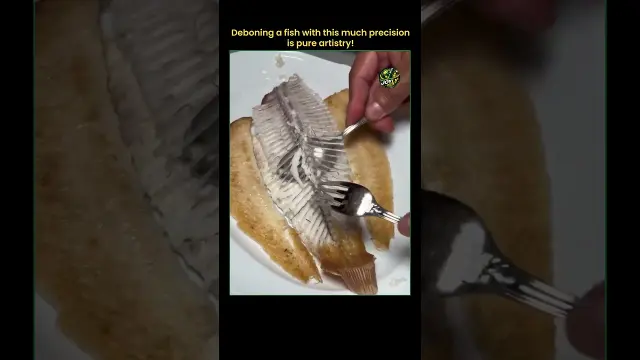
 Chef Deboning a Whole Fish on the Guest's Plate
#Culinary Craft
1 ideas
Chef Deboning a Whole Fish on the Guest's Plate
Get new #Culinary Craft ideas by email
Every Thursday: the week's best ideas, with the newest from #Culinary Craft.
Related tags
Culinary Craft: The Skills Behind Good Cooking
Culinary craft is the part of cooking that lives in your hands. Recipes tell you what to make; craft is what lets you make it well, again and again, with whatever ingredients you happen to have. It is the difference between following a dish and understanding one.
Where it comes from
Cooking has long been organised as a trade. Kitchens trained people through apprenticeship, moving them from simple preparation to the more demanding stations, and the knowledge passed along by demonstration rather than by written instruction. Professional kitchens still carry that structure: a brigade divided by task, each role building on the last. What the tradition preserved was not a set of recipes but a set of techniques, and those have proved remarkably durable. A braise, a stock, a laminated dough or a filleted fish is done much the way it was done long before anyone wrote it down.
The main areas of the craft
Read more
Knife work sits at the foundation. Consistent cuts matter because they decide how evenly food cooks, and learning to keep an edge and use it safely is the first real skill most cooks acquire.
Butchery and fish work come next: understanding how an animal or a fish is put together so you can take it apart cleanly, waste little and cook each part appropriately.
Heat control is the quiet centre of the craft. Knowing what a pan is doing, when to add food, when to leave it alone and when to move it is what separates food that is cooked from food that is merely hot.
Sauces and stocks teach building and balancing: extracting flavour, reducing it, and correcting seasoning at the end.
Pastry and baking reward precision, since proportion and temperature behave less forgivingly there than in savoury cooking.
Fermentation and preservation, from pickles to cured foods, extend a kitchen's reach and its calendar.
Plating and service are craft too: temperature, timing and restraint on the plate.
What beginners should know
Start with a sharp knife and a stable board. Learn to hold the knife properly and to curl your guiding hand, then practise on inexpensive ingredients until the motion is boring. Learn to salt and taste as you go rather than at the end. Set out what you need before you start, and clean as you work. Choose a handful of foundational preparations and repeat them until they are instinctive; repetition teaches more than variety at first.
Practical advice
Ask why a technique works, not only how. Watch the food rather than the clock. Taste constantly. Treat trim and offcuts as material, not rubbish: bones become stock, scraps become fillings. And accept that skill arrives slowly, in small increments, which is exactly what makes it worth having.
#Culinary Craft: frequently asked questions
How do I start learning culinary craft at home?
Begin with the basics rather than with ambitious dishes: get a sharp knife and a board that will not slide, learn a proper grip, and practise the same simple cuts on cheap ingredients until the motion stops feeling like effort. Pick a few foundational preparations and repeat them often, because repetition builds instinct faster than a constantly changing menu. Salt and taste as you go, and set out what you need before you begin.
What equipment do I actually need to practise the craft?
Very little beyond a knife you keep sharp, a stable cutting surface, a couple of heavy pans and a means of measuring temperature and weight, since pastry in particular depends on trustworthy measurements. Tools matter far less than understanding what the food in front of you is doing, so resist buying gadgets before you know what problem they solve. As you go, save trim and bones, which turn into stock and fillings instead of waste.
Which area of cooking should a beginner focus on first?
Knife work and heat control give the most return, because consistent cuts decide how evenly things cook and reading a pan is what separates food that is properly cooked from food that is merely hot. Once those feel natural, move on to sauces and stocks, which teach building and balancing flavour. Pastry, butchery and fermentation are better tackled afterward, since they punish imprecision more sharply.
Is pastry really harder than savoury cooking?
It is less forgiving rather than harder, since proportions and temperatures there behave with far less slack than they do in a stew or a sauté. That strictness is what makes it a good teacher, because mistakes show up clearly and force you to notice what caused them. If you are new to it, weigh ingredients rather than eyeballing them and follow the method closely before you start improvising.
What mistakes do people make when learning to cook?
The most common is watching the clock instead of the food, which leads to over- or under-cooked results when the pan, the thickness or the ingredients are not what the recipe assumed. Another is seasoning only at the end instead of tasting throughout, and a third is chasing variety instead of drilling the same fundamentals until they are automatic. Treating offcuts as rubbish rather than material is a quieter mistake that costs both flavour and money.
How do I build an occasion menu around culinary craft rather than recipes?
Plan the cooking around technique and timing rather than around a stack of dishes: choose preparations you can execute confidently, then work out which ones can be done ahead and which must be finished at the last moment. Pastry, pickles and cured items can carry much of the work earlier, leaving the hot elements and plating to the final stretch. Restraint on the plate, with everything served at the right temperature, reads as more skilled than a crowded table.
Videos come from YouTube and posts from Instagram; titles and summaries are our own. All rights belong to their creators.