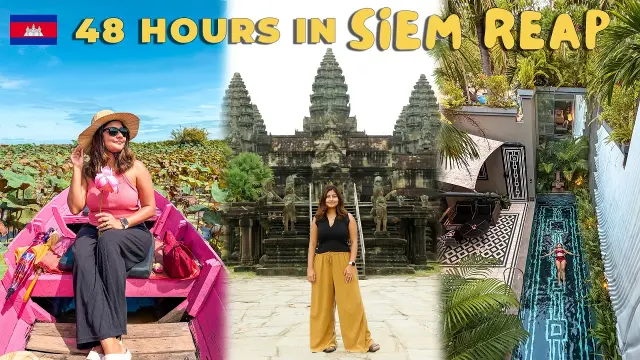
 48 hours in Siem Reap beyond Angkor Wat
#Cultural Dance
1 ideas
48 hours in Siem Reap beyond Angkor Wat
Get new #Cultural Dance ideas by email
Every Thursday: the week's best ideas, with the newest from #Cultural Dance.
Related tags
Cultural Dance: Traditions, Styles and Meaning
What cultural dance means
Cultural dance is dance that grows out of a particular community’s history, beliefs, celebrations, and everyday life. It can be used to tell stories, mark important events, honour ancestors, welcome guests, or simply bring people together. In many places, cultural dance is passed from one generation to the next through family, festivals, religious ceremonies, and community gatherings.
Unlike dances created mainly for stage performance, cultural dances are often closely tied to identity and shared memory. They may include specific steps, hand movements, gestures, costumes, music, and rhythms that carry meaning. Some dances are ancient in origin, while others have changed over time as communities have adapted them to new settings.
Where it comes from
Read more
Cultural dance can be found in every region of the world. It often develops from a blend of local customs, storytelling, work patterns, spiritual practice, and social life. In some traditions, dance is linked to harvests, weddings, coming-of-age ceremonies, or seasonal festivals. In others, it is part of prayer, ritual, or courtly entertainment.
Because dance is a living tradition, it may look different from one village, region, or family to another. The same dance can have several versions, each shaped by local taste and history. That is part of what makes cultural dance so rich: it is not fixed in one form, but carried by the people who practice it.
Main kinds and styles
There are many ways to classify cultural dance, but a few broad types are common:
- Ritual and ceremonial dances, performed for spiritual or communal occasions
- Social dances, shared at gatherings, weddings, and festivals
- Folk dances, rooted in local customs and often taught within communities
- Narrative dances, which use movement to express stories, myths, or historical events
- Court or classical traditions, which may have formal training, set patterns, and refined aesthetics
Some cultural dances are quiet and graceful, while others are energetic and rhythmic. Some focus on footwork, others on hand gestures, partner movement, circles, or group formations. Music may come from drums, strings, singing, clapping, or simple rhythmic accompaniment.
What to notice as a beginner
If you are new to cultural dance, start by watching with care and respect. Notice the posture, rhythm, spacing, and relationship between dancers and musicians. Many cultural dances are not just about shape or technique; they are about intention, expression, and connection to the occasion.
A few useful things to keep in mind:
- Learn the context of the dance before trying to copy it
- Pay attention to costume and music, since they often carry meaning
- Accept that some dances are reserved for specific groups or ceremonies
- Be patient with repetition, because many traditions are learned by imitation
- If you are joining in, follow local guidance and ask respectfully when unsure
Why cultural dance matters
Cultural dance helps preserve language, memory, and shared values in a form that can be seen and felt. It strengthens community bonds and gives people a way to celebrate belonging. For many, it is also a source of pride and continuity: a living art that keeps tradition active rather than locked away.
Whether you are observing, learning, or taking part, the best approach is respect. Cultural dance is not only performance. It is a way of carrying history in the body, one step at a time.
#Cultural Dance: frequently asked questions
How do I start learning a cultural dance if I have no experience?
Begin by watching closely and often, paying attention to posture, rhythm, and how dancers relate to the musicians. Learning usually happens by imitation and repetition within a community rather than from a written manual, so joining a local group or class tied to that tradition is the most respectful route. Ask questions humbly and let experienced dancers guide your pace.
What do I need before joining a cultural dance practice?
Comfortable clothing you can move in, an openness to the context behind the steps, and a willingness to listen more than you perform. Some traditions involve specific costume, music, or ceremonial elements that you should not improvise on your own. Check with the group beforehand about what to bring and what to leave alone.
How do I choose which kind of cultural dance to explore?
Start with what draws you — the music, a story you want to understand, or a community you already feel connected to. Ritual, social, folk, narrative, and court traditions each ask something different of a learner, from quiet observation to lively group participation. Pick one that matches your energy and the access you realistically have to people who practice it.
What are common mistakes beginners make with cultural dance?
The biggest one is copying steps without learning what they mean or when they are appropriate to perform. Others include treating a sacred or reserved dance as casual entertainment, and rushing past repetition in search of variety. Slowness, respect, and asking before assuming will prevent most of these.
How can cultural dance fit into a wedding or family celebration?
Many families include a dance from their heritage as a way to honour where they come from and involve relatives of different ages. It works best when someone from within the tradition guides the choreography and the choice of music and costume. If you are borrowing from a culture that is not yours, invite people from that community to lead rather than styling it yourself.
How do I show care and respect for a dance tradition I am learning?
Credit where you learned it, follow local guidance on when and where it may be performed, and accept that some parts are not open to outsiders. Keep practicing rather than treating it as a one-time novelty, since these traditions live through continued participation. Respect, not perfect technique, is what carries a tradition forward.
Videos come from YouTube and posts from Instagram; titles and summaries are our own. All rights belong to their creators.