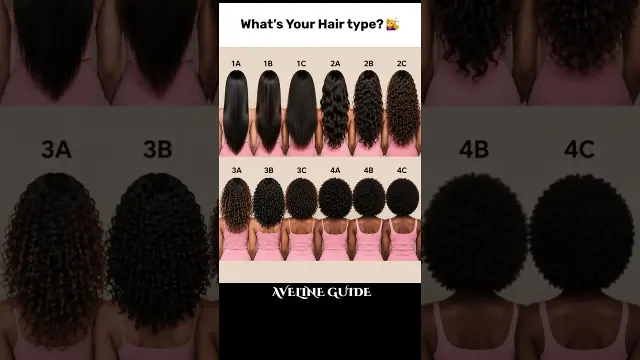
 Hair Types Explained: Find Your Curl Pattern from 1A to 4C
#Curl Pattern
1 ideas
Hair Types Explained: Find Your Curl Pattern from 1A to 4C
Get new #Curl Pattern ideas by email
Every Thursday: the week's best ideas, with the newest from #Curl Pattern.
Related tags
Understanding Curl Pattern in Hair
Curl pattern describes the natural shape your hair takes as it grows from the scalp. Some hair falls straight, some forms loose waves, and some creates defined curls or tight coils. Knowing your curl pattern can help you choose gentler care, better styling methods, and products that suit your hair’s needs.
What curl pattern means
Curl pattern is usually used as a simple way to describe hair texture. It is often grouped into broad categories, from straight to wavy, curly, and coily. These categories are helpful, but real hair does not always fit neatly into just one type. Many people have more than one curl pattern on the same head, with different textures at the roots, sides, or back.
Your curl pattern is influenced by the shape of the hair follicle and the way the hair strand grows. A rounder strand tends to lie straighter, while a more oval or flattened strand is more likely to bend or curl. Genetics plays a major role, but hair can also change over time because of age, hormones, heat styling, chemical treatments, and general hair condition.
Read more
Common curl pattern types
- Straight hair: lies flat and usually forms little or no bend.
- Wavy hair: has a loose S-shape and can range from soft waves to more defined bends.
- Curly hair: forms visible spirals, ringlets, or corkscrew shapes.
- Coily hair: makes tighter curls or zigzag patterns and often has a lot of natural shrinkage.
Within each broad group, texture can still vary. For example, some curls are loose and stretched, while others are dense and springy. Two people can both have curly hair and still need very different care.
What beginners should know
If you are trying to understand your curl pattern, start by looking at your hair in its natural state. Wash it gently, avoid heavy styling products for a day or two, and let it dry without brushing it out. That makes the natural shape easier to see. Remember that curl pattern is only one part of your hair’s character. Density, thickness, porosity, and scalp condition also matter.
It helps to think of curl pattern as a guide, not a rule. Hair is rarely identical from root to tip, and it may behave differently in humid weather, after washing, or after heat styling. The goal is not to force your hair into a category, but to learn what it naturally does.
Care tips for different curl patterns
- Straight and wavy hair often benefits from lightweight cleansing and conditioning, so it does not feel weighed down.
- Curly and coily hair often needs more moisture, gentler handling, and less friction from brushing or towel-drying.
- Detangling is usually easiest when hair is damp and coated with conditioner or a slip-rich product.
- Heat styling, tight pulling, and harsh chemical processing can weaken any curl pattern if used often.
- Sleeping on smooth fabric or using protective styling can help reduce tangling and breakage.
A practical approach
When you know your curl pattern, pay attention to what your hair likes rather than chasing a perfect type. Observe how it responds to water, combing, drying, and styling. A simple routine that respects your natural texture is usually better than a complicated one. Healthy, well-cared-for hair often shows its curl pattern more clearly, whatever shape that may be.
#Curl Pattern: frequently asked questions
How do I figure out my curl pattern?
Start by looking at your hair in its natural state: wash it gently, skip heavy styling products for a day or two, and let it air dry without brushing it out so the true shape shows. Pay attention to how much bend or spiral forms, and check different sections, since the back and sides can differ from the front. Treat what you see as a guide rather than a fixed label.
What do I need to get started with caring for curly or coily hair?
A gentle cleanser, a conditioner with plenty of slip for detangling, and a way to dry your hair without rough friction will carry you a long way. A wide-tooth comb or your fingers, plus a smooth fabric for drying and sleeping on, helps reduce breakage. Keep the routine simple at first and add products only when you notice a specific need.
Why does my hair seem to have more than one curl pattern?
It is very common to have looser waves at the roots or sides and tighter curls elsewhere, because texture is rarely uniform across a whole head. Hair can also change over time with age, hormonal shifts, heat styling, chemical treatments, and overall condition. Care for the sections individually instead of expecting one routine to suit everything.
How should I care for my curl pattern day to day?
Straight and wavy hair usually does best with lightweight cleansing and conditioning so it doesn't feel weighed down, while curly and coily hair tends to need more moisture and gentler handling. Detangle while hair is damp and coated with conditioner, and limit heat styling and tight pulling. Protective styling and sleeping on smooth fabric help cut down on tangling.
What mistakes should I avoid when caring for curls?
Brushing dry curly hair, towel-drying roughly, and over-washing are common habits that disrupt the natural shape and cause frizz or breakage. Another mistake is chasing a perfect type category instead of noticing what your own hair actually responds well to. Frequent heat and harsh chemical processing can weaken the pattern over time.
Does knowing my curl pattern really matter?
It helps as a starting point for choosing gentler handling, styling methods, and products suited to your texture. But density, strand thickness, porosity, and scalp condition matter just as much, so the category alone won't tell the whole story. Observing how your hair behaves with water, combing, and drying is the more reliable guide.
Videos come from YouTube and posts from Instagram; titles and summaries are our own. All rights belong to their creators.