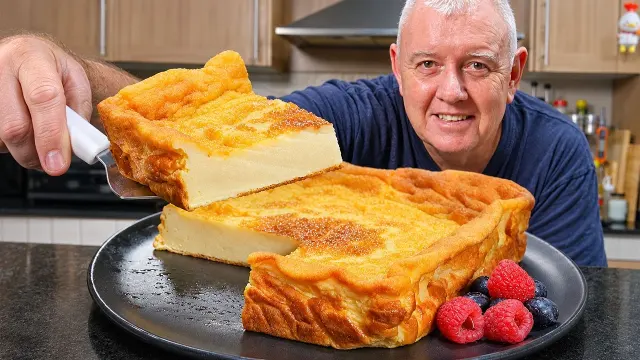
 Fresh Lemon Custard Cake Recipe Without Pastry
#Custard Cake
1 ideas
Fresh Lemon Custard Cake Recipe Without Pastry
Get new #Custard Cake ideas by email
Every Thursday: the week's best ideas, with the newest from #Custard Cake.
Related tags
Custard Cake: A Soft, Creamy Classic Explained
Custard cake is less a single recipe than a family of bakes in which a softly set custard — eggs, milk, sugar, often a little vanilla — forms the heart of the cake. Sometimes the custard sits in a pastry shell, sometimes on a sponge base, and sometimes it makes up the whole of the filling, with only a thin crust of caramel or crumb to hold it. What unites them is texture: tender, trembling, faintly sweet, and rich without being heavy. If you have ever eaten a slice of flan, a warm pastel de nata, or a plain wedge of French flan, you already know the pleasure of it.
Where it comes from
Custard itself is an old European kitchen idea, and nearly every country that cooks with milk and eggs has folded it into a cake of its own. In Portugal, small custard tarts are baked hot so the surface blisters and darkens. In France, the flan pâtissier is a deep, cool slab of custard in a thin pastry case, sliced like a pie. In Spain and Latin America, flan is turned out of its mould with a layer of amber caramel running down its sides. The English custard tart keeps things plain, often dusted with nutmeg. None of these is a copy of the others; each grew from what local kitchens had to hand.
The main kinds
Read more
- Baked custard cakes: the custard sets in the oven in a water bath or at low heat, giving a smooth, sliceable result.
- Custard-topped or custard-filled cakes: a sponge or shortcrust base carries a softer custard on top or inside.
- Magic custard cake: one thin batter separates in the oven into three layers — a light sponge on top, a custard middle, a denser base.
- No-bake versions: thickened custard set with gelatine or cornflour, layered with biscuits or fruit.
What beginners should know
Custard is gentle by nature, so heat is the thing to watch. Too much of it and the eggs curdle, leaving a grainy texture and watery edges. Baking in a water bath, keeping the oven moderate, and pulling the cake out while the centre still wobbles slightly all help. It will firm up as it cools.
Straining the custard mixture before baking catches stray bits of egg and gives a silkier finish. Room-temperature eggs and warm milk blend more evenly than cold ones. And resist cutting too soon: a custard cake needs time to settle, ideally a few hours in the fridge, which also makes it easier to slice cleanly.
Practical tips
Add flavour lightly — vanilla, lemon zest, a little nutmeg, a spoon of rum — so the custard stays the point. If you are using fruit, choose kinds that do not release too much liquid. Store the cake covered and cold, and bring it out shortly before serving for the best texture. Serve it plainly, or with berries, cream or a dusting of sugar. It is a humble sort of bake, and that is exactly why it keeps being made.
#Custard Cake: frequently asked questions
How do I start making a custard cake if I've never baked one before?
Begin with a simple baked custard, since it teaches you how the mixture should look and feel before you take on layered or pastry-based versions. Keep the batter plain at first and focus on gentle heat and slow cooling rather than on extra flavourings. Once you can produce a smooth, sliceable result reliably, the fancier styles become much easier.
What do I actually need in the kitchen to make one?
The ingredients are ordinary: eggs, milk, sugar, and something to set the custard in or on — pastry, sponge, or just a lined tin. Beyond that, a whisk, a bowl, a fine sieve for straining, and a roasting pan big enough to hold your tin for a water bath will see you through most versions. A thermometer is helpful but not essential; you can judge doneness by look and wobble.
Which kind of custard cake should I choose?
Pick based on how much structure you want: a pastry-based bake gives clean slices and a crisp edge, while a sponge-based one is softer and more forgiving. No-bake versions are the easiest to fit around a busy day because they set in the fridge without any oven time. If you like a bit of drama, the style that separates into distinct layers as it bakes is worth trying once you're comfortable with the basics.
How should I store and serve a custard cake?
Keep it covered and cold, and let it come out shortly before you eat so the texture softens again from fridge-cold. It slices most cleanly after it has had time to settle, so resist cutting into it while it is still warm. Serve it plain or with fruit, cream, or a light dusting of sugar — the custard should stay the centre of attention.
What are the most common mistakes people make with custard cakes?
The big one is heat: an oven that is too hot or a tin left in too long turns the eggs grainy and leaves watery edges. Another frequent slip is cutting in too early, before the custard has had time to firm up, which makes the slices collapse. Straining the mixture before it bakes and using room-temperature eggs with warm milk will head off most of the rest.
Can I make a custard cake without pastry, and is it worth it?
Yes — the custard can set entirely on its own, or sit on a sponge or crumb base instead of a pastry case. Skipping pastry makes the bake lighter and quicker, and it suits citrus or vanilla flavours that would otherwise compete with the crust. It also means fewer steps to get wrong while you are learning.
Videos come from YouTube and posts from Instagram; titles and summaries are our own. All rights belong to their creators.