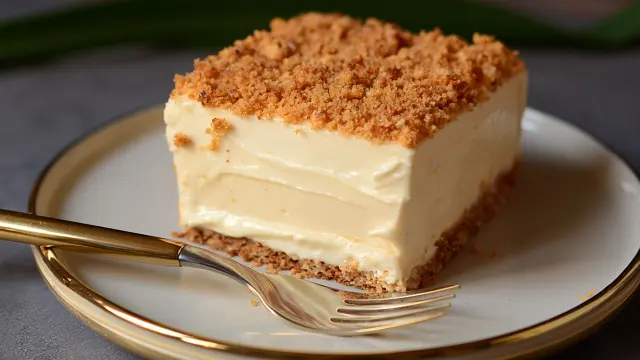
 Easy Twenty-Minute Custard Icebox Cake
#Custard Cream
1 ideas
Easy Twenty-Minute Custard Icebox Cake
Get new #Custard Cream ideas by email
Every Thursday: the week's best ideas, with the newest from #Custard Cream.
Related tags
Custard Cream: The Classic Biscuit and How to Use It
A custard cream is a sandwich biscuit: two thin, pale, shortcake-style biscuits joined by a sweet cream filling flavoured with vanilla and custard. It is one of the most familiar biscuits in Britain, sold in every supermarket and eaten with tea at kitchen tables and in offices as much as at formal afternoon teas. The flavour is mild and comforting rather than rich — a soft vanilla sweetness with a faint custardy note — and that mildness is exactly why it works as an ingredient as well as a snack.
Where it comes from
The custard cream belongs to a family of biscuits that grew up alongside industrial baking, when factories learned to make sandwich biscuits cheaply and consistently. It sits with the likes of the bourbon and the jam sandwich cream: two biscuits, one filling, wrapped in a decorative outer layer that is stamped rather than hand-finished. Traditional versions are embossed with a repeating pattern of dots, scrolls and a small baroque frame, and the classic pairing is a plain or lightly golden biscuit with a pale cream centre.
What makes it recognisable
Read more
- Two thin biscuits, usually stamped with an ornate repeating pattern.
- A sweet, vanilla-forward cream filling with a faint custard flavour.
- A dry, snappy texture that softens quickly when dunked or layered.
- A long shelf life, which makes it a practical store-cupboard ingredient.
Custard cream as a dessert ingredient
Because the biscuit is dry and lightly flavoured, it takes on moisture without turning to paste, which makes it a natural for no-bake puddings. Crushed into crumbs and mixed with melted butter, it becomes a cheesecake or tart base with a toasted, slightly caramel edge. Layered whole with whipped cream, custard or a soft cream cheese mixture, it forms the backbone of an icebox cake, where the biscuits soften overnight into something closer to cake than cookie. Crumbled coarsely, it makes a good topping for trifles, mousses and ice cream, adding crunch where softer textures would otherwise dominate.
Tips for beginners
- Crush biscuits in a sealed bag with a rolling pin, or pulse briefly — stop before they turn to dust, so the crumbs keep some bite.
- For a base, use roughly twice as much crumb by weight as melted butter, and press it firmly before chilling.
- In a layered dessert, give the assembled dish several hours in the fridge; the biscuits need time to soften evenly.
- Add a pinch of salt to crumb mixtures to keep the sweetness in check.
- Store biscuits in an airtight tin away from damp — they stale quickly once the packet is open.
A note on the name
In some places "custard cream" means the filling itself: a thick, cooked vanilla cream used in cakes and pastries. Both meanings share the same soft, familiar flavour, so a recipe that calls for one and uses the other will still taste right, though the texture will differ.
#Custard Cream: frequently asked questions
What exactly is a custard cream?
It is a sandwich biscuit made of two thin, pale shortcake-style biscuits with a sweet cream filling in the middle, flavoured with vanilla and a hint of custard. It is one of the most familiar biscuits in Britain, mild and comforting rather than rich, which is why it works as a snack and as a baking ingredient.
Can I use custard creams in desserts instead of just eating them?
Yes — the biscuit's dry, lightly flavoured crumb makes it unusually good for no-bake desserts. Crushed and bound with melted butter it becomes a cheesecake or tart base, and layered whole with whipped cream, custard or soft cream cheese it forms the backbone of an icebox cake. Crumble it coarsely over trifles, mousses or ice cream when you want a bit of crunch.
How do I crush the biscuits for a base without ending up with paste?
Seal them in a bag and go over them with a rolling pin, or pulse them in short bursts and stop while the crumbs still have some bite. Press the mixture firmly into the tin and chill it before you add the filling. A pinch of salt in the crumbs keeps the sweetness from taking over.
Why did my layered custard cream dessert turn out uneven or too soft?
Layered desserts need time — the biscuits have to draw moisture and soften evenly, so give the assembled dish several hours in the fridge rather than serving it straight away. If you rush it, some biscuits stay hard while others collapse. Assembling it a day ahead usually gives the most even, cake-like result.
What is the best way to store custard creams?
Keep them in an airtight tin, away from damp, since they go stale quickly once the packet is open. Their long shelf life is part of what makes them handy to have in the cupboard for impromptu puddings, but that only holds if they stay sealed and dry.
Is the custard cream in a recipe always the biscuit?
Not always — in some places the same phrase means the thick cooked vanilla cream used to fill cakes and pastries. The two share the same soft, familiar flavour, so a recipe calling for one and made with the other will still taste right, though the texture will be different.
Videos come from YouTube and posts from Instagram; titles and summaries are our own. All rights belong to their creators.