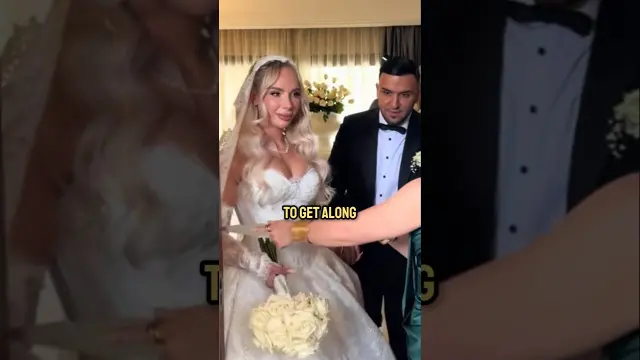
 Bride Reacts to an Old Sword Tradition at the Door
#Customs
1 ideas
Bride Reacts to an Old Sword Tradition at the Door
Get new #Customs ideas by email
Every Thursday: the week's best ideas, with the newest from #Customs.
Related tags
What Customs Are and Why We Keep Them
A custom is a way of doing something that a group of people has repeated for long enough that it no longer feels like a choice. It is inherited rather than decided — you learn it by standing next to someone at a table, a doorway or a graveside and copying what they do. Customs cover the big occasions and the tiny ones: how you greet an elder, what you serve at a certain time of year, who speaks first, who sits where.
Where customs come from
Most customs grew out of practical needs that were later given meaning. A community needed a public way to recognise a marriage, a birth, a death or a new season, and the gesture — a shared meal, a walk between two places, a gift passed from hand to hand — became the memory-keeper. Over generations the practical reason faded and the gesture stayed, often acquiring a story to explain itself. This is why the same action can mean different things in two villages, and why two families can hold completely different versions of the "same" tradition.
The kinds you will meet
Read more
Customs cluster around the moments a community wants to witness together:
- Threshold customs: things done at doorways, gates and boundaries, marking the crossing from one state to another.
- Processional customs: walking, driving or being carried somewhere as part of the ceremony itself.
- Offering and exchange customs: food, drink, cloth, coins or flowers given to seal a promise.
- Warding customs: gestures meant to protect or bless, often involving metal, water, fire or a spoken phrase.
- Calendar customs: what a household does on particular days of the year, and in what order.
What to know if you are starting out
You do not have to understand a custom to take part in it. Ask someone older, or someone who has hosted the occasion before, what happens and in what sequence; usually they will be delighted that you asked. Ask too who normally performs each part, because the answer is often not the person you would assume.
If you are adapting a custom into your own family, keep the shape and change the details. The power of a tradition tends to lie in its small, fixed physical moments — the object handed over, the step taken, the word said — rather than in elaborate staging. A simplified version done with attention is more affecting than a lavish one done carelessly.
Keeping them alive
Customs survive by being used, not by being protected. Change is normal: every tradition that feels ancient was once somebody's new idea. What keeps a custom going is people who know why it matters to them and who are willing to explain it to whoever is watching. If you inherit one that no longer fits, you are allowed to reshape it — and if you inherit one you love, say the story out loud next time. That is how it reaches the next person.
#Customs: frequently asked questions
How do I begin taking part in a custom I didn't grow up with?
Start by watching rather than performing. Ask the person who usually hosts the occasion to walk you through what happens and in what order, and ask who normally carries out each part, since it is often not who you would expect. Most people are pleased to be asked, and copying alongside them teaches more than any written description.
What do I need before I can hold a custom in my own home?
You need the sequence of small physical actions more than you need equipment. Find out which object is handed over, who moves first, and what is said or not said, then gather only what those moments require. A borrowed dish or a plain candle works fine; the attention you bring matters far more than the setting.
Which kind of custom fits the occasion I'm marking?
Think about what the moment actually is: a crossing, a journey, a promise, a blessing, or a date on the calendar. Doorway and threshold gestures suit arrivals and departures, processions suit ceremonies that need to be witnessed on the move, and offerings of food, cloth or flowers suit pledges between families. Pick the shape that matches the feeling rather than the most elaborate option you have seen.
How do I care for a tradition I've inherited so it doesn't fade?
Use it, and use it often enough that the people around you learn it by standing beside you. Customs live through repetition rather than protection, so the real maintenance is telling the story of why it matters out loud while you do it. If a detail no longer fits your household, reshape it deliberately instead of dropping the whole thing.
What are the common mistakes when adapting a tradition?
The usual one is adding staging and losing the fixed physical moment that gave the custom its weight. Another is changing details without knowing what they were for, which can quietly remove the part that carried the meaning. Keep the shape, adjust the particulars, and check with someone older before you remove anything.
Can I create a new custom for my own family?
Yes, and most traditions people assume are ancient began as somebody's fresh idea. Choose a repeatable gesture tied to a moment you will meet again, such as a greeting at the door or something served at a particular season, and do it the same way each time. Repetition is what turns it from a plan into something your family simply does.
Videos come from YouTube and posts from Instagram; titles and summaries are our own. All rights belong to their creators.