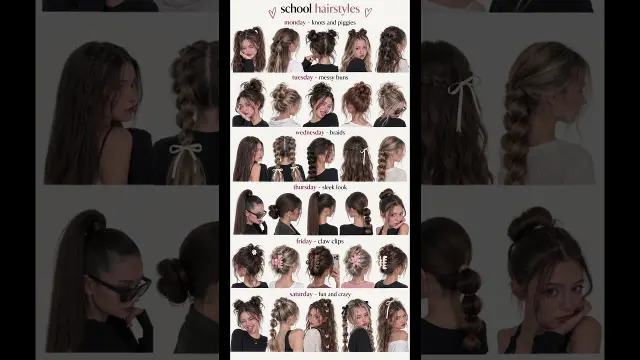
 Cute Braided Hairstyle Ideas to Try on Girls
#Cute Hairstyles
1 ideas
Cute Braided Hairstyle Ideas to Try on Girls
Get new #Cute Hairstyles ideas by email
Every Thursday: the week's best ideas, with the newest from #Cute Hairstyles.
Related tags
Cute Hairstyles: A Beginner's Guide to Everyday Looks
A cute hairstyle is less about following a rulebook and more about the pleasure of a look that suits the person wearing it. It might be playful, soft, tidy or a little undone — what these styles share is that they feel charming, comfortable and easy to live with. Because you can build most of them with a brush, a few hair ties and a handful of pins, cute hairstyles are popular for everyday wear, for school and work, for special occasions and for children who want something fun without a long sitting session.
Where these styles come from
Hairstyling as a craft is as old as human culture: people have braided, wrapped, pinned and coiled their hair across the world for practical reasons and for celebration. Many of the looks that feel fresh and simple today echo techniques passed down through families and communities, from three-strand braids to smooth buns and neatly sectioned partings. Others grew out of everyday improvisation — a quick twist to keep hair out of the face while cooking, working or playing.
The main kinds
Read more
Braids are the backbone of the category: a simple three-strand plait, two pigtail braids, a French or Dutch braid that gathers hair close to the scalp, or a loose side braid for a softer finish. Twists and rope braids suit hair that slips out of plaits easily. Buns and knots — high, low, messy or neat — tidy long hair in seconds and look equally at home at the desk or at a party. Ponytails, half-up styles and small sectioned clips change the shape of a face with very little effort. For shorter hair, headbands, small twists and pinned-back sides create the same sense of shape.
What beginners should know
Start with clean, dry hair and detangle it fully before you begin; most tangles come from rushing. A little leave-in conditioner or a light styling cream can help hair hold a braid, but go easy so the finish stays soft rather than stiff. Section hair with clips as you work so the strands stay separate. Practise one style repeatedly rather than trying many at once — hands learn patterns faster than eyes do. If a braid looks uneven, it is usually because the sections were not equal at the start.
Practical tips
- Use hair-friendly elastics without metal joins, and remove them gently rather than pulling.
- Slide pins in with the ridged side facing the scalp and the tip pointing towards the end of the style; that is what makes them hold.
- Loosen braids and buns slightly with your fingertips after securing them for a softer, less severe look.
- Avoid tight styles worn all day, every day, and especially on children; give hair and scalp regular rest.
- Keep a small comb, a few pins and a spare elastic in your bag — most cute styles can be repaired in under a minute.
Cute hairstyles are a skill, not a talent. Choose a look that matches your hair's length and texture, give yourself room to make mistakes, and the same style will get quicker and neater each time you try it.
#Cute Hairstyles: frequently asked questions
How do I start learning to do cute hairstyles if I've never styled hair before?
Begin with clean, dry hair that has been fully detangled, since rushing through tangles is the most common reason a style comes out messy. Pick one simple look — a basic three-strand braid or a low bun — and practise it repeatedly rather than jumping between many styles, because your hands learn the pattern faster than your eyes do. Keep a comb, a few pins and a spare elastic nearby so you can fix small slips as you go.
What do I actually need to create cute hairstyles at home?
You really only need a brush or comb, hair-friendly elastics without metal joins, and a handful of pins; sectioning clips help keep strands separate while you work. A little leave-in conditioner or light styling cream can give hair some grip, but use it sparingly so the finish stays soft. Most cute looks can be repaired in under a minute with that small kit, which is why it's worth keeping in your bag.
How do I choose a cute hairstyle that suits my hair length and texture?
Match the style to what your hair naturally does: twists and rope braids hold better on hair that slips out of plain plaits, while smooth buns and knots tidy long hair quickly. If your hair is short, headbands, small twists and pinned-back sides create the same sense of shape as a braid or ponytail. Loosening the finished style slightly with your fingertips softens any look so it feels charming rather than severe.
Why does my braid come out uneven, and how can I fix it?
An uneven braid almost always starts with sections that weren't equal when you divided the hair, so take the time to part it evenly before you cross anything over. Clip the sections apart as you work so the strands don't drift back together and blur the pattern. If the finished braid still looks lopsided, gently loosen and re-tension it rather than pulling harder, which only makes it tighter at one side.
How should I care for my hair when I wear cute styles often?
Use elastics without metal joins and remove them gently instead of pulling, and slide pins in with the ridged side toward the scalp and the tip pointing toward the end of the style so they hold without digging. Avoid tight styles worn all day every day, and give hair and scalp regular rest — this matters especially for children. A style that feels comfortable is part of what makes it cute.
What are good cute hairstyle ideas for a special occasion or for a child?
For occasions, a neat low bun, a loose side braid or a half-up style with small sectioned clips changes the shape of the face with very little effort, and each can be dressed up or worn casually. For children, two pigtail braids, a simple plait or pinned-back sides are fun without a long sitting session. In both cases, build in breaks and keep the tension gentle so the experience stays pleasant.
Videos come from YouTube and posts from Instagram; titles and summaries are our own. All rights belong to their creators.