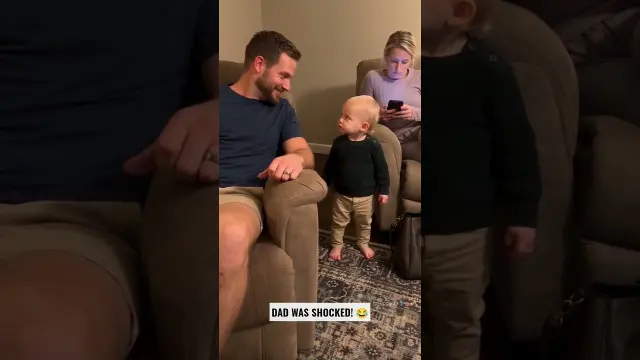
 Funny and Cute Reactions Between Dad and Baby
#Dad
1 ideas
Funny and Cute Reactions Between Dad and Baby
Get new #Dad ideas by email
Every Thursday: the week's best ideas, with the newest from #Dad.
Related tags
Dad: A Guide to Fatherhood and Family Life
Fatherhood is one of the oldest roles a person can take on, and one of the least fixed. A dad might be a biological parent, an adoptive one, a stepfather, a foster father, a grandfather or an uncle who stepped in — the word describes a relationship more than a bloodline. Across cultures the expectations placed on fathers have shifted a great deal over time, from distant provider to active hands-on parent, and most families today hold a mix of both ideas at once. What stays constant is the job's shape: showing up, keeping someone safe, and teaching by example.
What fatherhood involves
Dads tend to combine several roles. There is the practical one — food, shelter, routines, rules, the endless logistics of appointments and school runs. There is the protective one: setting boundaries, teaching safety, being calm in a crisis. There is the playful one, which is where a lot of the joy lives — roughhousing, silly jokes, invented games, the willingness to be a bit ridiculous. And there is the teaching role, which is rarely about formal instruction. Children learn far more from how a father handles frustration, mistakes and other people than from anything he says about them.
Different kinds of dads
Read more
Every father has his own style, and it is common to see a few recognisable ones. Some are the calm, steady type who speak little and stay present. Others are the extroverted, joke-telling dad who fills a room. Some are deeply practical, always building or fixing something; others are the emotional ones who ask real questions and listen to the answers. There is also the long-distance dad keeping in touch by phone, and the dad who becomes a father figure to someone else's child. None of these is the correct model. The useful question is not what kind of dad you are but whether the child feels safe, seen and welcome.
What beginners should know
New fathers often expect an instinct to arrive and are surprised when it does not. Bonding with a baby can take time, especially in the early months when much of the care is feeding and sleeping. Holding, carrying, changing, singing and simply sitting with a baby all build the attachment just as effectively as anything more dramatic.
A few ideas that hold up:
- Take a real share of the work, including the invisible parts — planning, noticing, remembering.
- Talk to children at their level, and let them finish their sentences.
- Keep promises small and frequent; being reliable matters more than being impressive.
- Play physical, playful games when you can. It is one of the easiest ways to connect.
- Show them what a healthy apology looks like. Repairing a rupture teaches more than never having one.
- Look after your own sleep, health and friendships; you parent better from a stable place.
- Make room for the other parent's voice, and agree on the important rules together.
Practical notes
Fatherhood is not a performance, and there is no scoreboard of perfect days. What children remember is the ordinary consistency — the person who was there at dinner, who asked how the day went, who laughed at the things they found funny. Being present most of the time, apologising when you get it wrong, and continuing to try is, for most families, enough.
#Dad: frequently asked questions
How does a new dad start bonding with a baby who mostly eats and sleeps?
Attachment builds through ordinary repetition rather than a single big moment, so take on the hands-on parts of the day — holding, carrying, changing, bathing, singing — even when the baby seems to do little in return. Talk and narrate what you are doing, and give it time; many fathers find the closeness grows gradually over the first months instead of arriving all at once.
What does a dad actually need to be good at the role?
The core skills are unglamorous: being reliably present, staying calm when things go sideways, and noticing what a child needs before they can explain it. Beyond that, a willingness to share the unglamorous background work — remembering appointments, planning, keeping track of things — matters as much as the visible moments. Reliability tends to count for more than any particular parenting technique.
What kind of dad should I try to be?
There is no single right model; calm and quiet fathers, playful ones, practical ones and emotionally open ones all raise secure children. The better question is whether your child feels safe, seen and genuinely welcome around you, and whether your particular strengths are being used rather than imitated. Borrow ideas from fathers you admire, but let your own temperament shape the style.
How do I keep the relationship strong as children grow older?
Keep the everyday contact going — meals together, asking about the day, being around without needing a reason — because that steady ordinary presence is what children remember later. Adjust how you talk as they change: let them finish their sentences, listen more than you lecture, and stay curious about what they care about. When you get something wrong, a plain and honest apology repairs more than pretending it did not happen.
What are the most common mistakes fathers make?
Waiting for a natural instinct to kick in and assuming something is wrong when it does not is a very common one; bonding is usually learned by doing. Another is focusing only on big gestures and milestones while leaving the daily, invisible work to someone else, or treating rules as the whole relationship. Overcorrecting with seriousness is also easy to slip into — play and humour carry a lot of the connection.
Any simple ideas for spending real time together?
Physical, slightly silly play is one of the easiest routes in — invented games, roughhousing, jokes that only the two of you find funny. Everyday tasks work too: cooking, fixing something, running errands, walking the dog, where the conversation happens sideways rather than face to face. The activity matters less than the regularity, so pick things you can repeat often rather than once.
Videos come from YouTube and posts from Instagram; titles and summaries are our own. All rights belong to their creators.