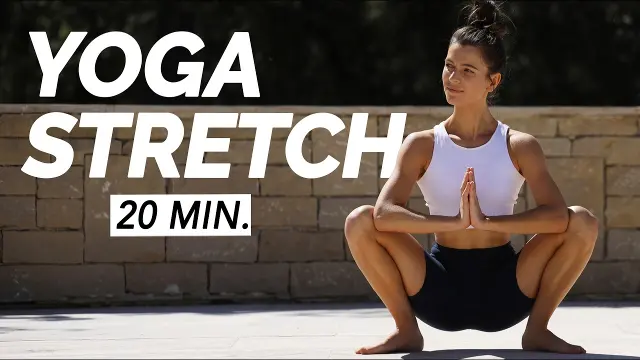
 20 Minute Daily Yoga Stretch Routine for All Levels
#Daily Stretch
1 ideas
20 Minute Daily Yoga Stretch Routine for All Levels
Get new #Daily Stretch ideas by email
Every Thursday: the week's best ideas, with the newest from #Daily Stretch.
Related tags
Daily Stretch: A Simple Guide to Moving More Freely
Stretching is the practice of lengthening a muscle and the connective tissue around it, usually by holding a position or moving slowly through a range of motion. It is one of the oldest forms of body care there is: forms of it appear in yoga, in traditional martial arts, and in the warm-up rituals of dancers and athletes long before anyone wrote a book about flexibility. What all of them share is a simple idea — the body adapts to what you ask of it, and asking it to move through a full range, regularly, keeps that range available to you.
Why a daily habit, rather than an occasional effort
Flexibility responds to frequency more than intensity. A short session most days will do more for you than a long, ambitious one once a week, and it is far easier to keep. Many people stretch in the morning to shake off stiffness from sleep, or in the evening to unwind after hours at a desk. Either works; what matters is that it becomes part of the day's rhythm, like brushing your teeth.
The main kinds of stretching
Read more
- Static stretching: easing into a position and holding it, breathing steadily, for a period of time. The most common and accessible approach.
- Dynamic stretching: controlled, repeated movements through a range of motion, such as leg swings or arm circles. Often used before activity.
- Gentle mobility work: slow, deliberate joint movement — shoulder rolls, spinal rotations, hip circles — that keeps joints moving without force.
- Breath-led stretching: letting the exhale soften you deeper into a position, as in many yoga traditions. Useful for people who tend to tense up.
What beginners should know
Warm up first. A few minutes of walking, marching in place or easy movement raises tissue temperature and makes stretching feel far better than cold. Move slowly and let the breath set the pace. You are looking for a mild pull, not pain — sharp sensation is a signal to back off, not to push. Never bounce or force a position, and avoid comparing your range to anyone else's; joint structure varies enormously from person to person.
Pick a handful of stretches that cover the areas most people hold tension: the back of the legs, the hips, the lower back, the chest and shoulders, and the neck. A mat, a wall and a sturdy chair are usually all the equipment you need, and a cushion or a folded towel helps if the floor feels far away.
Making it stick
Keep it short and finishable. A few minutes done daily builds a habit; an hour planned and skipped builds nothing. Tie the session to something you already do, keep a reminder where you will see it, and treat missed days lightly — simply begin again the next day. If you have an injury, a joint problem or a condition that affects your movement, check with a qualified professional before starting, and let comfort, not ambition, guide how far you go.
#Daily Stretch: frequently asked questions
How do I start a daily stretching habit if I've never done it before?
Begin with a small, repeatable set of movements that feels easy to finish, and attach it to something already in your day, like waking up or finishing work. Warm the body up first with a little walking or marching in place, then ease into each position slowly and let your breath set the pace. Consistency matters far more than ambition, so pick something you'll actually repeat tomorrow.
Do I need any equipment to stretch at home?
Very little — a mat, a wall to lean on and a sturdy chair cover most of what you'd want. A cushion or folded towel is handy when the floor feels far away or a seated position needs support. From there, the practice is mostly about attention and patience rather than gear.
Which kind of stretching should I choose?
It depends on when and why you're doing it: controlled, repeated movements suit a body that's about to be active, while easing into a held position and staying there suits a quieter moment. Gentle mobility work such as shoulder rolls or hip circles is a good middle ground for stiff days. Many people mix a few approaches across the week rather than committing to one.
Is it better to stretch in the morning or in the evening?
Either works, and the better choice is usually the one that fits your day reliably. Mornings suit people who wake up feeling stiff, while evenings appeal to those unwinding after long hours in a chair. What counts is that it becomes part of your daily rhythm rather than an occasional event.
What are the most common mistakes beginners make?
Pushing into pain, bouncing, and forcing a position are the usual culprits — a mild pull is the aim, and sharp sensation is a signal to ease off. Comparing your range with someone else's is another trap, since joint structure differs enormously between people. The other common slip is planning a long session that never happens instead of a short one that does.
Which areas should a simple routine cover?
Focus on where tension tends to collect: the back of the legs, the hips, the lower back, the chest and shoulders, and the neck. A handful of movements reaching those areas is enough for a home practice. If you're recovering from an injury or have a condition that affects how you move, check with a qualified professional before you begin.
Videos come from YouTube and posts from Instagram; titles and summaries are our own. All rights belong to their creators.