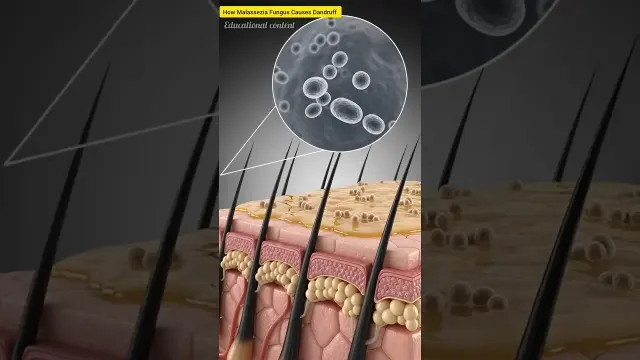
 How Malassezia Yeast Causes Dandruff, Shown in 3D Animation
#Dandruff
1 ideas
How Malassezia Yeast Causes Dandruff, Shown in 3D Animation
Get new #Dandruff ideas by email
Every Thursday: the week's best ideas, with the newest from #Dandruff.
Related tags
Dandruff: A Practical Guide to a Flaky, Itchy Scalp
Dandruff is the most ordinary scalp complaint there is — small flakes of dead skin that loosen from the scalp and settle on hair, shoulders and collars, often with an itch. Almost everyone meets it at some point, and the fact that it is common does not make it any less annoying. The reassuring part is that it is not a sign of poor hygiene, and it is not contagious.
What is actually happening
Your scalp, like the rest of your skin, constantly renews itself: new cells form underneath, older ones rise and are shed. With dandruff that process speeds up, so cells clump together and come away in visible flakes instead of disappearing invisibly. A yeast called Malassezia, which lives on almost every adult scalp without causing trouble, feeds on the oils your skin produces. In people prone to dandruff, the scalp reacts to it with irritation, itching and faster shedding. Hormones, stress, cold dry weather, and how much oil your scalp makes all nudge the balance.
The kinds you might meet
Read more
Ordinary dandruff shows as fine white or greyish flakes, usually worst at the hairline and crown. A drier scalp produces smaller, powdery flakes and often tightness rather than oiliness. A greasier version comes with yellowish flakes and a scalp that feels oily soon after washing. When flakes are thick, the scalp is red and itchy, or patches spread to eyebrows and the sides of the nose, that is a different, more persistent condition that deserves a professional opinion rather than another shampoo.
What helps, day to day
Wash regularly with a gentle shampoo — going days without washing lets oil and skin cells build up, which is exactly what the yeast likes. Massage the scalp with your fingertips rather than your nails, and rinse thoroughly.
If ordinary shampoo is not enough, look for an anti-dandruff shampoo and give it time. The main families of active ingredients work in different ways: some slow the yeast, some loosen flakes so they can be washed away, some calm irritation. Use one for several weeks before judging it; switching every few days tells you nothing. If one stops working, alternating with a different type occasionally can help. Follow the instructions on the label about how long to leave it on.
Skip harsh scrubs, very hot water and tight hats that trap sweat. Some people find their scalp settles when they stop over-washing with strong products and let a mild routine do the work.
When to look further
See a doctor or pharmacist if the scalp is very itchy, red, weeping, scabbed or painful; if flakes persist despite weeks of proper anti-dandruff use; or if you are losing hair. Dandruff is a small thing, but a scalp that never settles is worth a proper look rather than years of guesswork.
Videos come from YouTube and posts from Instagram; titles and summaries are our own. All rights belong to their creators.