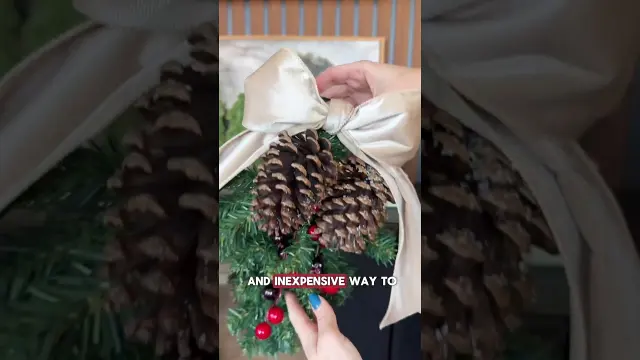
 Dollar Tree Holiday Decor Hacks With Minimal Effort
#Decor Hacks
1 ideas
Dollar Tree Holiday Decor Hacks With Minimal Effort
Get new #Decor Hacks ideas by email
Every Thursday: the week's best ideas, with the newest from #Decor Hacks.
Related tags
Decor Hacks: Smart Ideas for a Home That Feels Finished
Decor hacks are the small, clever shortcuts that make a room look considered rather than costly. They are not a single style or technique but a loose collection of practical tricks — ways of hanging, arranging, layering and improvising that solve the everyday problems of decorating: walls that feel bare, shelves that look cluttered, rooms that never quite come together. The idea has existed as long as people have furnished homes on a budget, passed along by word of mouth and, more recently, shared and reshaped through social media. What makes a hack useful is not novelty but repeatability: if it works in one home, it tends to work in the next.
Where to start
Most decorating frustration comes from proportion rather than shortage. Before buying anything, take stock of scale. A small picture on a large blank wall will always look lost, so group several pieces into a single arrangement rather than scattering them. Curtains hung close to the ceiling and wider than the window make a ceiling seem higher and a room more generous. Rugs that reach under at least the front legs of the furniture anchor a seating area; a rug floating in the middle of the floor leaves everything looking temporary. None of these fixes require new belongings, only a change of position.
The main kinds of hack
Read more
Hanging and mounting tricks cover the practical side: adhesive strips and hooks for lightweight frames, a strip of tape or paper measured against the wall to plan a gallery before anything is nailed, picture wire adjusted to the right height. Styling hacks deal with surfaces — odd numbers of objects, varied heights, books stacked horizontally to lift a small vase, trays to gather loose items into a single visual unit. Layering hacks add warmth and depth: throws over the arm of a sofa, cushions in mixed textures, a smaller lamp on a side table to create pools of light instead of one bright ceiling fixture.
There are also improvisation hacks, where an object is used for something other than its intended purpose — a ladder as shelving, a basket as a planter cover, a mirror placed to reflect a window and borrow its light. These carry the most charm and the most risk, so test them in place before committing.
What beginners should know
Measure twice and keep the tools simple: a tape measure, a level, removable hooks and a pencil will cover most jobs. Start with one wall or one shelf rather than the whole house, and live with the change for a few days before adding more. Edit as you go — the difference between styled and cluttered is usually subtraction. Prefer tricks that do no permanent damage, especially in rented homes, and check that anything you hang is genuinely suited to the weight it must hold.
Finally, treat these ideas as a starting vocabulary rather than rules. The best decor hack is the one that suits your own rooms, your own light and the way you actually live in them.
#Decor Hacks: frequently asked questions
How do I start decorating a room with decor hacks?
Start by looking at proportion before you buy anything — a tiny frame lost on a big wall, or a rug stranded in the middle of the floor, usually causes more dissatisfaction than a lack of things. Regroup what you already own: cluster small pictures into a single arrangement, hang curtains high and wide so the ceiling reads taller, and slide rugs under the front legs of your furniture. Pick a single wall or shelf to rework first, then live with it for a while before moving on.
What basic tools and supplies do I need for these tricks?
A tape measure, a level, a pencil and removable hooks will handle most jobs, with adhesive strips for anything light. Paper or tape is handy for mapping out a gallery arrangement on the wall before you commit to hanging it. If you rent, favour methods that leave no permanent marks and always check that the fixing suits the weight it has to carry.
Which kind of decor hack should I choose for my room?
Choose based on the problem you actually have: hanging and mounting tricks fix bare walls and awkward arrangements, styling tricks tidy up shelves and surfaces, and layering tricks add warmth to rooms that feel flat or over-lit. Improvisation hacks — a ladder used as shelving, a basket hiding a plant pot, a mirror angled to catch window light — are the most charming but the least predictable, so try them in place before deciding. Match the trick to your own light and the way the room is used, not to whatever looks good in someone else's photos.
How do I keep a styled room from looking cluttered?
Editing is the real skill, and the difference between styled and cluttered is usually subtraction rather than addition. Gather loose items onto a tray so they read as one object, vary heights instead of lining things up in a row, and stack books flat to give a small vase some lift. If a surface still feels busy, take something away rather than rearranging what is there.
What are common mistakes people make with decor hacks?
The usual culprits are scale and haste: pieces too small for the wall, a rug that anchors nothing, a gallery planned by eye instead of measured on the wall first. Another is doing too much at once, which makes it hard to tell what actually worked. Test anything improvised, keep the fixings honest about the weight they hold, and stop before the room starts feeling staged rather than lived in.
Can I use decor hacks for a holiday or seasonal refresh?
Yes — seasonal decorating is one of the easiest places to apply them, because you are changing surfaces and arrangements rather than buying furniture. Group your seasonal pieces into a single focused display on a shelf or mantel, layer in texture with fabric and lights, and pack the rest away. Swapping the display back afterwards takes minutes, which is the point of a good hack.
Videos come from YouTube and posts from Instagram; titles and summaries are our own. All rights belong to their creators.