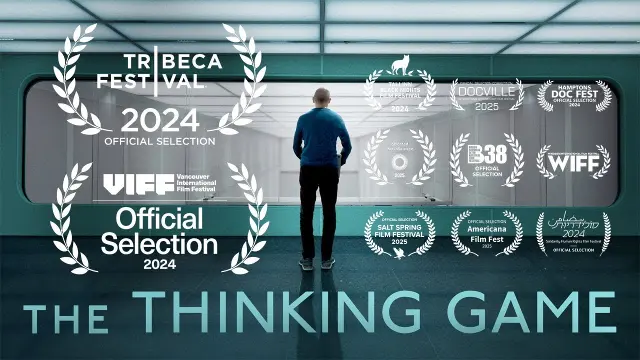
 The Thinking Game: Inside DeepMind's Push Toward General AI
#DeepMind
1 ideas
The Thinking Game: Inside DeepMind's Push Toward General AI
Get new #DeepMind ideas by email
Every Thursday: the week's best ideas, with the newest from #DeepMind.
Related tags
DeepMind: Inside the Pursuit of General Intelligence
DeepMind is a research laboratory devoted to artificial intelligence, and its name has become shorthand for the ambitious end of the field: the idea that machines might one day learn the way people do, picking up new skills without being rebuilt for every task. Rather than writing rules by hand and hoping they cover every case, the lab builds systems that improve through experience.
Where it comes from
The work grew out of an unusual mix of computer science and neuroscience. Its founders were interested in how brains learn, and in whether those principles could be translated into software. What began as a small independent lab was eventually absorbed into a much larger technology company, which gave it the computing power such experiments demand. That combination, clever ideas plus enormous machines, shaped everything that followed.
Learning by trial and error
Read more
The central method is reinforcement learning: a system tries things, receives feedback on how well it did, and gradually adjusts. Pair that with deep neural networks, which find patterns in overwhelming amounts of data, and you get software that can teach itself to play a game, control a robot, or solve a puzzle without being told the strategy.
Games became the favourite testing ground because they offer a clean scoreboard. The lab's best-known moment came when one of its programs learned to beat a champion at an ancient board game whose possible positions outnumber anything a person could memorise. The interesting part was never the win itself, but that the system found moves no human had thought to try.
From games to real problems
The same techniques have been pointed at harder, less playful questions: predicting the three-dimensional shape of proteins from their chemical sequence, suggesting new materials, assisting with mathematics, reducing the energy used by cooling systems, and helping radiologists spot disease. Some of these are research demonstrations, some have become tools used by scientists every day.
The general in general intelligence
Most artificial intelligence you meet is narrow. A spam filter cannot drive, and a translation tool cannot diagnose anything. General intelligence would be different: one system that can turn its hand to unfamiliar problems, learn from very little, and transfer what it knows. Nobody agrees on how close that is, or even on how to measure it, which is precisely why the question stays interesting.
What beginners should know
- Intelligence in software is not one thing. Learning, reasoning, perception and language are separate problems that are often solved separately.
- Research demos and shipping products are different animals. A result that works in a lab may take years to become something reliable.
- Be sceptical in both directions. Breathless claims about machines taking over and dismissive claims that nothing has changed are usually both wrong.
- Data and computing power matter as much as clever design. Many breakthroughs are engineering as much as insight.
- Safety and ethics are part of the technical work, not an afterthought: who the systems are trained on, what they get wrong, and who answers for it.
You do not need a maths degree to follow this field. Read the plain-language summaries the labs publish, keep a rough mental map of what has actually been demonstrated, and stay curious about the questions rather than the headlines.
Videos come from YouTube and posts from Instagram; titles and summaries are our own. All rights belong to their creators.