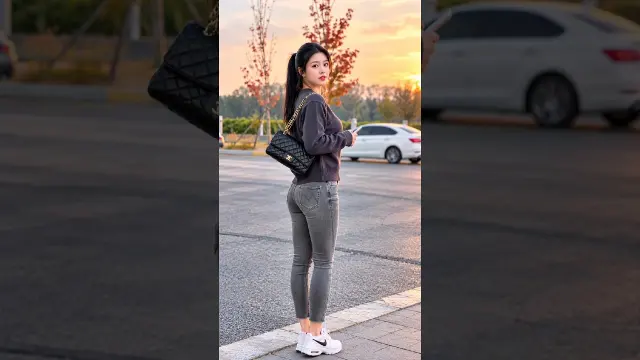
 Effortless Classy Street Style Featuring Grey Jeans
#Denim Fashion
1 ideas
Effortless Classy Street Style Featuring Grey Jeans
Get new #Denim Fashion ideas by email
Every Thursday: the week's best ideas, with the newest from #Denim Fashion.
Related tags
Denim Fashion: A Guide to Jeans, Jackets and Timeless Style
Denim is a sturdy twill fabric woven with coloured warp threads and undyed weft threads, which is why it looks blue on one side and pale on the other. Its tight weave makes it hard-wearing, and that durability is the reason it moved from workwear into everyday wardrobes and eventually into fashion proper. The word itself comes from a twilled cloth once made in southern France, while the fabric's association with heavy-duty trousers grew out of nineteenth-century work clothing built for miners, farmers and labourers. Over the following century, denim travelled from the job site to the cinema screen to the street, becoming one of the few fabrics worn by almost everyone.
The main styles of jeans
- Straight leg: an even line from hip to hem; the most versatile cut and a good starting point.
- Slim and skinny: close to the leg all the way down, best in fabrics with some stretch.
- Wide leg and flare: roomy through the thigh and either even or widening at the hem.
- Boyfriend and relaxed: cut loose and slightly oversized, often with a lower waist.
- Bootcut: fitted through the thigh with a slight flare that sits over a boot.
- High, mid and low rise: where the waistband sits on the body, which changes proportions more than any other detail.
Washes matter as much as cut. Dark indigo reads sharper and more formal, mid-blue is the everyday neutral, and faded or vintage washes feel casual. Raw denim is unsanforised and unwashed, so it starts stiff and dark and slowly moulds to the wearer; sanforised denim has been pre-shrunk for a more predictable fit.
Read more
Denim beyond jeans
Jackets are the other cornerstone: the classic trucker shape, cropped at the waist with a button front, works over dresses and knitwear alike. Denim shirts bridge casual and smart, chambray offers a lighter alternative, and skirts, dungarees and wide-leg trousers take the fabric in other directions. Beyond clothing, denim turns up in bags, aprons and home textiles, prized for the same toughness that made it workwear.
What beginners should know
- Fit is a matter of proportions. Balance a loose top with a slimmer jean, or a wide leg with something closer to the body.
- Look at the fabric content. A small amount of elastane adds comfort and recovery; all-cotton denim holds its shape but takes longer to break in.
- Check the seams, the stitching and the pockets. Reinforced stitching at stress points is a sign of a garment built to last.
- Try jeans sitting down, not just standing. Waistbands and rises behave differently once you move.
Care and longevity
Wash denim inside out, in cold water, and only when it actually needs it; spot cleaning and airing extend its life considerably. Skip the tumble dryer where you can, since heat weakens fibres and fades colour. Hang to dry, and fold rather than hang heavy jeans for long storage. Repairs matter too: a re-stitched seam or a patched knee keeps a good pair in rotation and adds character rather than spoiling the look.
Denim rewards patience. The best pieces are rarely the newest, but the ones worn often enough to soften into something that fits only you.
#Denim Fashion: frequently asked questions
How do I start building a denim wardrobe if I don't own much yet?
Begin with one pair of jeans in a cut you actually reach for, ideally in a mid-blue or dark wash that works with most of your tops and shoes. Add a denim jacket or shirt next, since either layers over dresses and knitwear as easily as it does over a tee. Once those basics feel worn-in and reliable, branch into wider legs, skirts or dungarees rather than buying several similar pieces at once.
Which style of jeans should I choose for my body and my routine?
Straight leg is the safest starting point because the line from hip to hem is even and pairs with almost everything, while slim cuts work best when the fabric has some stretch to it. Think about rise as much as leg shape, since where the waistband sits changes your proportions more than any other detail. If you want an oversized, relaxed feel, go with a boyfriend or wide-leg cut and keep the top half closer to the body.
How should I wash and store denim so it lasts longer?
Turn pieces inside out, use cold water, and wash only when they genuinely need it — airing and spot cleaning handle most everyday marks. Avoid the tumble dryer, because heat breaks down fibres and dulls the colour, and hang the item to dry instead. For long storage, fold heavy jeans rather than hanging them, and treat a re-stitched seam or patch as an improvement rather than a flaw.
Can denim work for a dressed-up occasion?
Yes, and the trick is in the wash and the pairing rather than the garment type. A dark indigo pair reads sharper and more formal, especially with a tucked-in shirt, a knit and clean shoes, while faded or vintage washes deliberately lean casual. A denim shirt or a cropped trucker jacket over a dress also bridges the gap between relaxed and put-together.
What mistakes do people commonly make when buying jeans?
Judging the fit only while standing is the big one — waistbands and rises behave differently once you sit down, so try them that way before deciding. Many people also ignore what the fabric is made of and skip checking the seams, stitching and pockets, even though reinforced stitching at stress points is what keeps a pair going. Finally, remember that proportions matter: balance a loose top with a slimmer jean, or a wide leg with something closer to the body.
What is the difference between raw and pre-shrunk denim?
Raw denim comes unsanforised and unwashed, so it starts stiff and deeply coloured and gradually moulds to the shape of the wearer. Pre-shrunk denim has been treated to shrink ahead of time, which gives you a more predictable fit from the first wear with far less break-in. Choose raw if you enjoy the slow shaping process, and pre-shrunk if you would rather know exactly what you are getting.
Videos come from YouTube and posts from Instagram; titles and summaries are our own. All rights belong to their creators.