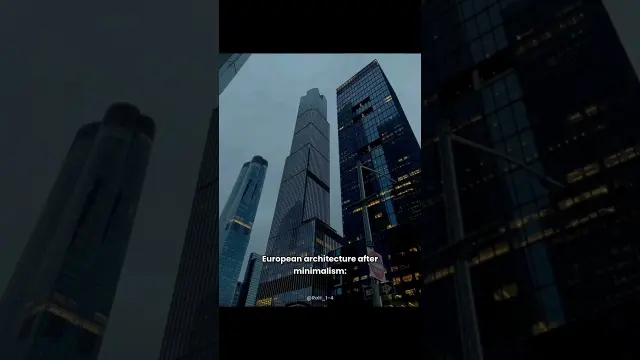
 Evolution of European Architecture From Classical to Minimalist
#Design Evolution
1 ideas
Evolution of European Architecture From Classical to Minimalist
Get new #Design Evolution ideas by email
Every Thursday: the week's best ideas, with the newest from #Design Evolution.
Related tags
Design Evolution: From Classic Forms to Modern Simplicity
What design evolution means
Design evolution is the gradual change of visual ideas, forms, and methods over time. It can describe the history of architecture, interiors, fashion, graphics, product design, or any creative field where people shape objects and spaces. As needs, materials, and tastes change, design changes too. Old ideas are often adapted rather than completely replaced, so new styles usually grow out of earlier ones.
At its core, design evolution shows how people balance beauty, function, and cultural identity. A design may begin with decorative detail, then move toward simpler lines, better usability, or a new way of using materials. In many cases, it reflects wider changes in society, such as new technology, shifting lifestyles, or different ideas about comfort and practicality.
Where it comes from
Read more
Design has always evolved alongside human life. Early forms were shaped by local materials, climate, and practical needs. Over time, craftsmanship, trade, and shared artistic traditions spread ideas from one place to another. That is why many design movements borrow from older styles while adding something new.
In architecture, for example, classical forms influenced later periods that reinterpreted symmetry, proportion, and ornament. In interiors and objects, handmade traditions often gave way to cleaner shapes and more efficient production. In visual design, changes in printing, photography, and digital tools created new ways to organize images and information. No matter the field, design evolution is usually a mix of heritage and innovation.
Main directions in design evolution
Design can move in many directions, but a few broad tendencies appear again and again:
- Ornamental to simple: highly detailed work often gives way to cleaner lines and reduced decoration.
- Handcrafted to industrial: handmade objects may inspire designs made for wider production.
- Traditional to contemporary: familiar forms are simplified, adapted, or combined with modern materials.
- Local to global: regional styles spread, merge, and influence one another.
- Decorative to functional: usability and clarity become more important alongside appearance.
These shifts do not mean older styles disappear. Instead, they remain available as references, and many modern designs use them in subtle ways.
What beginners should know
If you are learning about design evolution, start by looking for recurring principles rather than memorizing style names. Pay attention to shape, proportion, material, color, texture, and decoration. Ask yourself what a design is trying to communicate: elegance, stability, warmth, simplicity, luxury, or efficiency.
It also helps to study contrasts. Compare a highly decorative piece with a pared-back one, or an old interior with a more minimal version. Notice what has been kept, what has been removed, and why.
A few useful tips:
- Look at design as a response to need, not only as decoration.
- Trace one idea across time to see how it changes.
- Notice how materials influence style.
- Learn to identify what makes a design feel timeless.
- Remember that good design often solves a problem while still expressing character.
Why it still matters
Design evolution matters because it helps you understand why things look the way they do. It gives context to styles you love and helps you see the logic behind changing tastes. Whether you are decorating a room, choosing a visual style, or simply collecting inspiration, understanding design evolution helps you make choices that feel thoughtful, lasting, and personal.
#Design Evolution: frequently asked questions
How do I start learning about design evolution if I'm a complete beginner?
Begin with principles rather than a list of style names — look at shape, proportion, material, color, texture, and how much decoration is present. Then compare two things side by side, such as an ornate piece and a pared-back one, and ask what was kept, what was removed, and what problem the change solved. Tracing one single idea across time teaches you far more than trying to memorize movements in order.
What do I actually need in order to study design evolution properly?
Mostly curiosity and a habit of looking closely; you can work from rooms you already live in, objects you own, or buildings you pass on your way somewhere. Keep a simple collection of images you respond to and revisit it to spot patterns in what draws your eye. The real requirement is patience to ask why something looks the way it does, not specialized equipment or training.
Which direction of design change should I focus on first?
Pick the one that matches what you already notice — many people are most struck by the shift from highly ornamented work to cleaner lines, or from handmade pieces to industrially produced ones. Following a single thread keeps the subject manageable, since each direction overlaps with the others anyway. As you go, you will start recognizing familiar forms being adapted with modern materials rather than replaced outright.
How can I use older styles without making a room or project feel dated?
Use the older piece as a reference for proportion, material, or craftsmanship rather than copying its surface decoration wholesale. Pairing a traditional form with a simplified setting lets the character of the original show while the overall result still feels current. The safest test is whether the object earns its place by being useful or well made, not merely decorative.
How can I apply design evolution to a specific occasion, like a wedding or a family celebration?
Choose an era or tradition you genuinely love and take one clear cue from it — a silhouette, a table shape, a texture, a way of arranging things — instead of blending everything at once. That single reference gives the event coherence and makes the details feel intentional rather than themed. Mixing in something contemporary keeps the homage from reading as costume.
What are the common mistakes people make when thinking about design history?
Treating styles as a fixed sequence of names to memorize, rather than as responses to needs, materials, and available technology, is the most frequent one. Another is assuming newer automatically replaces older, when in practice older ideas stay available and keep being reworked. Assuming good design is only about appearance also misses the point, since lasting work usually solves a practical problem while still expressing character.
Videos come from YouTube and posts from Instagram; titles and summaries are our own. All rights belong to their creators.